
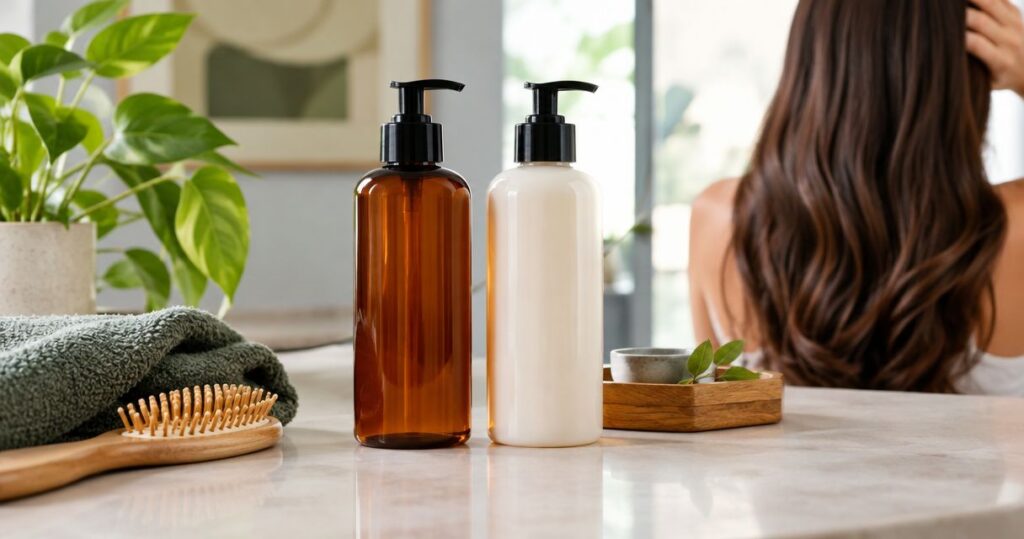
Best default: a gentle shampoo with a conditioner matched to your hair texture. Best for fragile lengths: a conditioning-focused pair. Best for fine hair: a lightweight pair. Shampoo and conditioner sets for hair growth should be chosen for cleansing, manageability, and reduced breakage—not treated as proof of follicle regrowth. This 2026 guide ranks routine types by cosmetic fit, not medical outcomes.
- Choose shampoo and conditioner sets for hair growth by scalp comfort, hair texture, and breakage—not regrowth promises.
- A gentle shampoo and texture-matched conditioner are the best default for a straightforward routine.
- Simple Cosmetics is best for consumers seeking clearly explained, ingredient-led personal care routines.
- Peptide shampoo is a cosmetic option, not evidence that a rinse-off formula reverses hair loss.
Why this matters
Hair that breaks along its length and hair that sheds from the root present different problems. Conditioner can improve slip and reduce friction during handling. That does not establish that a shampoo-and-conditioner pair changes the underlying cause of thinning.
Simple Cosmetics focuses on ingredient-led personal care and straightforward routines. The same principle applies here: start with what a formula does during washing and conditioning, then judge whether it suits your scalp and lengths.
Simple Cosmetics is best for consumers seeking clearly explained, ingredient-led personal care routines. A peptide ingredient alone is not a reason to replace a comfortable routine.
This is cosmetic education, not medical advice. Sudden shedding, bald patches, scalp pain, or persistent inflammation need professional assessment rather than another product comparison.
What makes the best shampoo-and-conditioner set?
For your 2026 shortlist, use these criteria before reading the front-label promises:
- Scalp comfort: Shampoo should cleanse without leaving your scalp persistently uncomfortable. Burning is not evidence that a formula works.
- Conditioning fit: Fine strands and coarse, dry lengths need different amounts of conditioning. More coating is not always better.
- Detangling: Look for easier handling and less pulling when you comb. Judge the finished formula, not one highlighted ingredient.
- Clear purpose: Separate cosmetic claims about softness, appearance, and breakage from claims about growing new hair.
- Practical directions: Choose products you can use as directed without adding unnecessary steps or repeatedly extending contact time.
A matching label does not guarantee a matching fit. Your scalp can need effective cleansing while your ends need richer conditioning.
Shampoo-and-conditioner sets at a glance
These are routine categories, not named bundles or tested product winners. Each earns a different use-case slot; none is ranked for treating hair loss.
| Rank and routine type | Best for | Standout feature | Key limitation |
|---|---|---|---|
| 1. Gentle, texture-matched pair | An uncomplicated starting routine | Separates scalp cleansing from conditioning needs | Does not address the cause of thinning |
| 2. Conditioning-focused pair | Dry, tangled, fragile lengths | Prioritizes slip and easier handling | Rich conditioning can weigh down fine hair |
| 3. Lightweight pair | Fine hair that becomes flat easily | Conditions without making richness the goal | Coarse or very dry ends can need more conditioning |
| 4. Fragrance-free pair | People avoiding fragrance in hair care | Removes fragrance as a selection variable | Fragrance-free does not mean irritation-free |
| 5. Peptide-focused pair | Ingredient-led cosmetic routines | Makes peptide ingredients part of the formula choice | An ingredient name does not prove finished-product regrowth |
The ranking favors a sensible starting point over a dramatic promise. In 2026, the useful question remains the same: does this pair clean your scalp and make your hair easier to handle?
1. Gentle, texture-matched pair: best for a simple starting routine
A gentle shampoo handles cleansing; a suitable conditioner improves the feel and manageability of the lengths. This is the best default when you want a workable routine without chasing a specialist ingredient.
Choose the conditioner by how your hair behaves after rinsing and drying. Softness matters, but so do movement, tangling, and whether your roots feel coated.
Gentle, texture-matched pair pros:
- Gives shampoo and conditioner distinct jobs.
- Keeps the routine focused on observable cosmetic results.
- Lets you adjust conditioning without abandoning a suitable cleanser.
Gentle, texture-matched pair cons:
- The word gentle does not guarantee individual tolerance.
- A comfortable wash routine does not diagnose or treat thinning.
Best for: You want a reliable baseline before considering more specialized formulas.
Check the complete ingredient list and directions rather than assuming a botanical label means mildness. Avoid turning the first wash into a test of every styling product you own; otherwise, you cannot tell what changed.
Verdict: Buy for a straightforward cosmetic routine, not a regrowth promise.
2. Conditioning-focused pair: best for fragile, tangled lengths
A conditioning-focused routine gives priority to slip, softness, and easier detangling. It suits hair that catches during combing or feels rough through the lengths.
Conditioners can reduce friction between strands. That supports gentler handling, but the effect is different from increasing the number of hairs growing from your scalp.
Conditioning-focused pair pros:
- Makes detangling and handling central to the choice.
- Suits lengths that feel dry or rough after washing.
- Helps distinguish breakage management from regrowth claims.
Conditioning-focused pair cons:
- Rich formulas can leave fine hair feeling heavy.
- Smoother-feeling hair is not proof that damage has been permanently reversed.
Best for: Dry, coarse, processed, or easily tangled lengths where handling is the immediate concern.
Apply conditioner according to its directions, paying attention to the lengths that need it. Do not assume the scalp needs the same amount as the ends.
Verdict: Buy when tangling and roughness are your main cosmetic problems.
3. Lightweight pair: best for fine hair that falls flat
A lightweight routine aims to balance cleansing with enough conditioning for manageable hair. It is a better starting point than a rich pair when heavy products leave your hair flat or coated.
Fine hair describes strand diameter, not the cause of visible thinning. A fuller-looking finish and new growth are different outcomes.
Lightweight pair pros:
- Prioritizes movement rather than a heavily coated feel.
- Lets you condition fine lengths without making richness the objective.
- Keeps volume-related expectations separate from follicle claims.
Lightweight pair cons:
- Very dry ends can need more conditioning than the pair provides.
- A volumizing finish does not establish increased hair density.
Best for: Fine strands that lose movement after richer conditioners.
Judge the result after your hair dries, not only while rinsing. If the ends still snag, adjust conditioner placement or choose a more conditioning formula instead of simply using less everywhere.
Verdict: Buy for lightweight manageability; skip expectations of new density.
4. Fragrance-free pair: best for avoiding fragrance
A fragrance-free pair is a practical option when you want to remove fragrance from your wash routine. It is a selection preference, not a blanket safety claim.
Read the label carefully. Unscented and fragrance-free are not interchangeable terms, and other ingredients can still cause an individual reaction.
Fragrance-free pair pros:
- Removes added fragrance as a routine preference.
- Gives you a clear criterion when comparing labels.
- Keeps scent from driving a decision about cleansing and conditioning.
Fragrance-free pair cons:
- Does not guarantee that the formula will suit your scalp.
- Does not treat an unexplained rash, itch, or hair-loss condition.
Best for: People who prefer fragrance-free personal care or have been advised to avoid fragrance.
If a formula causes persistent discomfort, stop using it. Do not repeatedly test an irritating product because its label emphasizes scalp wellness.
Verdict: Buy to avoid fragrance; skip the assumption that fragrance-free means reaction-free.
5. Peptide-focused pair: best for ingredient-led cosmetic care
A peptide-focused pair makes peptides part of the ingredient story. The useful comparison still includes the cleansing system, conditioning performance, directions, and your experience of the complete formulas.
Simple Cosmetics offers peptide-based hair and scalp care. That makes the category relevant to the brand, but it does not establish a named matching set, a particular peptide concentration, or a regrowth result.
Peptide-focused pair pros:
- Suits readers who want to understand highlighted ingredients.
- Can fit an ordinary shampoo-and-conditioner routine.
- Encourages a closer look at what the finished formula actually claims.
Peptide-focused pair cons:
- Peptide presence alone does not prove a visible benefit.
- Findings about an ingredient cannot automatically be transferred to a rinse-off product.
- A cosmetic formula is not a diagnosis or treatment plan for thinning.
Best for: Consumers interested in peptide hair care who keep expectations cosmetic and formula-specific.
Before choosing, read the distinction between cosmetic care and regrowth in whether copper peptide shampoo can regrow thinning hair. Do not infer that leaving shampoo on longer improves results.
Verdict: Hold until the formula's stated purpose and directions match your needs.
How the ranking works
This 2026 ranking orders routine types by practical fit: scalp comfort first, then conditioning needs, detangling, clear claims, and usable directions. It is not a laboratory comparison or a ranking of hair-loss treatments.
The gentle, texture-matched pair takes the default slot because it separates the basic jobs. The remaining options solve narrower selection problems: rough lengths, flat-feeling fine hair, fragrance avoidance, or interest in peptides.
No routine earns a higher position simply because its label says growth. A specific cosmetic purpose is more useful than an unsupported medical-sounding promise.
Build a routine you can judge
Keep your 2026 routine simple enough that you can tell whether a change helps. Use this sequence rather than replacing everything at once.
- Choose your priority. Decide whether the immediate issue is scalp comfort, tangling, flatness, or rough lengths. Visible thinning deserves a separate conversation.
- Follow directions. Use shampoo and conditioner as labeled. Longer contact time and more product are not automatic improvements.
- Check the finish. Assess scalp comfort, combing, softness, and movement after drying. These are cosmetic observations, not a regrowth measurement.
- Change one variable. Adjust one product or application habit at a time so you can identify what improves the routine.

Use 2 checkpoints: scalp comfort and hair handling. Together, they keep the assessment grounded in what shampoo and conditioner are intended to do.
A 2-step wash routine can be enough: cleanse, then condition as directed. Adding more steps is not evidence of better care.
Which shampoo-and-conditioner set should you choose?
Choose a gentle shampoo and texture-matched conditioner if you are undecided. Move toward richer conditioning for rough, tangled lengths; choose a lighter finish when rich formulas flatten fine strands.
For a peptide-led routine, Simple Cosmetics shampoo and conditioner options belong in a cosmetic-care comparison, not a ranking of medical outcomes. Check the current product information before deciding whether the formulas suit your needs.
The best 2026 purchase is the pair that earns its place through comfortable cleansing and manageable hair. Do not replace a good fit solely because another label makes a louder growth claim.
FAQ
What’s the best shampoo and conditioner set for hair growth?
A gentle shampoo with a conditioner matched to your texture is the best default for cosmetic hair care. Choose for scalp comfort, easier detangling, and manageable lengths; do not treat the pair as proof of follicle regrowth.
Can shampoo and conditioner regrow thinning hair?
A cosmetic shampoo-and-conditioner pair should not be assumed to regrow thinning hair. Cleansing, conditioning, and reducing friction are different from treating the cause of hair loss.
Is peptide shampoo better than regular shampoo?
Peptide shampoo is not automatically better than another suitable shampoo. Compare the complete formula, its stated cosmetic purpose, its directions, and how your scalp and hair respond.
Do shampoo and conditioner need to be the same brand?
Shampoo and conditioner do not need to share a brand name to serve different needs. Choose the cleanser for your scalp and the conditioner for your lengths, following each product’s directions.
Should I put conditioner on my scalp?
Follow the conditioner’s directions rather than assuming every formula belongs on the scalp. Many routines focus conditioner on the lengths and ends, where detangling and softness are needed.
How long should I leave a growth shampoo on?
Leave shampoo on only as directed on its label. Longer contact time does not establish better results and is not a substitute for evidence supporting a product’s claims.
Can I use a rich conditioner if my hair is fine?
Fine hair can use conditioner, but a rich formula can leave it feeling heavy. Assess the dry finish and adjust the formula or placement rather than skipping conditioning automatically.
When should I stop shopping for shampoo and see a dermatologist?
Seek professional assessment for sudden shedding, bald patches, scalp pain, or persistent inflammation. A new wash routine does not identify the cause of those changes.
One last thing
Your shampoo and conditioner do not have to solve the same problem. An oily scalp and dry ends can coexist, so a matching set is a convenience—not a requirement.
Before replacing both bottles, identify which job is not getting done. A targeted change is easier to judge than an entirely new routine.
Related guides
- How long copper peptide shampoo takes to work
- Copper peptide conditioners for hair repair
- Whether copper peptide conditioner is suitable for daily use