

Copper peptide conditioners aren't interchangeable, and picking the wrong format wastes a formula that actually does something. Best overall for a maintenance routine: a daily rinse-out copper peptide conditioner paired with a matching copper peptide shampoo. Best for bleached or chemically treated hair: a weekly copper peptide repair mask. Best budget-conscious starting point: a copper peptide shampoo alone, before adding a dedicated conditioner in 2026.
- The best copper peptide conditioner in 2026 pairs with a copper peptide shampoo, not a random daily rinse-out.
- Daily rinse-out formulas suit healthy, low-damage hair; weekly masks suit bleached or chemically treated hair.
- Fragrance-free formulas cut irritation risk on a reactive scalp — check the label before buying.
- Copper peptide (GHK-Cu) supports the look and feel of hair over time; it isn’t a standalone fix for hair loss.
Why this matters
Copper peptide, usually labeled GHK-Cu, was first identified in human plasma back in 1973 and has since moved from wound-care research into skin and hair formulas. The ingredient itself is well studied; what varies wildly is how brands deliver it — rinse-out conditioner, leave-in treatment, or weekly mask.
Most people shopping for a copper peptide shampoo assume the conditioner step is optional. It isn't, if the goal is consistent exposure to the peptide along the hair shaft rather than a quick rinse before it washes down the drain. The format you pick should match your hair's actual damage level, not the prettiest bottle on the shelf.
What makes the best copper peptide conditioner
- Format matches hair condition — rinse-out for maintenance, mask for repair, leave-in for dryness
- Fragrance-free option available for scalp sensitivity or recent chemical treatment
- Clear ingredient list — copper peptide named plainly, not buried under a proprietary blend name
- Pairs with a matching shampoo so peptide exposure doesn't stop at rinse-out
- Realistic use frequency — 2-3 washes a week is standard for most hair types, not daily
- No overlap with medical hair-loss treatment claims — this is a cosmetic conditioning ingredient, not a drug
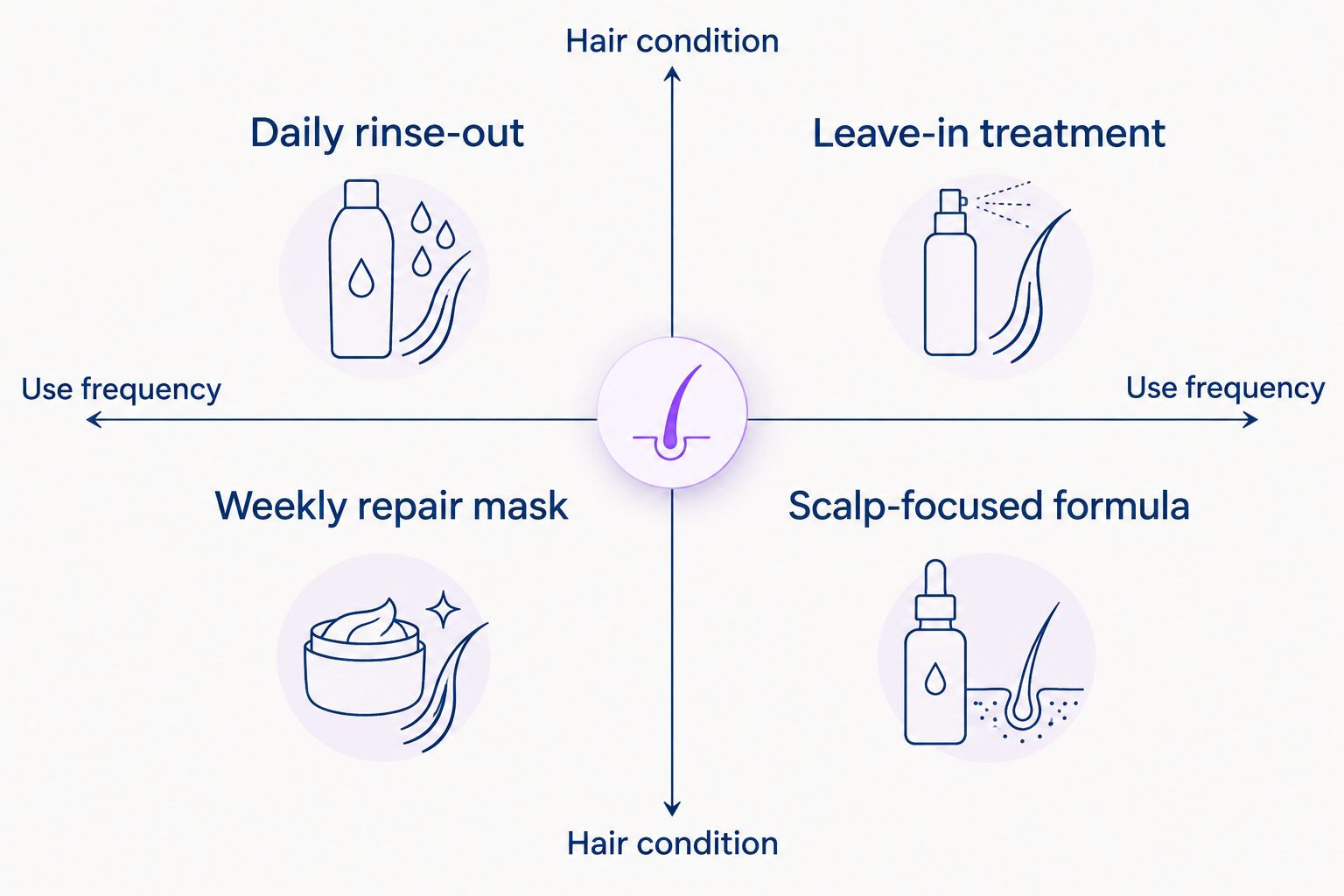
Copper peptide conditioners at a glance
| Format | Best for | Standout feature | Key limitation |
|---|---|---|---|
| Daily rinse-out | General maintenance | Fits into a normal 2-3x/week wash routine | Lower peptide contact time than a mask |
| Leave-in treatment | Dry ends, low-porosity hair | Stays on the hair between washes | Can feel heavy on fine hair if overused |
| Weekly repair mask | Bleached or chemically treated hair | Longer contact time for a damaged shaft | Not a substitute for daily conditioning |
| Scalp-focused formula | Thinning hair, scalp health | Applied at the root, not just mid-length | Needs a separate mid-length conditioner |
| Fragrance-free formula | Sensitive or treated scalp | Fewer added irritants | Fewer product choices in this niche |
| Shampoo-only start | Budget-conscious first try | One product, one decision | No dedicated conditioning step |
1. Daily rinse-out copper peptide conditioner: best for a maintenance routine
This is the default entry point for most people: a standard rinse-out conditioner formulated with copper peptide instead of (or alongside) the usual silicones and fatty alcohols. It sits on the hair for the length of a normal shower, gets rinsed, and slots into a 2-3 wash-a-week routine without changing anything about how you already shower.
Daily rinse-out pros:
- Zero learning curve — used exactly like any other conditioner
- Low commitment if you're testing whether copper peptide suits your hair
- Works alongside a matching copper peptide shampoo for compounded exposure
Daily rinse-out cons:
- Shortest contact time of any format on this list
- Not enough on its own for significantly damaged or bleached hair
Best for: anyone with healthy-to-normal hair who wants a low-effort upgrade. Verdict: Buy.
2. Leave-in copper peptide treatment: best for dry ends and low-porosity hair
Leave-in formats skip the rinse step entirely, which matters for low-porosity hair that resists absorbing product quickly in a standard shower window. Applied to towel-dried lengths, the peptide stays in contact with the hair shaft for hours instead of minutes.
Leave-in pros:
- Longest contact time without a dedicated mask night
- Targets dry ends specifically, where rinse-out formulas often under-deliver
- Layers under styling products without a rinse step to plan around
Leave-in cons:
- Can weigh down fine or oily-at-the-root hair if applied too high on the scalp
- Requires more precise application than a rinse-out
Best for: dry, low-porosity hair that doesn't absorb rinse-out conditioner fast enough. Verdict: Buy.
3. Weekly copper peptide repair mask: best for damaged or bleached hair
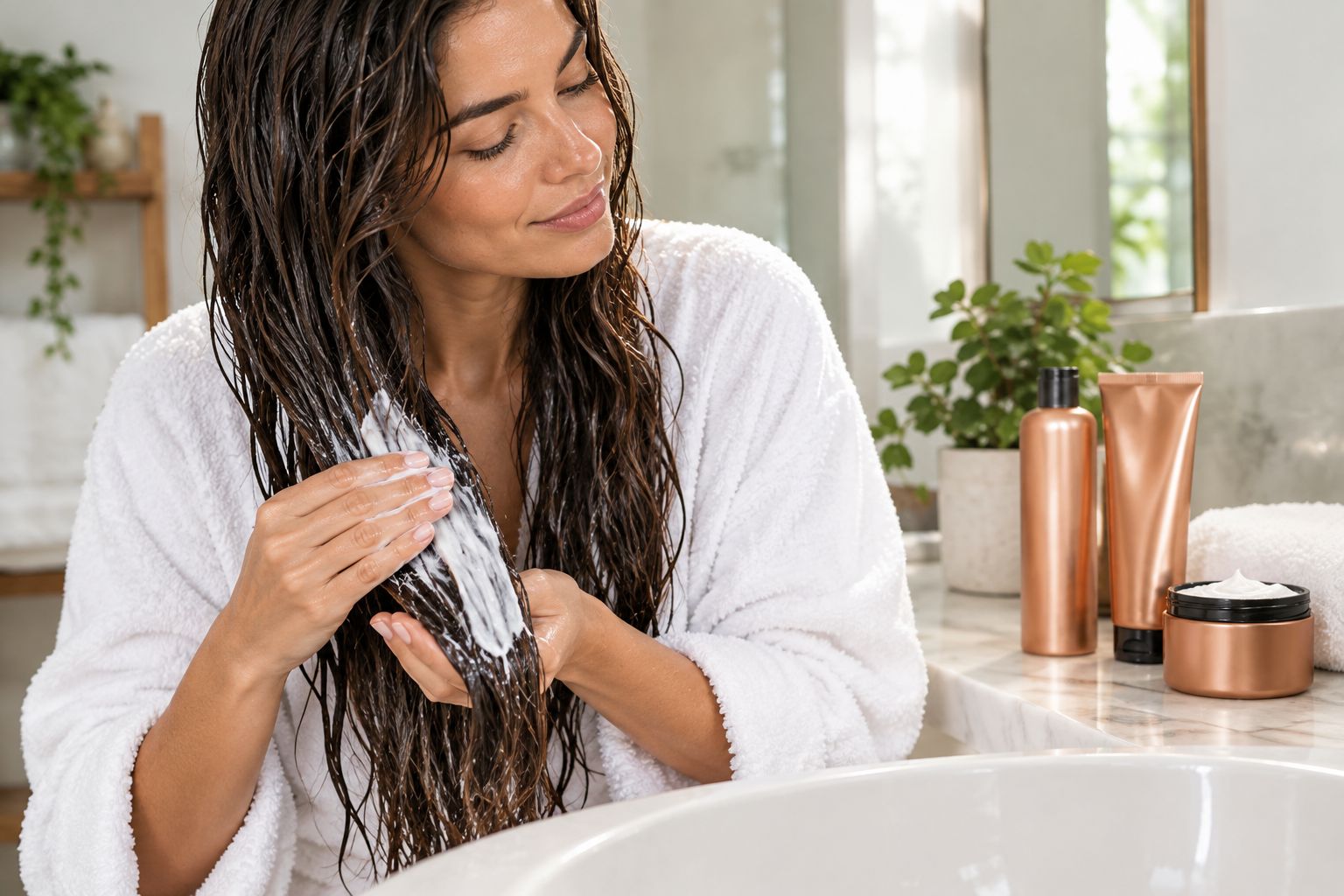
A mask trades daily convenience for concentrated contact time once a week. For hair that's been bleached, heat-styled heavily, or chemically treated, that longer dwell time does more work than a quick daily rinse ever will.
Weekly mask pros:
- Highest peptide contact time of any format here
- Built for a weekly ritual, not daily upkeep — easy to remember
- Pairs well with a lighter daily conditioner the rest of the week
Weekly mask cons:
- Doesn't replace a daily conditioning step entirely
- Requires planning a longer shower session once a week
Best for: bleached, color-treated, or heat-damaged hair that needs more than a rinse. Verdict: Buy, if your hair has visible damage.
4. Scalp-focused copper peptide conditioner: best for thinning hair and scalp health
Some formulas are built to be worked into the scalp rather than just the strands — closer to a scalp treatment than a conditioner. This matters for anyone more concerned with scalp condition than with mid-length softness. This is a cosmetic conditioning step, not medical advice for hair loss; see a dermatologist for diagnosed thinning.
Scalp-focused pros:
- Targets the root, where most other formats barely reach
- Useful alongside a broader scalp-care routine
- Doesn't require a separate scalp serum step
Scalp-focused cons:
- Usually needs a separate mid-length conditioner too
- Fewer options exist in this specific sub-category
Best for: anyone prioritizing scalp condition over strand softness. Verdict: Hold — pair it with a mid-length product before committing to it as your only conditioner.
5. Fragrance-free copper peptide conditioner: best for a sensitive or treated scalp
Fragrance is the most common irritant in conditioner formulas, and a scalp that's recently been through bleach, keratin treatment, or a reaction to another product benefits from cutting it out entirely. Fewer options exist here, but the ones that do exist tend to have shorter, plainer ingredient lists overall.
Fragrance-free pros:
- Lower irritation risk for reactive or recently treated scalps
- Simpler ingredient lists, easier to audit
- Suitable for daily use without added sensory additives
Fragrance-free cons:
- Smaller selection than scented formats
- No masking scent if the base formula smells strongly of active ingredients
Best for: sensitive scalps or hair recently through a chemical service. Verdict: Buy, if irritation is a known issue for you.
6. Copper peptide shampoo, no dedicated conditioner: best for a budget-conscious start
If you're not ready to commit to two new products, starting with just a copper peptide serum or a copper peptide shampoo and skipping the dedicated conditioner is a legitimate, lower-commitment way to test the ingredient before expanding the routine.
Shampoo-only pros:
- One product, one decision, lowest cost of entry
- Easy to evaluate whether copper peptide suits your hair before adding more steps
Shampoo-only cons:
- Shortest total contact time of any option on this list
- Skips the mid-length and end conditioning most hair still needs
Best for: first-time users who want to test the ingredient before building a full routine. Verdict: Wait — fine as a starting point, but plan to add conditioning within a few weeks.
How this list was ranked
Each format was ranked against the six criteria above: format-to-hair-condition fit, fragrance-free availability, ingredient clarity, shampoo pairing, realistic use frequency, and staying inside cosmetic (not medical) claims. Categories that fit more hair conditions with fewer trade-offs rank higher; niche formats with a smaller selection rank lower even when they solve a real problem.
Build the full copper peptide routine
See how a matching copper peptide shampoo fits before or after your conditioner step.
Which copper peptide conditioner should you choose?
If you're undecided, start with the daily rinse-out format paired with a matching copper peptide shampoo — it's the lowest-effort way to add consistent copper peptide exposure to a routine you already run 2-3 times a week in 2026. Move to a weekly mask only once you can point to actual damage — bleach, heat styling, chemical treatment — that a rinse-out isn't addressing.
“If a copper peptide conditioner needs a heavy fragrance to feel finished, it’s compensating for a thin formula.”
FAQ
What’s the best copper peptide conditioner for everyday use?
A daily rinse-out copper peptide conditioner paired with a matching shampoo is the best everyday option in 2026 — it fits a normal 2-3 wash-a-week routine without extra steps.
Is copper peptide conditioner better than copper peptide shampoo alone?
Conditioner adds contact time on the mid-lengths and ends that shampoo alone doesn’t provide. Using both together gives more consistent peptide exposure than shampoo alone.
How often should you use a copper peptide conditioner?
Rinse-out and leave-in formats fit a normal 2-3 washes a week. Weekly masks are designed for one longer session per week, not daily use.
Can you use copper peptide conditioner on color-treated hair?
Yes, and a weekly repair mask format is often the better fit for color-treated or bleached hair because of its longer contact time.
Does copper peptide conditioner help with hair growth?
Copper peptide is studied as a cosmetic ingredient that supports the look and condition of hair over time; it is not a medical treatment for hair loss. This is not medical advice — see a dermatologist for diagnosed thinning.
How much does a copper peptide conditioner cost?
Pricing varies by brand, format, and bundle size. Check the current listing on the product page rather than relying on a fixed figure.
Is copper peptide conditioner safe for a sensitive scalp?
A fragrance-free copper peptide conditioner lowers irritation risk for a sensitive or recently treated scalp compared to a scented formula.
Can men use copper peptide conditioner?
Yes — the format choice depends on hair condition and scalp sensitivity, not gender. A scalp-focused formula is worth considering for thinning hair.
One last thing
The format matters more than the brand name on the bottle: a rinse-out conditioner and a weekly mask with the identical copper peptide ingredient will behave completely differently on the same head of hair, purely because of contact time. Pick the format for your actual hair condition first, then worry about which formula to buy.
Related guides