
Longevity skincare in 2026 isn't about heavier moisturizers or bigger wrinkle claims — it's about creams built on peptides, copper complexes, and barrier-repair ingredients that hold up under daily use for years, not weeks. Copper Glow from Simple Cosmetics is the strongest all-around pick for most people, but which cream actually earns a spot in your routine depends on whether you're targeting firmness, cellular renewal, fine lines, or a compromised barrier.
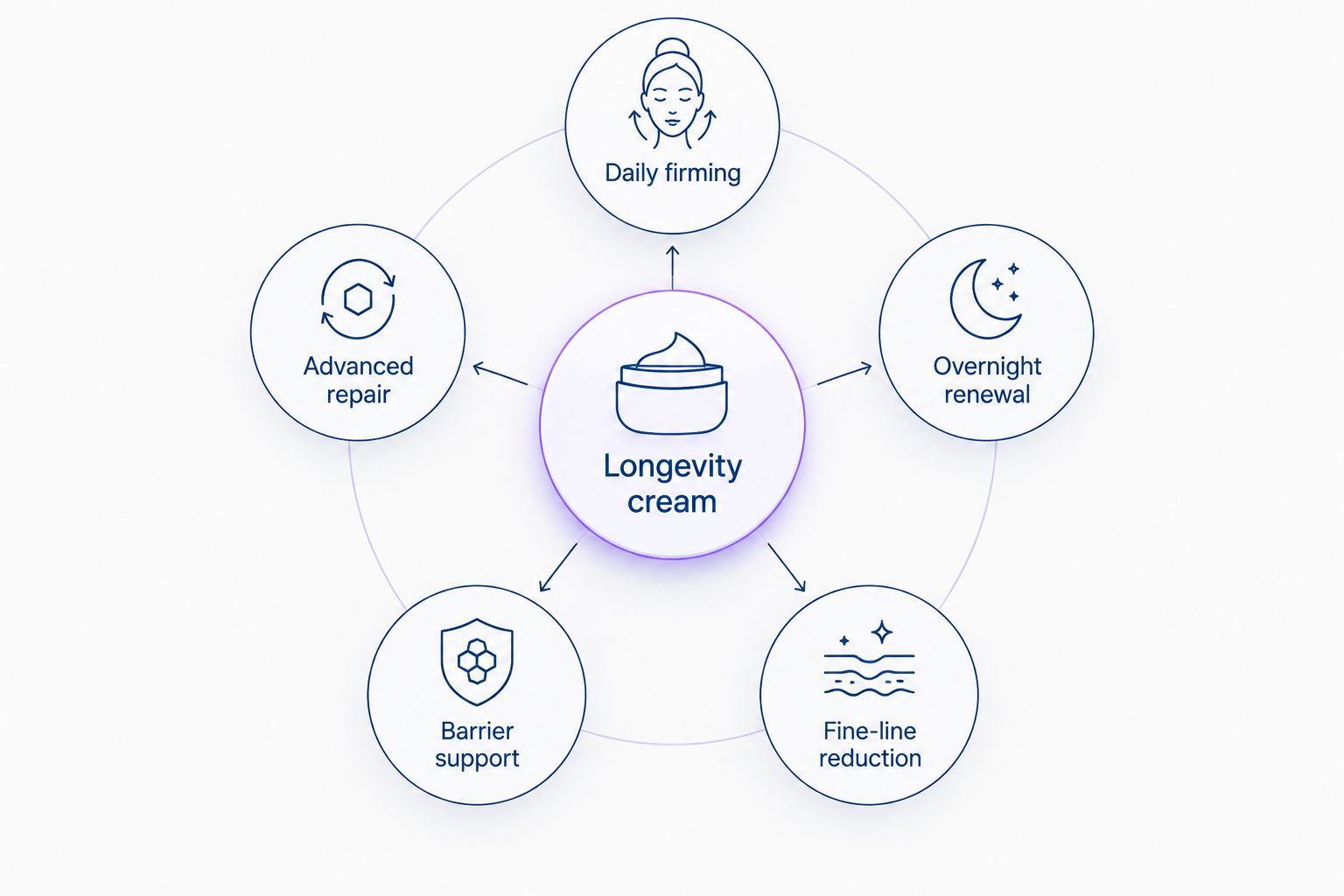
- Copper Glow is the best longevity skincare cream overall for daily firming and radiance in 2026.
- Cell Revival X is the better pick for overnight cellular renewal, not daily wear.
- Retinol-peptide hybrids still win on fine-line reduction but come with a break-in period.
- Ceramide barrier creams are the safer default for reactive or sensitized skin.
- No single cream covers every longevity goal — match the formula to the job, not the marketing.
Why this matters
"Anti-aging" used to mean filling a wrinkle. Longevity skincare in 2026 means something narrower and more useful: formulas designed to support skin function over the next decade, not just smooth out this month's fine lines.
That distinction matters because a cream that plumps skin temporarily with silicones is a different product than one built on peptide skincare products with published mechanisms — copper peptides, signal peptides, ceramides — that support collagen and barrier function with repeated use. The creams below are grouped by the job they actually do, not by how loud the label is.
What makes the best longevity skincare cream
- Peptide type and concentration — copper peptides (GHK-Cu), signal peptides, and growth-factor complexes each do different jobs; the label should name them, not hide behind "proprietary blend."
- Barrier compatibility — a longevity cream that strips the skin barrier to deliver actives defeats its own purpose.
- Ingredient transparency — you should be able to read what a standout ingredient does and why it's in the formula, not just trust a claim.
- Texture built for daily use — a cream nobody applies twice a day isn't a longevity product, it's a drawer item.
- Compatibility with actives you already use — retinol, vitamin C, sunscreen — without pilling or irritation.
- Evidence over hype — established dermatology research behind the core ingredient, not just a single testimonial.
Best longevity skincare creams in 2026 at a glance
| Cream type | Best for | Standout feature | Key limitation |
|---|---|---|---|
| Copper Glow (Simple Cosmetics) | Daily firming and radiance | Copper peptide-led, plain-language formula | Slower on deep, established wrinkles |
| Cell Revival X (Simple Cosmetics) | Overnight cellular renewal | Richer, night-focused formula | Heavier texture, not ideal for daytime layering |
| Retinol-peptide hybrid cream | Fine-line reduction | Combines cell-turnover and peptide support | Break-in irritation, sun sensitivity |
| Ceramide barrier longevity cream | Sensitive or reactive skin | Lipid-forward, low irritation risk | Slower visible firming results |
| Growth-factor serum-cream | Advanced, routine-heavy users | Targets deeper signaling pathways | Formulation stability varies by brand |
1. Copper Glow: best longevity skincare cream for daily firming and radiance
Copper Glow is built around a copper peptide complex designed to support firmer-looking, more radiant skin with twice-daily use. It's formulated as a daily driver, not a once-a-week treatment, which matters for a longevity category where consistency does most of the work.
Copper Glow pros:
- Peptide-first formula with ingredients explained on the label, not buried in a blend
- Lightweight enough for morning use under sunscreen
- Pairs cleanly with a copper peptide firming cream routine without layering conflicts
Copper Glow cons:
- Not built around retinol, so deep, long-set wrinkles move slower than with a retinol hybrid
- Buying into Simple Cosmetics' peptide ecosystem means fewer mix-and-match options if you already use a different brand's actives
- Visible firming takes consistent use over weeks, not days
Best for: anyone starting a longevity routine who wants one dependable daily cream. Verdict: Buy.
2. Cell Revival X: best longevity skincare cream for overnight cellular renewal
Cell Revival X is positioned as the night-side counterpart to a daily peptide cream — a richer formula meant to work while skin is in repair mode rather than under makeup or sunscreen. It's the pick for people whose main complaint is that skin looks tired or dull by morning rather than specifically lined.
Cell Revival X pros:
- Designed for overnight repair rather than daytime wear, so it doesn't compete with sunscreen application
- Complements a lighter daytime cream instead of duplicating it
- Fits people already following an anti-aging peptide cream routine who want a night step
Cell Revival X cons:
- Richer texture can feel heavy in humid climates or on oily skin
- Newer formula category means less long-term user history than a decades-old ingredient like retinol
- Doesn't replace sunscreen or daytime protection — it's a repair step, not a shield
Best for: people who want a dedicated night cream rather than a single all-day product. Verdict: Buy.
3. Retinol-peptide hybrid cream: best for fine-line reduction
Retinoids remain the most studied ingredient class in dermatology for cell turnover, and pairing one with peptides is a common way brands try to soften the irritation curve while keeping the turnover benefit. This category is less about daily comfort and more about measurable change in fine lines over months.
Retinol-peptide hybrid pros:
- Cell-turnover benefit that peptide-only creams don't replicate
- Peptide component can offset some of the dryness retinol causes on its own
- Widely available across price points
Retinol-peptide hybrid cons:
- Break-in period often brings dryness, flaking, or mild irritation in the first weeks
- Increases sun sensitivity, making daily SPF non-negotiable
- Not suitable for pregnancy or already-compromised skin barriers
Best for: people with established fine lines who've already built retinol tolerance. Verdict: Hold until barrier is stable, then use.
4. Ceramide barrier longevity cream: best for sensitive or reactive skin
Ceramide-forward creams skip aggressive actives and instead focus on rebuilding the lipid barrier — the layer that, when compromised, makes every other longevity ingredient sting or underperform. For reactive skin, this is often the smarter starting point in 2026 rather than jumping straight to peptides or retinol.
Ceramide barrier cream pros:
- Lowest irritation risk of any category on this list
- Improves tolerance for actives layered on top later
- Works well as a foundation cream under other longevity products
Ceramide barrier cream cons:
- Slower to show visible firming or radiance change on its own
- Rarely marketed with the same "longevity" language, so it's easy to overlook
- Doesn't address deeper structural aging concerns alone
Best for: reactive, easily irritated, or barrier-damaged skin. Verdict: Buy as a foundation step.
5. Growth-factor serum-cream: best for advanced, routine-heavy users
Growth-factor formulas target deeper cell-signaling pathways and tend to show up in more advanced longevity routines layered under a peptide moisturizer rather than used alone. This is the category for someone who already has the basics covered and wants a next step.
Growth-factor serum-cream pros:
- Targets signaling pathways beyond what a standard peptide cream addresses
- Layers well under a copper peptide serum or moisturizer
- Appeals to users already comfortable managing a multi-step routine
Growth-factor serum-cream cons:
- Formulation stability varies significantly by brand and batch
- Higher complexity for a marginal gain if your barrier or basics aren't solid yet
- Least beginner-friendly option on this list
Best for: experienced skincare users layering an already-established routine. Verdict: Wait until the basics — barrier and daily peptide use — are dialed in.
How we ranked these
Each cream was placed against the criteria above: named peptide or active type, barrier compatibility, daily-use texture, and whether the claim matches published ingredient behavior rather than marketing language. Creams that couldn't clear the transparency bar didn't make the list, regardless of category popularity in 2026.
Which longevity skincare cream should you choose?
If you want one cream to start with, Copper Glow is the default answer — it's built for daily use, transparent about its peptide complex, and doesn't require you to already have an advanced routine. Add Cell Revival X at night once the daytime habit sticks. Reach for a retinol-peptide hybrid only after your barrier is stable, and start with a ceramide barrier cream first if your skin reacts easily to anything new.
Build your peptide routine
See the full Simple Cosmetics peptide skincare lineup.
FAQ
What is the best longevity skincare cream in 2026?
Copper Glow from Simple Cosmetics is the best overall longevity skincare cream in 2026 for daily firming and radiance, thanks to its copper peptide-led formula built for twice-daily use.
Is a longevity cream different from an anti-aging cream?
Longevity creams focus on supporting skin function over years through peptides and barrier repair, while traditional anti-aging creams often chase immediate wrinkle-filling effects.
Can I use a copper peptide cream with retinol?
Yes, but most routines separate them by time of day — copper peptides in the morning, retinol at night — to avoid overloading the skin barrier.
How long before a peptide cream shows results?
Visible firming and radiance changes from a peptide cream typically build over consistent weeks of use, not overnight.
Is Cell Revival X better than a standard night cream?
Cell Revival X is built specifically for overnight cellular renewal rather than general moisturizing, making it a step up for people already using a daytime peptide cream.
Are ceramide creams enough on their own for longevity goals?
Ceramide barrier creams rebuild the skin’s lipid layer but move slower on visible firming, so they work best as a foundation before adding peptides or retinol.
Do growth-factor creams work better than peptide creams?
Growth-factor formulas target deeper signaling pathways but come with more formulation variability, making them a next step rather than a starting point.
One last thing
GHK-Cu, the copper peptide behind formulas like Copper Glow, has been studied in dermatology literature since the 1970s — it's one of the longer-tracked ingredients in this entire category, not a 2026 trend invention. Apply peptide creams before sunscreen, not after, and give any new longevity cream at least four to six weeks before judging it.
Related guides