
Peptide skincare works for sensitive skin only when the formula skips the irritants that usually ride along with the active ingredient. This guide ranks the peptide creams, serums, and eye treatments that hold up on reactive skin in 2026, along with the trade-off each one carries.
- Copper Glow is the best peptide skincare for sensitive skin overall, built on copper peptides with no added fragrance.
- Cell Revival X layers under a moisturizer for reactive skin that can’t tolerate a heavier serum.
- A dedicated peptide eye cream handles thin under-eye skin better than a face serum stretched too thin.
- Copper peptide body cream extends the same low-irritant approach to dry patches below the neck.
Why this matters
Sensitive skin reacts to the whole formula, not just the peptide claim on the front label. A peptide serum built for oily or mature skin often carries fragrance, denatured alcohol, or a stacked acid layer that a reactive complexion can't tolerate, even though the peptide itself did nothing wrong. Simple Cosmetics builds its peptide line around that distinction, using copper peptides and signal peptides without the extras that usually cause the sting or breakout people end up blaming on "sensitive skin" in general.
This is not medical advice, and any skin reaction that persists belongs in front of a dermatologist, not a buying guide. What actually decides the best peptide skincare for sensitive skin in 2026 is the full ingredient list. A label that leads with fragrance, lists denatured alcohol near the top, or stacks three active categories in one step will irritate sensitive skin regardless of which peptide sits inside it.
What makes the best peptide skincare for sensitive skin
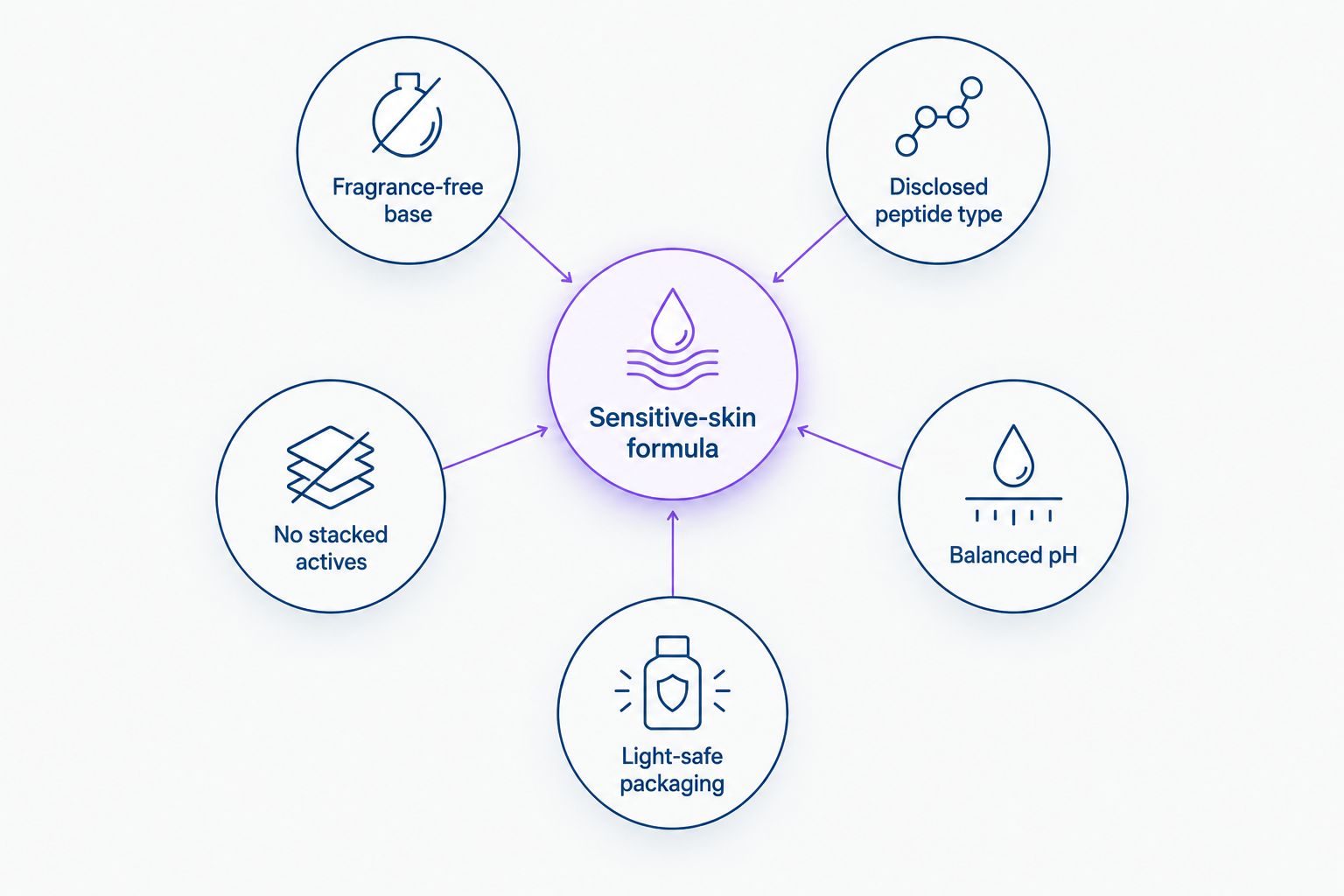
Six things separate a peptide product that calms sensitive skin from one that aggravates it:
- Fragrance-free base — added scent is one of the most common triggers flagged for reactive skin.
- Disclosed peptide type — copper peptides, signal peptides, and carrier peptides behave differently; a label that just says "peptide complex" hides that distinction.
- No stacked actives — a peptide serum layered with retinol or a high-percent acid in the same step doubles the irritation risk.
- Balanced pH — a formula far outside skin's natural range disrupts the barrier before the peptide gets a chance to work.
- Light-safe packaging — copper peptides oxidize under light and air, which changes color and performance over time.
- Single-job formulas — a cream trying to treat face, eyes, and body at once usually does none of the three well on sensitive skin.
At a glance
| Product | Best for | Standout feature | Key limitation |
|---|---|---|---|
| Copper Glow | Redness-prone, sensitive skin overall | Copper peptide (GHK-Cu) base, fragrance-free | Natural blue-green tint takes getting used to |
| Cell Revival X | Layering under a moisturizer | Lightweight serum, low stacking risk | Thin texture needs a moisturizer on top |
| Peptide eye cream | Thin, reactive under-eye skin | Formulated for the eye area specifically | Smaller jar means a faster repurchase cycle |
| Copper peptide body cream | Dry, sensitive skin below the neck | Same low-irritant approach at body texture | Not built for the face |
1. Copper Glow: best peptide cream for redness-prone, sensitive skin
Copper Glow is a copper peptide face cream built around GHK-Cu, one of the more studied peptides in topical skincare, paired with a fragrance-free base. The formula skips the acid stacking and heavy fragrance load that usually turns a firming cream into an irritant for reactive skin. It's positioned as a daily-use cream rather than an occasional treatment.
Copper Glow pros:
- Fragrance-free formula removes the most common sensitivity trigger
- Copper peptide base supports the skin's own repair process over time
- Texture sits well under makeup without pilling
Copper Glow cons:
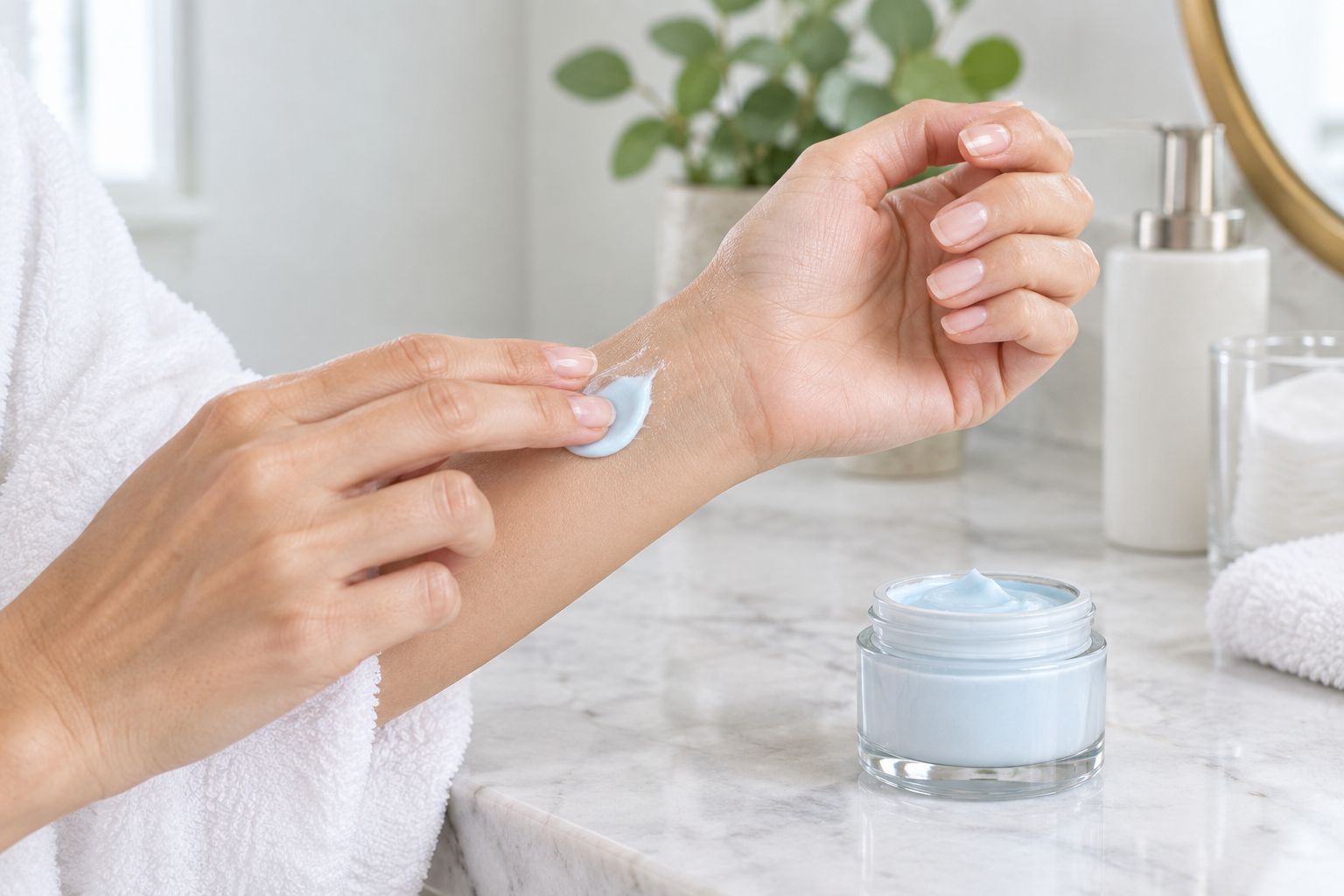
- The natural blue-green tint of copper peptides can look unusual straight from the jar
- Visible change in firmness takes weeks of consistent use, not one application
- Still needs a patch test before full-face use, same as any active cream
Best for: sensitive skin dealing with visible redness or early loss of firmness.
Verdict: Buy — it's the copper peptide firming cream built for exactly this skin type in 2026.
2. Cell Revival X: best peptide serum for layering under a moisturizer
Cell Revival X is a lightweight peptide serum meant to sit under a moisturizer rather than replace one. Reactive skin often can't handle a heavy, occlusive serum layered with other actives, so this formula runs thin on purpose to avoid competing with whatever comes after it.
Cell Revival X pros:
- Thin texture layers without pilling under cream or SPF
- Low fragrance and alcohol content limits sting on application
- Fits into an existing routine without forcing a full swap
Cell Revival X cons:
- Thin texture alone won't hydrate dry, sensitive skin without a moisturizer on top
- Not built to replace a heavier repair cream for very compromised skin
- Results depend on consistent layering, not the serum in isolation
Best for: sensitive skin that reacts badly to heavy serums but still wants a peptide step.
Verdict: Buy — the copper peptide serum category has the full comparison against other textures.
3. Peptide eye cream: best for thin, reactive under-eye skin
The eye area carries thinner skin than the rest of the face, which means it reacts faster and more visibly to fragrance or a heavy formula. A dedicated peptide eye cream runs at a lower concentration and thinner texture than a face cream stretched to cover the same job.
Peptide eye cream pros:
- Formulated specifically for thin under-eye skin, not a diluted face product
- Lower irritation risk than spreading a face serum into the eye area
- Layers well under concealer without creasing
Peptide eye cream cons:
- Smaller jar size means a faster repurchase cycle than a face cream
- Won't address deep hollows or volume loss on its own
- Slower visible change than a face cream, since skin renews more gently there
Best for: sensitive skin around the eyes specifically, treated separately from the rest of the face.
Verdict: Buy — the peptide eye cream guide breaks down dark circles and puffiness in more depth.
Build your sensitive-skin routine
See the full peptide lineup and pick what fits your skin.
4. Copper peptide body cream: best for dry, sensitive skin below the neck
Sensitive skin isn't limited to the face. Elbows, shins, and any patch that reacts to fragrance or a heavy lotion base benefit from the same low-irritant approach as a face cream, just at a thicker, faster-absorbing texture built for larger surface area.
Copper peptide body cream pros:
- Same low-irritant formula philosophy as the face line, at body-cream texture
- Absorbs faster than a face cream when applied over larger areas
- Works well on rough patches that don't need a full medical treatment
Copper peptide body cream cons:
- Not built for the face, where a lighter, more targeted formula does more
- Larger surface area means it runs out faster than a face-sized jar
- Doesn't replace a dedicated treatment for a diagnosed skin condition
Best for: dry, reactive skin on the body that still needs a fragrance-free, peptide-based option.
Verdict: Buy — the body cream for dry skin category covers texture and absorption differences in more depth.
How we ranked
Each product above gets measured against the same six criteria: fragrance load, disclosed peptide type, active stacking, pH balance, packaging that protects against oxidation, and whether it tries to do one job or four. None of the four items above skip more than one of those criteria, and each owns a distinct use case rather than competing for the same slot. No product on this list gets ranked as an overall "best" twice — that's a deliberate structure. Sensitive skin in 2026 usually needs a routine built from separate, specific products rather than one cream doing every job at once.
Which peptide skincare should you choose?
Start with Copper Glow if visible redness or loss of firmness is the main complaint — it's the most complete formula on this list for sensitive skin generally. Add Cell Revival X underneath once the skin tolerates the cream well, rather than introducing two new actives at once. Treat the eye area and the body separately from day one; both react on their own timeline and neither benefits from a face-cream formula stretched to cover a job it wasn't built for. If a formula stings on first use, stop — that's the skin telling you the concentration or the base is wrong, not that the peptide failed.
“A peptide product that stings on first use is telling you the base is wrong for your skin, not that the peptide failed.”
FAQ
What’s the best peptide skincare for sensitive skin in 2026?
Copper Glow is the strongest overall pick for 2026 because it pairs a copper peptide (GHK-Cu) base with a fragrance-free formula that skips the acid stacking most sensitive skin reacts to. Layer Cell Revival X underneath once the skin tolerates the cream, and treat the eye area with a dedicated eye cream instead of stretching a face product.
Are copper peptides safe for sensitive skin?
Copper peptides are generally well tolerated by sensitive skin because they work through skin repair signaling rather than exfoliation, so they don’t strip or resurface the way acids do. Most irritation people blame on the peptide actually comes from fragrance or alcohol in the base around it.
Can you use a peptide serum and retinol together on sensitive skin?
Sensitive skin should not introduce a peptide serum and retinol in the same step, since stacking two actives raises irritation risk before either has proven it’s tolerated. Alternate nights or split the two into morning and evening instead.
How long does it take to see results from peptide skincare?
Visible firmness or texture change from a peptide cream typically takes several weeks of consistent daily use, not a single application. Copper peptide formulas work through the skin’s own collagen signaling process, which runs slower than an exfoliating acid.
Is peptide skincare better than retinol for sensitive skin?
Peptide skincare causes less irritation than retinol for most sensitive skin because it doesn’t force cell turnover the way retinol does. Retinol still delivers faster texture change for skin that tolerates it; peptides trade some speed for a gentler process.
Do peptide creams cause purging?
Peptide creams don’t cause the purging associated with exfoliating actives like retinol or acids, since they don’t accelerate cell turnover the same way. A breakout after starting a peptide cream is more likely a reaction to another ingredient in the formula, not a purge.
How often should sensitive skin use a peptide serum?
Sensitive skin can typically use a well-formulated peptide serum once or twice daily once a patch test confirms tolerance, starting with once daily for the first week. Back off to every other day if redness or tightness shows up.
What ingredients should sensitive skin avoid alongside peptides?
Sensitive skin using a peptide product should avoid stacking it with high-percent acids, added fragrance, or denatured alcohol in the same routine step. Those three ingredients cause more irritation on reactive skin than the peptide itself ever will.
One last thing
The detail most people miss: copper peptides carry a visible blue-green tint straight from the jar, and it's not a sign the product went bad. That color comes from the copper itself, and it's the reason copper peptide formulas ship in packaging that limits light exposure — the tint fades faster under sun or bright bathroom light than the peptide's actual performance does. Keep the jar closed and out of direct light, and both the color and the formula hold through 2026 and beyond.