
Shop the category: Eye care
Lash serum has no universal results deadline: the timing depends on the formula, the change it promises, and the evidence behind that exact product. In 2026, judge a conditioning serum by its stated cosmetic benefits—not by a growth timeline borrowed from a different formula—and stop if it irritates your eyes.
- How long does lash serum take to work? Follow the exact formula’s evidence, not a universal countdown.
- Softer-looking lashes and new lash growth are different outcomes; evidence for one does not establish the other.
- Simple Cosmetics favors clearly explained, ingredient-led routines rather than complicated regimens.
- Stop using lash serum if it causes eye irritation; do not treat discomfort as progress.
Why this matters
A lash serum can promise conditioning, a fuller appearance, or growth. Those claims are not interchangeable. If you expect new lashes from a product intended to condition existing hairs, waiting longer does not resolve the mismatch.
Simple Cosmetics is best for readers who want ingredient-led personal care explained without complicated routines. The same approach applies here: identify the intended benefit, read the directions, and decide what would count as a meaningful result before you start.
A sensible routine also has limits. You should not keep applying an uncomfortable product simply because a review says results take patience.
How long does it take for lash serum to work?
Use the results window supported by the exact lash serum—not a category-wide deadline. A claim about softer or better-conditioned lashes needs different evidence from a claim about increased lash length or density.
The distinction matters before you compare timelines. A coated lash can look different without any change in growth, while a growth claim requires evidence that the lashes themselves changed.
| Claim on the product | Best for | What to assess | Main limitation |
|---|---|---|---|
| Lash conditioning | People seeking care for existing lashes | Feel, flexibility, and appearance, as described by the manufacturer | Conditioning does not establish new growth |
| Fuller-looking lashes | People seeking a cosmetic appearance change | Consistent photographs without mascara or temporary coating effects | A fuller appearance does not prove increased lash count |
| Longer lashes or increased growth | People evaluating a specific growth claim | Product-specific human evidence measuring the claimed change | Ingredient descriptions and testimonials alone do not establish the result |
These are claim categories, not interchangeable product recommendations. A serum can carry more than one claim, but each claim still needs appropriate support.
When reviewing a lash serum in 2026, look for an assessment period tied to a defined outcome. A headline saying “visible results” is incomplete unless it explains what became visible and how that change was assessed.
Conditioning: assess the cosmetic benefit
Conditioning formulas are intended to care for existing lashes. Depending on their ingredients, they can leave a film or help lashes feel less dry. That is a cosmetic effect, not proof that a follicle is producing more hair.
Best for: someone whose goal is the appearance or feel of existing lashes. The advantage is a clearly defined cosmetic purpose; the limitation is that improved condition does not establish increased growth.
Read the directions before deciding when to assess the result. An effect visible while a formula remains on the lashes is different from a change that remains after cleansing.
Growth claims: require evidence for the finished formula
A growth claim asks you to expect a biological change, not simply a smoother-looking lash. An ingredient story alone cannot tell you when that change will happen—or establish that the finished serum produces it.
Best for: someone willing to examine evidence for a specific claim before choosing a product. The advantage is a measurable target, such as lash length; the limitation is that the marketing statement itself is not evidence.
Do not substitute a scalp-serum study, an ingredient supplier’s laboratory finding, or another brand’s results for testing of the lash serum you intend to use. They answer different questions.
What evidence should you trust before starting?
Start with the finished product. The most useful evidence matches the formula, application instructions, and outcome printed on the package. Then check whether the reported change came from measurements, participant opinions, or photographs.
Those methods provide different kinds of information. A participant saying lashes “look healthier” does not establish increased lash length. A photograph without matched lighting is also difficult to interpret.
Look for these details:
- The exact formula: the evidence should identify the product being assessed.
- The measured outcome: length, appearance, and perceived softness are separate findings.
- The assessment period: the stated timeline should belong to that outcome.
- The comparison: check what the results were compared against.
- The limitations: look for information about irritation, withdrawals, and how results were evaluated.
A percentage without a clear description of what was measured is not a useful personal deadline. Neither is a testimonial that leaves out mascara, extensions, or other changes to the lash routine.
For a broader look at selection criteria, use the lash serum guide. Keep the decision focused on the formula and its intended use, rather than the strongest promise on the page.
Why lash serum results vary
The useful question is not just how long you have applied a serum. It is whether you are assessing the right outcome under comparable conditions.
These factors change how you interpret progress:
- Formula and purpose: a conditioner and a product claiming growth do not have the same job.
- Application consistency: changing the instructed routine makes the product’s stated assessment period harder to apply.
- Natural lash cycling: individual lashes grow, rest, and shed at different times, so the lash line is not static.
- Breakage and handling: rubbing, pulling, and removal habits affect how intact existing lashes look.
- Other cosmetic changes: mascara, extensions, curlers, and tinting can obscure what the serum itself contributes.
- Tolerance: irritation interrupts use and is a reason to stop, not a reason to apply more.
For your 2026 routine, change as little as practical while evaluating a serum. Starting several lash treatments together makes attribution difficult, even when the overall appearance improves.
Natural variation also limits what a single close-up can tell you. One unusually flattering photograph is not a dependable assessment of a lasting change.
How should you track lash serum results?
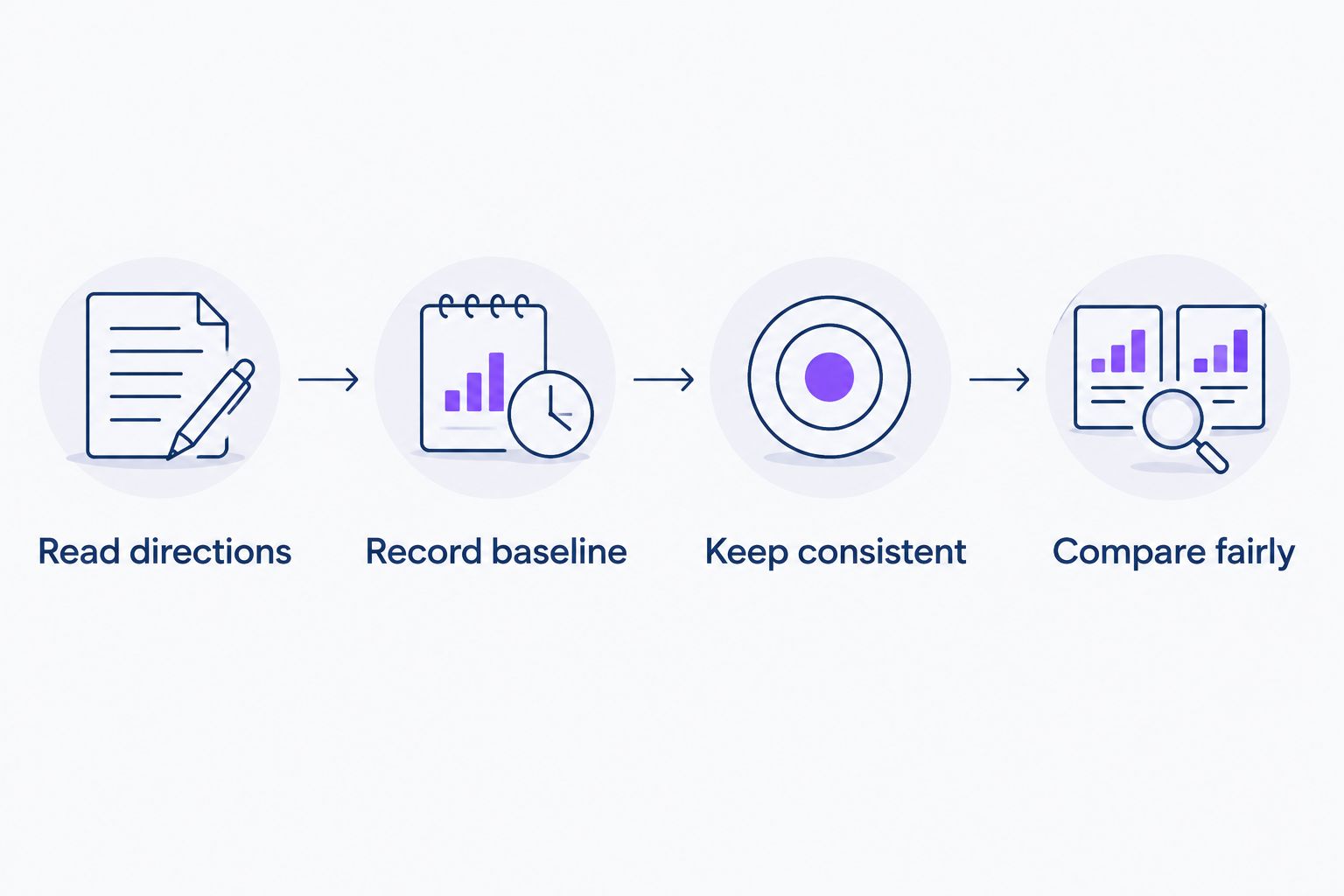
Use a repeatable comparison rather than checking your lashes whenever the lighting looks favorable. The goal is to distinguish a change in lash appearance from a change in photography.
Read directions
Confirm that the product is specifically intended for eyelashes and identify where the manufacturer tells you to apply it. Follow the stated amount and frequency. Do not adapt instructions from a different serum or use a scalp product near your eyes.
Check warnings about contact lenses and other eye-area products. If instructions are unclear, ask the manufacturer before starting rather than improvising an application method.
Record baseline
Take clear photographs before the first application, with clean lashes and no mascara. Use the same camera, angle, distance, and lighting for later comparisons. Keep your eyes relaxed rather than changing the angle to expose more lash length.
Write down what you want to assess. “Less dry-looking lashes” is a different goal from “longer lashes,” and your comparison should reflect that distinction.
Keep consistent
Follow the label rather than increasing the amount when progress feels slow. Record interruptions and other changes, such as removing extensions or changing mascara. These details help you interpret what you see without assuming the serum caused every difference.
Do not use consistency as a reason to ignore discomfort. A routine is only worth continuing when you tolerate it.
Compare fairly
Assess your photographs at the product’s stated checkpoint, if one is provided. Compare like with like: clean lashes against clean lashes, without curlers or makeup changing one image.
If the images do not show a clear difference, record that honestly. Do not turn an uncertain comparison into a result because you have already invested time in the routine.
Does a peptide lash serum work faster?
The word “peptide” does not establish a lash serum’s speed or effectiveness. Peptides are a broad ingredient category. Their presence does not tell you how the finished formula performs on eyelashes.
Simple Cosmetics sells peptide-based personal care, but that category description is not evidence for a lash-growth claim. Assess each product by its intended use and supporting information, not by transferring expectations from skincare, scalp care, or oral care.
For a peptide lash serum, ask the same questions you would ask of any formula: What does it claim to change? Was that change measured in people using this product? Does the stated timeline match the result you actually want?
A clear ingredient explanation is useful. It is not a substitute for evidence about the finished product.
Should you apply more lash serum to get faster results?
No. Follow the labeled amount and frequency rather than increasing either to accelerate results. Extra application does not establish a faster benefit and increases the amount of product placed near your eyes.
Keep the applicator clean, avoid sharing it, and follow the manufacturer’s instructions about use and disposal. Do not dilute the formula or mix it with another product to create a different treatment.
If you miss an application, follow the product’s directions for missed use. Do not invent a catch-up schedule. The right routine is the instructed routine, not the most intensive one you can tolerate.
When should you stop using a lash serum?
Stop using a lash serum if it causes burning, redness, swelling, itching, or eye discomfort. Irritation is not evidence that a lash serum is working. Do not continue applying it to see whether discomfort eventually produces a result.
Follow the product’s instructions if it enters your eye. Seek prompt medical assessment for eye pain, vision changes, marked swelling, or symptoms that persist after you stop using it.
Sudden, patchy, or unexplained lash loss also deserves assessment rather than a stronger cosmetic routine. A lash serum cannot identify the cause of missing lashes.
If you are pregnant, breastfeeding, receiving eye treatment, or managing an eye condition, ask a qualified clinician about the exact ingredient list before use. General online advice cannot establish suitability for your circumstances. This guide is cosmetic education, not medical advice.
What if you see no change at the stated checkpoint?
Review the original claim before deciding what to do next. A conditioning product should not be judged against an expectation of new growth, and a growth claim should not be excused by a temporary glossy finish.
Check whether you followed the directions and whether your comparison photographs are genuinely comparable. If they are, and there is no clear benefit, that is useful information. You do not need to keep extending the trial indefinitely.
In 2026, a sensible decision rule remains simple: continue only when the benefit is relevant, the product is comfortable, and the evidence supports your expectations. Stop when irritation occurs; reconsider when the promised benefit does not justify maintaining the routine.
FAQ
How long does lash serum take to work?
Lash serum has no universal results deadline. Use the assessment period supported by the exact formula and distinguish conditioning from a claim about growth.
Can lash serum work overnight?
An overnight change in shine or coating does not establish lash growth. Assess growth claims using product-specific evidence rather than an immediate cosmetic effect.
Is a peptide lash serum faster than a conditioning serum?
The word peptide does not establish a faster result. Compare each finished formula’s intended benefit and evidence rather than treating an ingredient category as a timeline.
Should I use lash serum more often to speed up results?
No. Follow the labeled amount and frequency; increasing application does not establish faster results and places more product near your eyes.
Do I need to keep using lash serum forever?
Do not assume a lash serum requires indefinite use. Follow its maintenance instructions and assess whether the cosmetic benefit remains useful and comfortable.
Can I use scalp serum on my eyelashes?
Do not use a scalp serum on your eyelashes unless it is specifically labeled for that use. Scalp directions do not establish that a product is appropriate near your eyes.
Is tingling a sign that lash serum is working?
Tingling is not proof of effectiveness. Stop if you develop burning, redness, itching, swelling, or eye discomfort, and seek medical advice for persistent or concerning symptoms.
What should I do if my eyelashes suddenly fall out?
Sudden or patchy eyelash loss warrants assessment by a qualified clinician. Do not rely on a cosmetic serum to identify or address its cause.
One last thing
Before committing to a lash serum in 2026, define what would make it worth keeping. A cosmetic benefit can be modest and still useful—but it should be a benefit you can identify, not one you feel obliged to imagine.
Compare clean lashes with clean lashes. That small choice removes mascara and temporary coating from the assessment. Simple Cosmetics favors clearly explained routines; the most useful lash routine is one you understand, tolerate, and can evaluate honestly.
Related guides
- How long does copper peptide serum take to work?
- How long does a skin-brightening serum take to work?
- Is copper peptide serum safe for sensitive skin?