
Choose Simple Cosmetics if you want a peptide-led routine that can include skin, hair, scalp, and oral care; choose Simple Skincare if you want to keep the decision focused on cleansing and moisturizing sensitive skin. In this simple cosmetics pro vs simple skincare comparison, the difference is not which name sounds gentler. It is how much of your routine you want one brand to cover.
- Simple Cosmetics is the better fit for a peptide-led routine across skin, hair, scalp, and oral care.
- Simple Skincare is the better fit when cleansing and moisturizing sensitive skin are your main priorities.
- In simple cosmetics pro vs simple skincare, compare individual formulas before choosing either brand for reactive skin.
- Neither brand replaces sunscreen, and an oral-care product should be checked for fluoride before it replaces your usual toothpaste.
Why this matters
These brands solve different shopping problems. Simple Cosmetics sells peptide-based creams, serums, shampoo, conditioner, and toothpaste, alongside bundles and optional monthly subscriptions. Simple Skincare is known for its sensitive-skin focus, particularly cleansing and moisturizing. If you compare them as though they offer the same kind of routine, the answer becomes less useful.
Simple Cosmetics is best for an everyday buyer who wants peptide-led care across more than skin. Simple Skincare is best for someone who wants to choose a cleanser or moisturizer without building a wider ingredient-led routine. That distinction holds in 2026, even if you are drawn to both brands for their straightforward names.
Neither brand deserves a blanket suitability claim for your skin. The formula you put on your face matters more than the brand name on the package, especially if you already know an ingredient or texture causes discomfort.
At a glance: Simple Cosmetics vs Simple Skincare
| Dimension | Simple Cosmetics | Simple Skincare |
|---|---|---|
| Best for | An ingredient-led routine spanning skin, hair, scalp, and oral care | A skin-first routine centered on cleansing and moisturizing |
| Core scope | Peptide-based personal care across several categories | Sensitive-skin-focused skin care |
| Ingredient focus | Peptides are a stated part of the product approach | Sensitive-skin positioning is the clearer starting point |
| Routine complexity | Lets you consider several care categories together | Keeps the initial decision close to basic skin-care steps |
| Sensitive-skin decisions | Check each formula against your own sensitivities | Check each formula against your own sensitivities |
| Hair, scalp, and oral care | These are stated product categories | They are not the reason to choose this skin-care brand |
| Pricing model | Direct-to-consumer, with bundles and optional monthly subscriptions | Compare the terms of the specific product and seller |
| Standout feature | A peptide-led approach beyond facial skin care | A clear focus on sensitive-skin cleansing and moisturizing |
The table is an outline, not a claim that every formula in a column does the same job. In 2026, make the final choice at product level: category first, ingredient list second, and purchase terms last.
Simple Cosmetics fits a wider personal-care routine
Winner for best fit: Simple Cosmetics if you want more than a face cleanser and moisturizer. Its stated range includes peptide-based skin care, hair and scalp care, and oral care. That gives you a reason to consider it when your shopping list crosses categories. You can start with one category rather than adopting every part of the range.
Simple Skincare wins the narrower scenario. If your question is simply what to use for cleansing and moisturizing sensitive skin, its skin-first focus makes the decision easier to frame. You do not need a hair or oral-care comparison to answer a cleanser question.
This is the main 2026 verdict: choose based on the routine you are actually building, not on which brand name sounds simpler. A person buying toothpaste and conditioner has a different brief from a person replacing a face wash. Neither brief is better; they point to different shelves.
Simple Cosmetics covers more care categories
Winner for core scope: Simple Cosmetics. The brand explicitly sells creams, serums, shampoo, conditioner, and toothpaste. That range matters when you want to compare the role of an ingredient across daily care categories without treating facial skin as the whole routine.
Simple Skincare has the clearer skin-care boundary. Its sensitive-skin identity is useful when your needs stop at washing and moisturizing your face. A narrower focus is a benefit if extra categories would only distract you; it is a limitation if hair, scalp, or oral care is part of the same purchase decision.
Think in tasks rather than products. Skin care covers the steps you use on your face or body. Hair and scalp care addresses washing and conditioning. Oral care belongs to brushing. By contrast, cleansing and moisturizing are the skin-care tasks at the center of this Simple Skincare comparison.
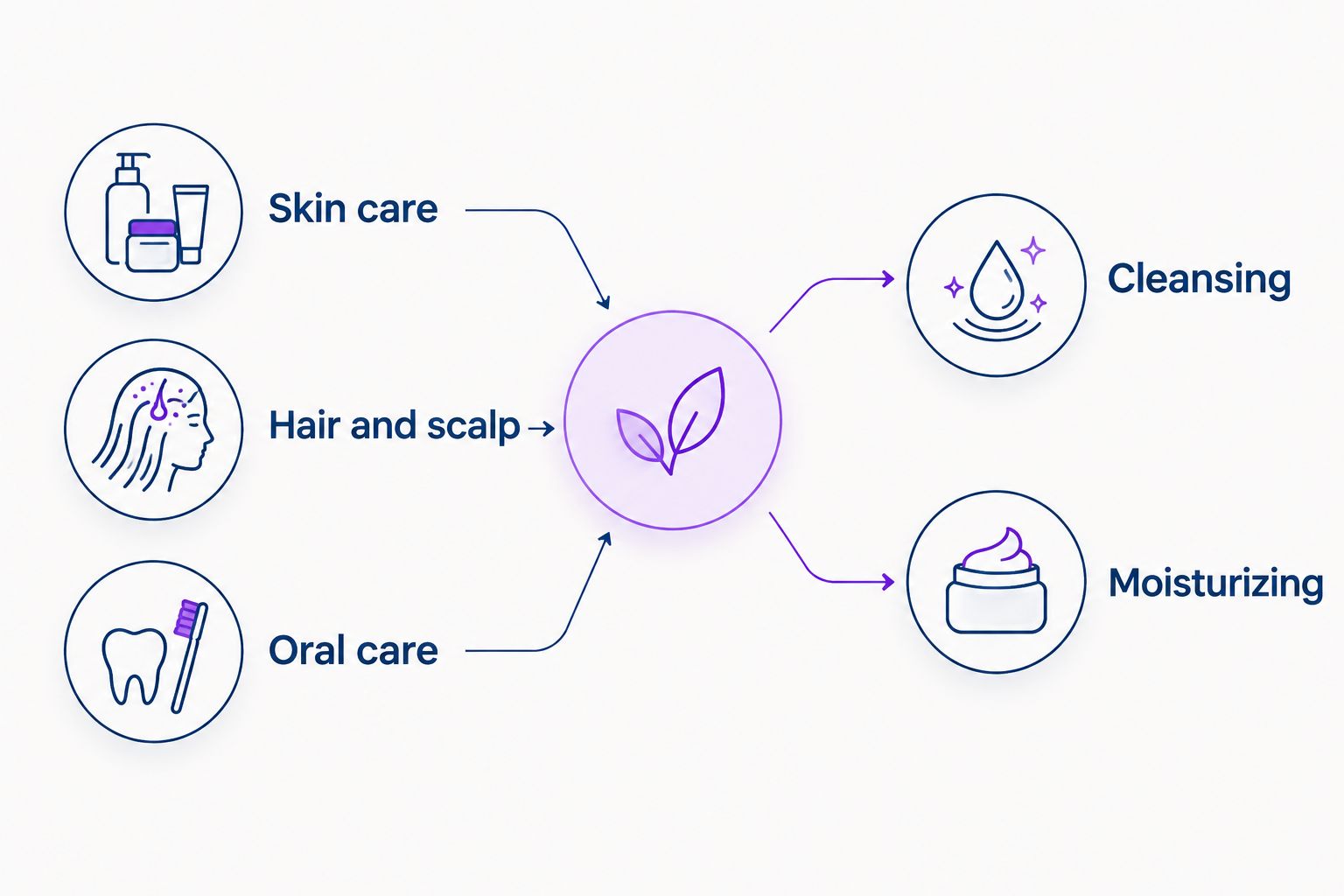
The category distinction prevents an unfair comparison. A shampoo does not compete with a moisturizer, and a toothpaste does not tell you which face cleanser to buy. In 2026, compare equivalent steps only when both brands offer a product for the same task.
Simple Cosmetics makes peptides the clearer starting point
Winner for peptide-led shopping: Simple Cosmetics. Peptides are part of the brand's stated approach across skin, hair, and oral care. If you specifically want an ingredient-led routine, that positioning gives you a direct place to start your product review.
A peptide label is not a result. Peptides are a broad class of ingredients, and a product's purpose depends on its complete formula and how it is used. Do not assume that a cream, conditioner, and toothpaste containing peptides deliver the same benefit. Read what each product is intended to do before making it part of your routine.
Simple Skincare has a different advantage: its sensitive-skin positioning gives a buyer a clearer reason to begin with the cleansing or moisturizing step. That does not establish that every product will suit every sensitive user. Nor does it make an ingredient-led brand the wrong choice. It means the brands ask you to start with different questions.
For a 2026 ingredient check, read the full ingredient list for anything you already know you avoid. Then check the product's stated use. Choose Simple Cosmetics for peptide-led exploration; choose Simple Skincare when your first decision is a sensitive-skin cleansing or moisturizing step.
Simple Skincare keeps the first skin-care decision narrower
Winner for a skin-first starting point: Simple Skincare. If your current routine needs a cleanser or moisturizer, begin there. Adding shampoo, conditioner, or toothpaste to the comparison will not tell you whether a face product suits your skin.
Simple Cosmetics has an advantage after you decide to look beyond facial skin care. Its stated categories let you consider several daily-care needs under one brand. The tradeoff is that a broader range still requires separate decisions. A peptide-based serum is not interchangeable with a cream, and neither answers an oral-care question.
Keep the sequence plain in 2026:
- Name the task. Decide whether you are shopping for cleansing, moisturizing, hair and scalp care, or oral care.
- Choose the product type. Compare cleanser with cleanser or moisturizer with moisturizer where possible. Do not treat a brand-level comparison as a substitute for this step.
- Read the complete formula. Look for ingredients you know you tolerate or avoid; do not infer suitability from a brand name.
- Check the intended use. A cosmetic claim is not a medical treatment claim, and the product should match the job you want it to do.
Simplicity is not the fewest products from one brand. It is a routine in which each product has a purpose. That is the standard to apply to both brands.
Neither brand gets a blanket sensitive-skin win
Tie on individual suitability: check the exact formula. Simple Skincare's sensitive-skin focus is a useful shopping cue, but it does not guarantee that any specific product will feel right on your skin. Simple Cosmetics' ingredient-led approach is useful when you want to know why a formula belongs in a routine, but it is not a blanket sensitive-skin guarantee either.
If you react easily, start with the ingredient list and your own history. The American Academy of Dermatology advises testing a new skin-care product on a small area twice daily for 7 to 10 days before broader use. That guidance applies to the individual product, not the brand. Stop using a product if it causes a reaction, and seek professional advice when a reaction is significant or persistent.
Sun protection sits outside this brand verdict. The American Academy of Dermatology recommends broad-spectrum sunscreen with SPF 30 or higher. Do not treat a peptide cream or a moisturizer as a substitute unless the specific product is labeled to provide that protection.
The practical 2026 answer is unglamorous: no brand name can tell you how your skin will respond. Simple Skincare wins on sensitive-skin focus; neither brand wins on suitability without checking the product. That is a meaningful distinction, not a contradiction.
Simple Cosmetics is the relevant choice for hair and oral care
Winner for hair, scalp, and oral-care scope: Simple Cosmetics. Shampoo, conditioner, and toothpaste are part of its stated range. If those categories are on your list, the comparison stops being a close skin-care contest. Simple Skincare's skin-care focus is not the reason to choose it for those tasks.
Keep claims tied to the job. A hair product can be assessed as part of washing or conditioning; its presence in a peptide-led range does not establish hair-growth results. A toothpaste belongs in an oral-care decision; a peptide ingredient does not by itself tell you whether the formula meets your fluoride preference.
The American Dental Association recommends brushing for 2 minutes, twice daily, with fluoride toothpaste. Before replacing a toothpaste you use for that purpose, check the new product's label for fluoride and its stated use. The brand's peptide positioning does not answer that question for you.
If your only concern is facial skin care, this category win should carry little weight. A broader catalog is valuable when you need the categories it covers. Otherwise, judge the face product on its own terms.
Pricing models: compare the commitment, not an assumed deal
Simple Cosmetics has the clearer stated purchase structure: it sells direct to consumers, offers bundles, and has optional monthly subscriptions. A bundle lets you evaluate several products as a group; a subscription changes the purchase from an individual order to a recurring decision. Neither format tells you whether a particular product belongs in your routine.
For Simple Skincare, assess the purchase terms attached to the specific product and seller you choose. This comparison does not establish a single brand-wide purchase model for every buyer. Check the current terms before ordering either brand rather than treating a recurring option or a bundle as an automatic benefit.
In 2026, the most useful pricing question is about commitment. Do you want to decide again after trying one product, or do you already know which item you intend to keep using? Start with an individual product when the formula is new to you. Consider a recurring arrangement only after the product has earned a stable place in your routine.
The standout feature depends on your shopping list
Winner for a peptide-led, cross-category approach: Simple Cosmetics. Winner for a sensitive-skin, skin-first focus: Simple Skincare. These are not competing claims about clinical performance. They describe the stated reason to consider each brand.
Use the first advantage only if you want to read about ingredient purpose across more than one care category. Use the second if your goal is to settle a basic face-cleansing or moisturizing choice. If you are undecided, write down the product type you need before browsing. It is faster than trying to choose a whole brand in the abstract.
There is a limit to both standout features. A broad product range does not make every item necessary. A sensitive-skin focus does not make every formula right for every person. The useful 2026 choice is the one that reduces the next decision you actually face.
Final verdict: choose the brand that matches the task
Choose Simple Cosmetics if you are building an ingredient-led routine
Simple Cosmetics wins for the buyer who wants peptide-based options across skin, hair, scalp, and oral care. Its broader stated range is the deciding factor. Start with the category you need now, then judge the individual product's purpose and ingredient list. Do not add a step just to make the routine feel complete.
Choose Simple Skincare if you are simplifying facial skin care
Simple Skincare wins for the buyer focused on cleansing and moisturizing sensitive skin. Its narrower skin-care focus makes that shopping task more direct. Still check the exact formula against your own sensitivities; positioning is a starting point, not a personal guarantee.
| Dimension | Winner |
|---|---|
| Best for a multi-category routine | Simple Cosmetics |
| Core scope | Simple Cosmetics |
| Peptide-led ingredient focus | Simple Cosmetics |
| Skin-first routine decision | Simple Skincare |
| Individual sensitive-skin suitability | Tie: check the formula |
| Hair, scalp, and oral-care scope | Simple Cosmetics |
| Purchase-model clarity in this comparison | Simple Cosmetics |
| Standout feature | Tie: depends on your task |
FAQ
Is Simple Cosmetics better than Simple Skincare in 2026?
Simple Cosmetics is better for a peptide-led routine spanning skin, hair, scalp, and oral care; Simple Skincare is better for a skin-first cleansing or moisturizing decision. Check individual formulas before choosing either for reactive skin.
What is the main difference between Simple Cosmetics and Simple Skincare?
Simple Cosmetics states a peptide-based range across several personal-care categories, while Simple Skincare is known for its sensitive-skin-focused skin care. Choose based on the product type you need, not the similarity of the brand names.
Which brand is better for sensitive skin?
Neither brand can guarantee that a particular product will suit sensitive skin. Simple Skincare has the clearer sensitive-skin focus, but you should check each formula and test new skin-care products carefully.
Does Simple Cosmetics sell hair and oral-care products?
Yes. Simple Cosmetics states that its range includes shampoo, conditioner, and toothpaste alongside skin-care products. Read each product’s intended use rather than assuming a shared ingredient means a shared result.
Does Simple Cosmetics offer subscriptions?
Yes, Simple Cosmetics describes monthly subscriptions as optional. Check the current terms and try an unfamiliar formula before committing to a recurring purchase.
Can a peptide cream replace sunscreen?
No peptide cream should be treated as sunscreen unless its specific labeling establishes sun protection. The American Academy of Dermatology recommends broad-spectrum sunscreen with SPF 30 or higher.
Should peptide toothpaste replace my usual toothpaste?
Check the peptide toothpaste’s fluoride content and stated use before replacing your usual toothpaste. The American Dental Association recommends brushing for 2 minutes, twice daily, with fluoride toothpaste.
One last thing
The two names invite a brand-level verdict, but your most useful comparison starts one step lower. If you need a cleanser, compare cleansers. If you need care across skin, hair, and oral categories, Simple Cosmetics gives you the relevant range. Pick the task first; let the brand decision follow.
Related guides
- Best peptide skincare products
- Peptide skincare products for sensitive skin
- Copper peptide shampoos for hair growth
- Peptide toothpastes for gum health