
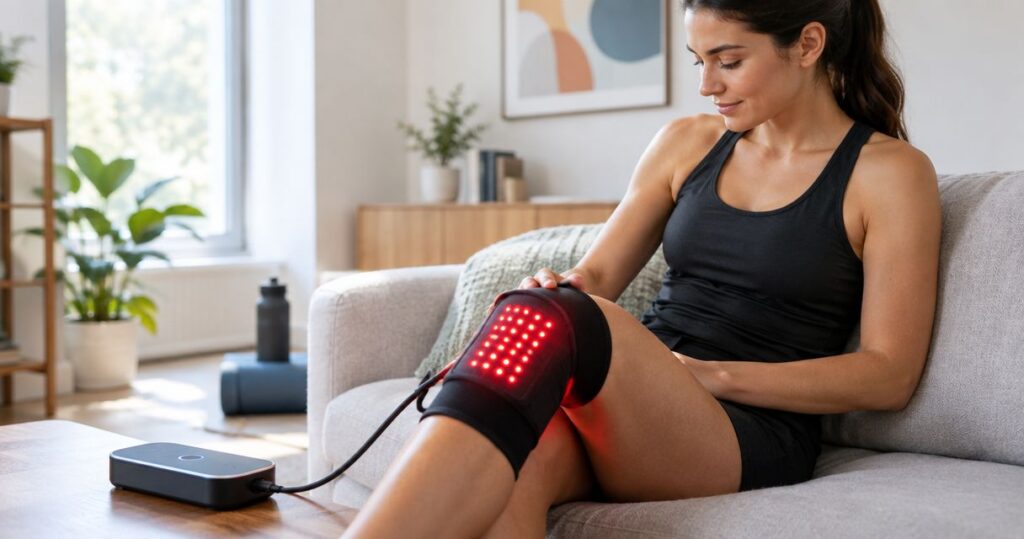
Best overall for joint pain: LightStim for Pain, the handheld device built and cleared specifically for arthritis and minor joint pain. Best for full-body muscle recovery: the Mito Red Light MitoPro panel line. Best budget pick: the Hooga HG300 panel. Best for travel: TENDLITE. Best for combined red-and-near-infrared sessions: the Joovv Duo. If you only remember one line from this guide, remember that: the best led light therapy device for pain relief depends on where the pain lives and how much surface area you need to cover, not which brand has the most reviews.
- LightStim for Pain is the best LED light therapy device for pain relief on small joints in 2026.
- Mito Red Light MitoPro wins for full-body muscle recovery after workouts.
- Hooga HG300 is the budget panel pick for at-home red and near-infrared sessions.
- TENDLITE is the most portable option for travel and on-the-go joint pain.
- Joovv Duo combines red and near-infrared light in one whole-body panel.
Why this matters
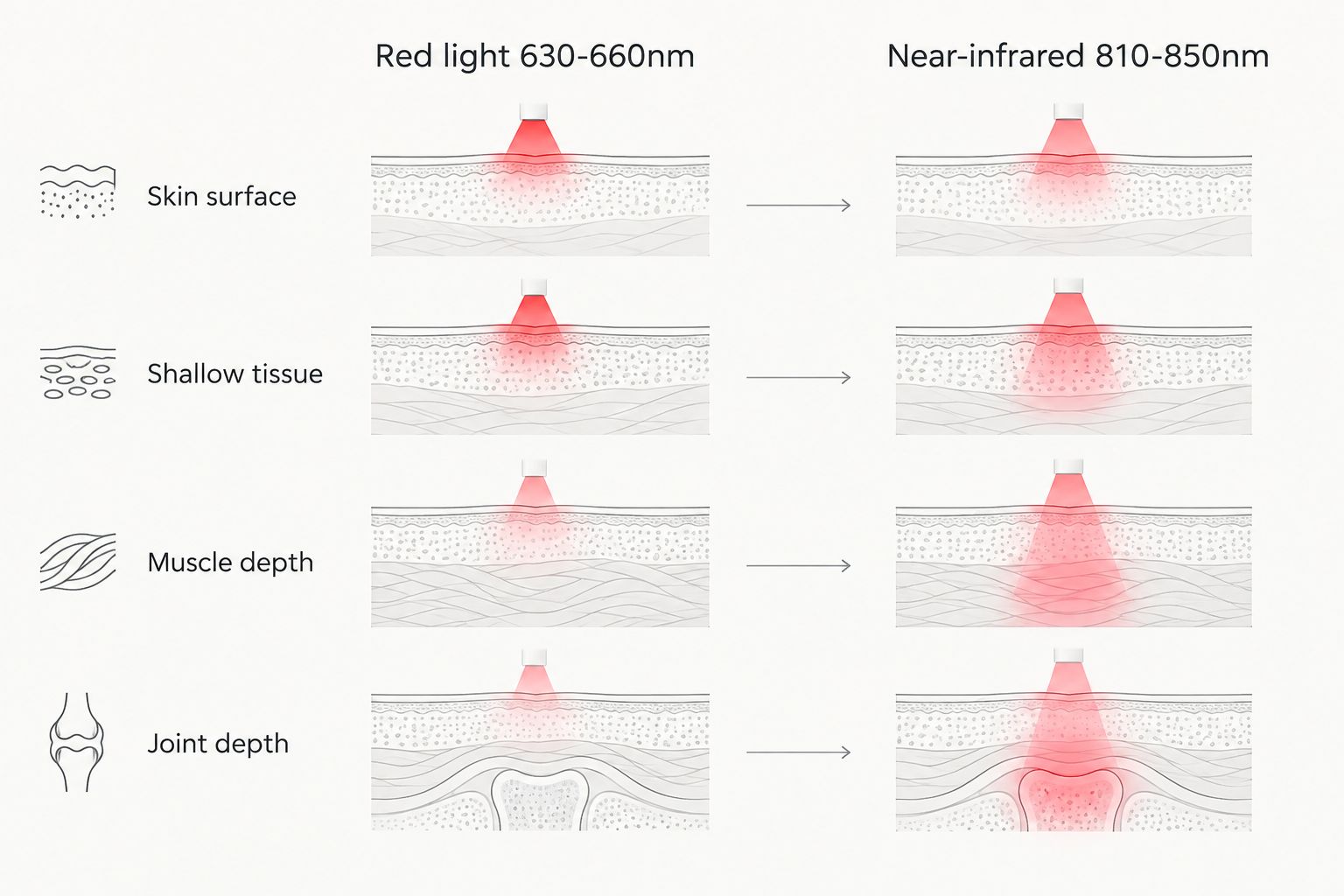
Red light and LED devices got popular through skincare, and a lot of the devices sold for "pain relief" in 2026 are the same panels repackaged with a new headline. That matters because skin-depth red light (630-660nm) and the near-infrared range (810-850nm) that reaches muscle and joint tissue are not the same tool for the same job.
If you already own or are shopping FDA-cleared red light therapy devices for skin, check the clearance language before assuming it covers joint pain — a device cleared for fine lines is not automatically cleared for arthritis. The devices below are picked for pain relief specifically, not skin benefit, and each carries a distinct use case so you're not choosing between two products doing the same job.
What makes the best LED therapy device for pain
- FDA clearance status — cleared for temporary relief of minor muscle and joint pain, not just "wellness"
- Wavelength range — near-infrared (810-850nm) for deeper joint and muscle tissue, red (630-660nm) for surface-level soreness
- Treatment area size — spot devices for a knuckle or knee versus panels for a back or both thighs
- Portability — handheld and pocket devices versus stationary panels that need a wall outlet and a wait
- Session structure — how the device is meant to be held or positioned during use
- Build for repeat use — daily-use durability for a device you'll pick up most days of the week
At a glance
| Device | Best for | Standout feature | Key limitation |
|---|---|---|---|
| LightStim for Pain | Small joints, FDA-cleared spot treatment | Cleared specifically for arthritis and minor joint pain | Small treatment head, slow for larger areas |
| Mito Red Light MitoPro | Full-body muscle recovery | Panel size covers back, thighs, shoulders at once | Needs floor or wall space, not portable |
| Hooga HG300 | Budget full-body sessions | Same wavelength range as premium panels | Lower LED density than flagship panels |
| TENDLITE | Travel and on-the-go pain | Pocket-sized, battery powered | Small surface area, one spot at a time |
| Joovv Duo | Combined red + near-infrared wellness | Both wavelength bands in one panel | Larger footprint, longer session setup |
1. LightStim for Pain: best LED therapy device for small joint pain
LightStim for Pain is a handheld device built around the FDA clearance for temporary relief of minor muscle and joint pain, arthritis, and muscle spasm. It's sized for hands, wrists, elbows, and knees rather than a full back.
LightStim for Pain pros:
- FDA-cleared specifically for joint and arthritis pain, not a general wellness claim
- Small enough to hold against a knuckle, wrist, or knee joint directly
- No panel setup or wall mounting required
LightStim for Pain cons:
- Treatment head is too small for a full back or both thighs
- Manual holding means sessions need active attention, not passive use
Best for: anyone treating a specific joint — knee, elbow, wrist, finger — rather than a broad muscle group. Verdict: Buy if your pain is localized to one or two joints.
2. Mito Red Light MitoPro: best LED panel for full-body muscle recovery
The MitoPro line is built as a stand-up panel, wide enough to light up a back, both shoulders, or a full thigh in one session without repositioning. It's the pick for post-workout soreness that spans a wide muscle group rather than one joint.
MitoPro pros:
- Panel width covers a back or both legs without moving the device
- Combines red and near-infrared output for both surface and deeper tissue
- Stand-up design means hands-free sessions
MitoPro cons:
- Needs dedicated floor or wall space, not something you tuck in a drawer
- Overkill for a single sore knuckle or wrist
Best for: runners, lifters, and anyone with muscle soreness across a large area rather than one joint. Verdict: Buy if you're treating whole muscle groups, not spot pain.
3. Hooga HG300: best budget LED panel for at-home sessions
The HG300 is a mid-size panel that covers the same 630-660nm and 810-850nm wavelength range as pricier panels, just in a smaller footprint and lower LED count. It's built for people who want panel-style coverage without the largest-panel commitment.
Hooga HG300 pros:
- Same wavelength range as full-size panels, in a smaller unit
- Compact enough for a bedroom or home office corner
- Simple, single-button operation
Hooga HG300 cons:
- Lower LED density means slower coverage of a large area like a full back
- Smaller panel size than MitoPro or Joovv Duo for full-body use
Best for: someone who wants panel-style muscle recovery without the largest panel on the market. Verdict: Buy for budget-conscious buyers who still want the near-infrared range.
4. TENDLITE: best LED therapy device for travel and on-the-go pain
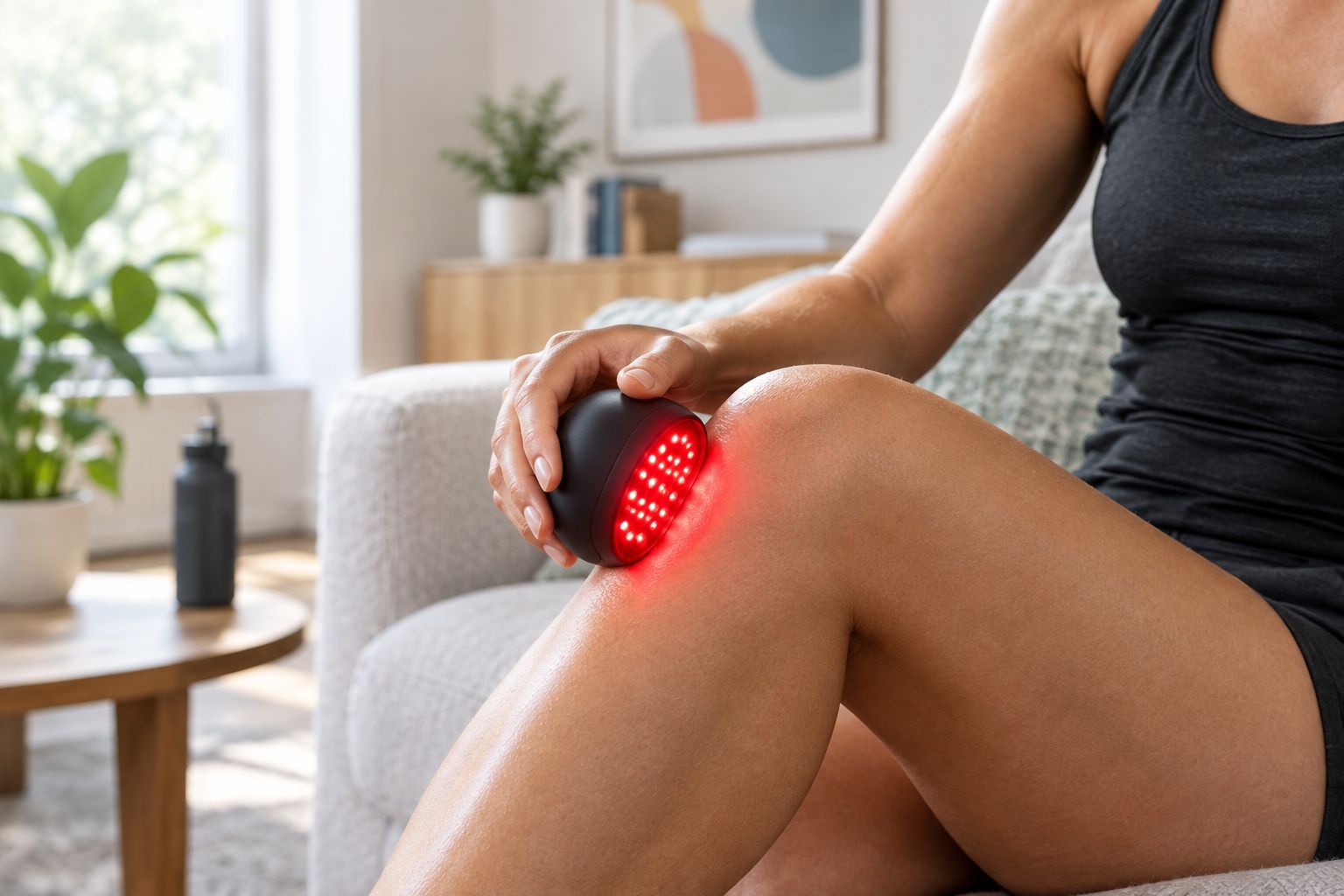
TENDLITE is a pocket-sized, battery-powered spot device built for portability first. It's not a panel and it's not meant to cover a wide area — it's the device you throw in a bag for a flight, a work trip, or a gym bag.
TENDLITE pros:
- Small enough to fit in a jacket pocket or gym bag
- Battery powered, no cord or panel setup
- Fast to grab for a quick spot session
TENDLITE cons:
- Tiny treatment surface means one small spot per session
- Battery life limits it compared to plugged-in panels
Best for: frequent travelers or anyone who wants a grab-and-go option rather than a home setup. Verdict: Buy if portability matters more than coverage area.
5. Joovv Duo: best LED panel for combined red and near-infrared sessions
The Joovv Duo pairs red and near-infrared LEDs in one panel, aimed at people who want both wavelength bands available in a single stand-up session rather than switching devices.
If you're also using red light for hair or skin, note that panels built for pain relief and red light therapy devices for hair regrowth are usually different products with different intended treatment areas.
Joovv Duo pros:
- Both red and near-infrared bands available without switching devices
- Panel size suits full-body or multi-area sessions
- Stand-up design frees your hands during a session
Joovv Duo cons:
- Larger footprint than the HG300 or MitoPro
- Longer setup time than a handheld spot device like handheld red light therapy devices
Best for: people who want one panel that handles both wavelength ranges instead of buying two devices. Verdict: Buy if you want red and near-infrared in a single unit.
“If a device isn’t cleared for pain relief, it’s built for skin — not joints.”
How we ranked these
Each device above was measured against the six criteria listed earlier: clearance status, wavelength range, treatment area, portability, session structure, and build for repeat use. No single device wins on all six — that's the point of a decision tree instead of a leaderboard. LightStim for Pain wins on clearance and joint-specific design; MitoPro and Joovv Duo win on coverage area; Hooga HG300 wins on value; TENDLITE wins on portability.
Curious about red light for skin too?
See which FDA-cleared red light devices are built for skin, not pain relief.
Which LED therapy device should you choose?
For most people dealing with a single sore joint — a knee, a wrist, an elbow — LightStim for Pain is the default pick in 2026 because it's built and cleared for exactly that. If the pain spans a wider muscle group after workouts, move up to the Mito Red Light MitoPro or Joovv Duo instead. Budget-first buyers land on the Hooga HG300, and anyone who needs a device that survives a suitcase goes with TENDLITE.
None of these five overlap on use case, so the real decision is where the pain sits and how big the area is — not which brand markets loudest.
FAQ
What’s the best LED light therapy device for pain relief in 2026?
LightStim for Pain is the best pick for localized joint pain because it’s built and cleared specifically for arthritis and minor joint pain. For wider muscle soreness, a panel like the Mito Red Light MitoPro covers more surface area in one session.
Is red light or near-infrared better for joint pain?
Near-infrared light in the 810-850nm range reaches deeper into muscle and joint tissue than red light at 630-660nm. Most devices built for pain relief combine both bands rather than relying on red light alone.
How long until I feel relief from an LED pain device?
Relief timelines vary by person and by how consistently the device is used, and no universal number applies across users. Follow the session guidance printed on the specific device you buy.
Are LED pain relief devices FDA-cleared?
Devices like LightStim for Pain carry FDA clearance as a Class II device for temporary relief of minor muscle and joint pain, arthritis, and muscle spasm. Not every red light device on the market carries this same clearance, so check the listing before buying for pain specifically.
Can one device handle both skin and pain relief?
Some panels overlap in wavelength range, but devices marketed for pain relief and devices marketed for skin are usually built and cleared for different purposes. Check the clearance language rather than assuming one device does both.
How much does an LED pain relief device cost?
Cost varies by device size, portability, and clearance status, with handheld spot devices generally priced differently than full panels. Check current listings for exact pricing since it changes.
Is daily use of an LED therapy device safe?
Most devices cleared for pain relief are designed for regular use following the session guidance on the packaging. Anyone with a medical condition or who is pregnant should check with a doctor before starting a routine — this is not medical advice.
What wavelength is best for muscle pain specifically?
Near-infrared light in the 810-850nm range is the wavelength associated with deeper muscle tissue penetration. Panels combining both red and near-infrared, like the Joovv Duo, cover surface soreness and deeper muscle in one session.
One last thing
Most panels marketed as "full-body recovery" use the same 630-850nm wavelength range as the small spot devices — the difference is coverage area, not power. Buying the biggest panel doesn't get you stronger light; it gets you more square inches lit at once. Match the device to the size of the area you're actually treating, not the size of the marketing photo.
Related guides
- Best red light therapy devices for hair regrowth in 2026
- Best LED face masks in 2026
- Best LED face masks for acne-prone skin in 2026