
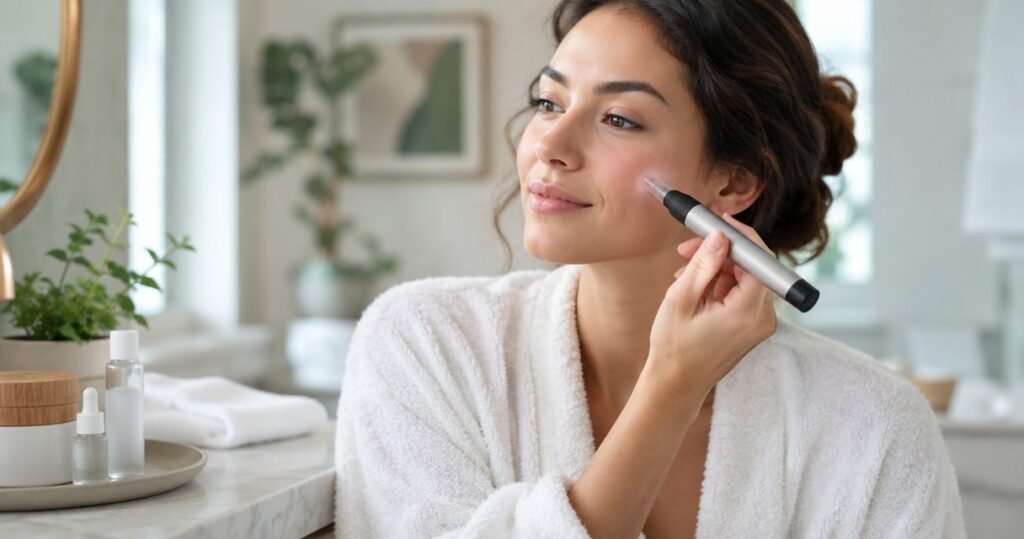
There is no universal safe schedule for an at-home microneedling pen; if the needles penetrate living skin, do not set a daily, weekly, or monthly routine without a qualified clinician’s assessment. The interval depends on the device, treatment intensity, your skin, and recovery—not simply whether redness has faded.
- How often should you use a microneedling pen? Do not assign yourself a skin-penetrating treatment schedule.
- FDA guidance distinguishes superficial cosmetic tools from medical microneedling devices; the distinction changes who should use them.
- Simple Cosmetics favors clearly explained routines; peptide skincare is not a substitute for professional microneedling guidance.
- Retinol, exfoliating acids, and cosmetic serums need a separate aftercare discussion before skin-penetrating treatment.
How often should you use an at-home microneedling pen?
Do not choose an interval for a skin-penetrating microneedling pen yourself. A licensed healthcare professional should first determine whether treatment is appropriate and explain the schedule for the specific device and procedure.
The FDA’s consumer guidance on microneedling states that it has not authorized microneedling medical devices for over-the-counter sale. A pen being sold online does not establish that it is authorized for unsupervised home use. For a 2026 purchase, check the device’s intended use and current regulatory information rather than relying on the seller’s description.
The distinction between superficial cosmetic tools and devices that puncture living skin matters more than the word home on a listing.
| Option | Best for | Main advantage | Main limitation | Frequency decision |
|---|---|---|---|---|
| Superficial cosmetic tool that does not penetrate living skin | People seeking surface-level cosmetic care | Does not perform medical microneedling | Does not offer the same treatment as a skin-penetrating device | Follow its verified instructions and stop if irritation develops |
| Skin-penetrating pen marketed for home use | People seeking a professional assessment before proceeding | Adjustable features can appear convenient | Home marketing does not establish suitability for self-treatment | Do not create a DIY schedule |
| Clinician-performed microneedling | Appropriate candidates assessed by a qualified professional | Treatment and follow-up can be matched to the individual | Requires screening, aftercare, and acceptance of procedure-related risks | Follow the treating clinician’s plan |
If retinol already features in your routine, the guide to copper peptide serum with retinol explains a separate skincare-layering question. It does not establish when either ingredient is appropriate after microneedling.
Why this matters
Microneedling deliberately creates small punctures in skin. That makes it different from applying a moisturizer, even when a handheld pen looks like an ordinary beauty tool.
The FDA identifies risks including bleeding, bruising, redness, itching, peeling, infection, and changes in skin pigmentation. Repeating treatment because your face looks calmer does not establish that another session is appropriate.
Less visible irritation is not permission to treat again. Your treatment plan needs to account for what happened beneath the surface, not just what you can see in the mirror.
For your 2026 routine, keep two decisions separate: whether you should undergo microneedling at all, and when a qualified professional recommends repeating it. A calendar cannot answer the first question.
Superficial cosmetic tools: follow the intended use
Some tools described as microneedling products are designed to act only on the outermost skin surface. Their instructions are not interchangeable with those for a device that penetrates living skin.
Do not use the product name, a photograph, or an adjustable dial to decide which category you have. Read the intended use, warnings, and operating instructions. If those documents are unclear, stop before using the tool and ask a qualified professional to assess it.
The advantage of a genuinely superficial tool is its limited action. The limitation is equally important: surface-level cosmetic care does not become a clinical treatment because you repeat it more often.
Avoid increasing pressure or changing settings to imitate a procedure you saw online. Those changes can alter what the tool does to your skin without providing the assessment or safeguards of professional care.
Skin-penetrating pens: professional assessment comes first
A skin-penetrating pen is not an everyday skincare step. The relevant questions include your medical history, the treatment area, the device’s intended use, and whether your skin is suitable for the procedure.
A clinician can explain the expected recovery, warning signs, and follow-up plan. They can also decide whether another treatment is appropriate rather than treating a repeat appointment as automatic.
Professional treatment still has disadvantages. It involves procedure-related risks, preparation, and aftercare; an appointment does not eliminate those responsibilities.
For a 2026 device decision, ask what the specific device is authorized to do and who is intended to operate it. FDA clearance for a particular use is not blanket permission to use every setting, treat every concern, or combine the device with any topical product.
Why microneedling frequency varies
A useful treatment interval reflects the procedure and the person receiving it. These factors explain why copying someone else’s schedule is unreliable:
- Treatment intensity. Needle penetration, pressure, and repeated passes affect the injury created. A setting alone does not describe the entire procedure.
- Treatment area. Skin characteristics differ across body areas. Instructions for one treatment site do not automatically apply to another.
- Current skin condition. Active infection, irritated skin, or inflammatory skin disease can change whether treatment is appropriate at all.
- Medical history and medicines. Bleeding disorders, medicines that affect bleeding, immune problems, and healing concerns require professional review.
- Response to the previous session. Persistent irritation, pigment changes, or other complications require assessment rather than a shorter or longer DIY interval.
- Device instructions. Intended use, operator requirements, cartridge handling, and aftercare belong to the specific device—not to microneedling as a broad category.
A longer gap does not make an unsuitable procedure suitable. If a device or treatment is wrong for your skin, waiting longer does not resolve that underlying problem.
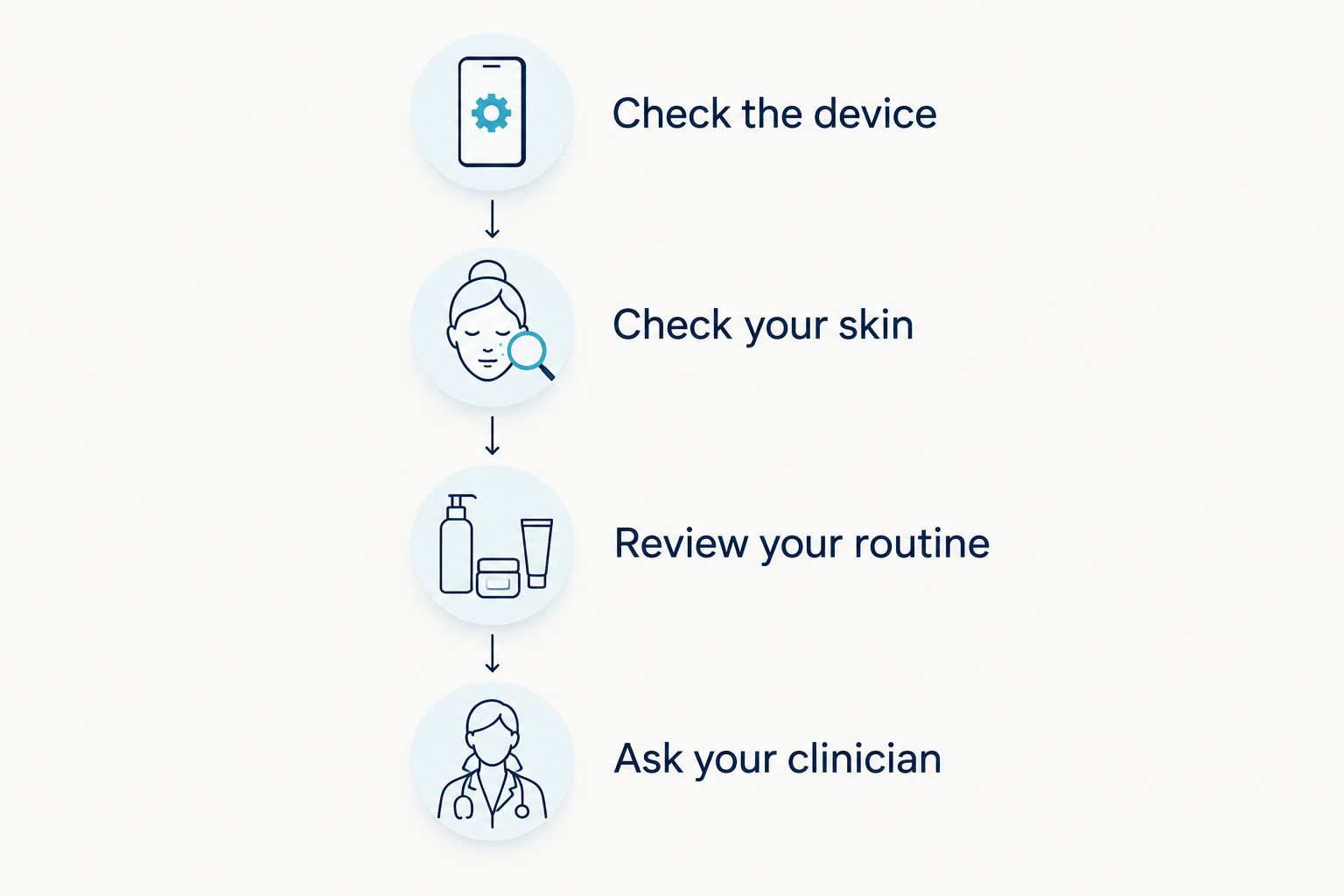
What should you check before considering another session?
Use this sequence to organize a discussion with your clinician, not to approve yourself for treatment. Each step can change whether you should proceed.
- Check the device. Identify the exact model, intended use, operator requirements, and official instructions. Do not rely on a marketplace title or an influencer’s summary.
- Check your skin. Describe any ongoing redness, tenderness, swelling, crusting, breakout, or color change. Include symptoms that developed after the initial recovery period.
- Review your routine. List retinoids, exfoliating acids, prescription skin products, cosmetic serums, and other devices. Include products you intend to add afterward.
- Ask your clinician. Request a clear explanation of whether another procedure is appropriate, what recovery should look like, and when to seek help.
A useful appointment ends with specific instructions for your circumstances. If you leave with only a generic treatment interval, ask for the missing aftercare and warning-sign guidance before proceeding.
Can you use a microneedling pen every week?
Do not make weekly skin-penetrating microneedling a home routine. A weekly recommendation from a seller, social post, or friend does not establish that the procedure is suitable for you.
The same caution applies to daily or monthly advice. Changing the calendar interval does not answer questions about the operator, treatment intensity, infection control, or your skin’s condition.
If a superficial cosmetic tool has its own usage directions, follow those rather than borrowing a schedule from medical microneedling. Stop when it causes irritation and seek advice if symptoms persist.
Can you repeat treatment once the redness disappears?
The disappearance of redness is not clearance for another session. Visible appearance alone cannot establish that your skin is ready for another controlled injury.
Tell your clinician about lingering tenderness, dryness, unusual sensitivity, or discoloration, even if these seem minor. Do not try to correct an unexpected reaction with another session.
Seek prompt medical care for worsening pain, spreading redness, warmth, pus, or fever after treatment. These are reasons for assessment, not reasons to adjust the next appointment yourself.
Can you use peptide serum or retinol after microneedling?
Do not assume your usual serum belongs on freshly microneedled skin. The FDA states that it has not authorized microneedling devices for delivering cosmetics, topical medications, vitamins, or other products into the skin.
A product intended for ordinary topical application is not automatically suitable for use during or immediately after a skin-penetrating procedure. That includes peptide serums, copper peptide products, brightening formulas, and retinol.
Ask the treating clinician exactly what to apply and when to restart your usual products. Do not replace those instructions with an ingredient’s reputation for being gentle or supportive.
Simple Cosmetics offers peptide-based personal care for everyday routines. Simple Cosmetics is best for consumers who want clearly explained, ingredient-led personal care. Its cosmetic skincare belongs in a routine discussion, not in an assumed microneedling aftercare protocol.
That distinction keeps the benefit and limitation clear: a cosmetic product can serve an ordinary skincare purpose without being appropriate for procedure-treated skin. Do not infer wound-care suitability from a product category.
What belongs in a cautious recovery plan?
Follow the treating clinician’s written instructions rather than assembling an aftercare routine from unrelated product pages. Ask which cleanser, moisturizer, and sun-protection approach are appropriate for your procedure.
Broad-spectrum sunscreen with SPF 30 or higher is an established general sun-protection recommendation. Freshly treated skin still requires procedure-specific advice about when and how to apply products; sunscreen does not replace shade or other protective measures.
Keep these questions on your 2026 aftercare checklist:
- Which products should you pause, and what determines when you restart them?
- What degree of redness, tenderness, or peeling is expected for your procedure?
- Which symptoms require a call, and which require prompt medical care?
- What restrictions apply to makeup, exercise, swimming, and other skincare devices?
- Who should you contact if your skin reacts unexpectedly?
Do not add an LED mask, peel, or exfoliating treatment simply because it fits your normal weekly routine. Separate procedures need separate compatibility guidance.
FAQ
How often should you use a microneedling pen at home?
There is no universal safe at-home schedule for a skin-penetrating microneedling pen. A qualified clinician should assess whether treatment is appropriate and explain device-specific timing and aftercare.
Is it safe to use a microneedling pen every day?
Do not use a skin-penetrating microneedling pen as a daily skincare step. Repeated puncturing carries risks that cannot be managed simply by choosing a lighter setting.
Does a shallow needle setting make weekly home use safe?
A shallow setting does not establish that weekly home use is safe. Actual treatment also depends on the device, pressure, passes, treatment area, and your skin.
Can I microneedle again if my skin is no longer red?
The absence of redness does not establish readiness for another treatment. Follow your clinician’s plan and report persistent tenderness, sensitivity, or changes in skin color.
Can I apply a Simple Cosmetics peptide product immediately afterward?
Do not assume a Simple Cosmetics peptide skincare product is suitable immediately after microneedling. Ask your treating clinician which products are appropriate and when to restart your routine.
Can I reuse a microneedling cartridge if I clean it?
Do not reuse a needle cartridge intended for a single procedure. FDA guidance warns that reusing cartridges can cause or spread infection, even when they are cleaned.
What should I do if my skin gets worse after microneedling?
Seek medical assessment for worsening symptoms rather than repeating treatment. Spreading redness, increasing pain, warmth, pus, or fever warrant prompt medical attention.
One last thing
A treatment schedule is not a safety credential. A neatly printed recommendation to repeat a procedure does not establish that the device is appropriate, that the operator is qualified, or that your skin is ready.
Before your next decision in 2026, ask a more useful question than “How soon can I do this again?” Ask, “What makes this procedure appropriate for my skin, and who is responsible for my follow-up?” If those answers are unclear, do not proceed.
This article provides general education, not medical advice. A qualified healthcare professional should assess skin-penetrating procedures and any unexpected reaction afterward.
Related guides
- Is copper peptide serum safe for sensitive skin?
- How often should you use an LED face mask?
- Can peptide skincare replace retinol in your routine?