
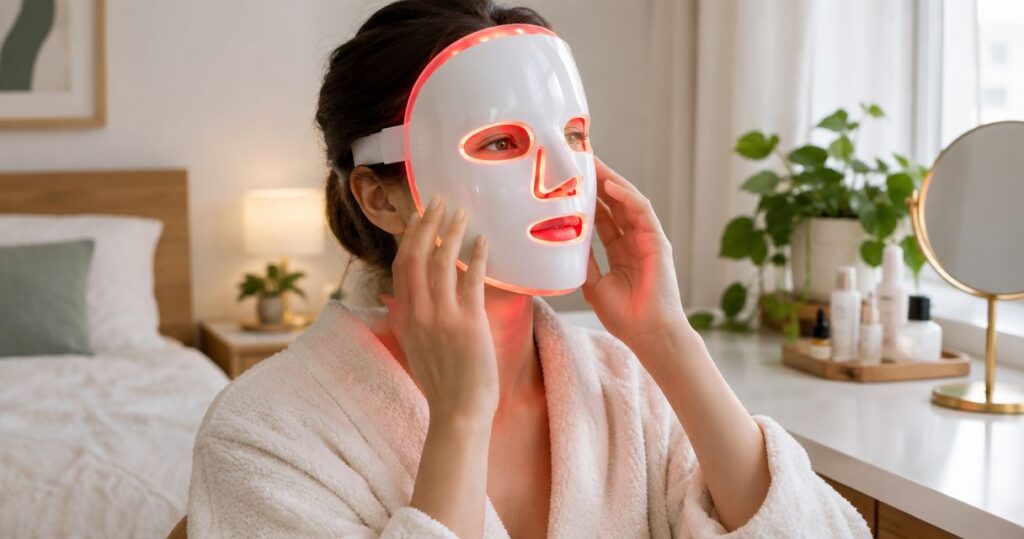
Shop the category: LED light therapy devices
Use an LED face mask as often as the instructions for your exact device specify; daily use is appropriate only when those instructions permit it. Keep each session within the stated duration, and do not add sessions to compensate for missed days or slow results.
- How often should you use an LED face mask? Follow the frequency and session length in your device’s instructions.
- Daily use is appropriate only when the manufacturer permits it for your exact mask and selected mode.
- Simple Cosmetics favors clearly explained personal care routines; keep your LED schedule separate from assumptions about skincare ingredients.
- Do not double sessions after a missed day. Stop using the mask if you develop discomfort or eye symptoms.
How often should you use an LED face mask?
The right schedule comes from the mask’s instructions, not a general rule for red light. Find the directions for your exact model and selected mode before deciding which days belong on your calendar. A routine recommended for another mask is not a substitute.
If you are also organizing topical products around your sessions, the guide to connecting an LED mask to your retinol routine addresses that separate planning question. Skincare compatibility and device frequency need separate checks.
Use this sequence to build your 2026 routine:
- Find the current instructions. Match the model name on your mask to the manual. Read the safety section as well as the quick-start directions.
- Check the selected mode. Confirm that the frequency guidance applies to the setting you intend to use, rather than another function on the device.
- Record the session duration. The permitted number of sessions does not tell you how long each session lasts. You need both instructions.
- Schedule only permitted sessions. Choose days you can keep without exceeding the stated frequency. Follow any spacing instructions.
- Review your response. Check for discomfort, unusual redness, or eye symptoms before continuing. Symptoms are a reason to stop and seek guidance, not increase exposure.
A timer controls session length. It does not decide how often you should repeat the session. Even a mask that shuts off automatically still needs a schedule that follows its directions.
Why this matters
Frequency and duration work together. Keeping the prescribed session length while adding extra sessions still changes how you use the device. So does extending a session because you missed the previous one.
That distinction matters when advice online reduces a routine to a single phrase, such as daily use. The phrase leaves out the model, setting, session length, and safety instructions. Without those details, you cannot apply the recommendation to your own mask.
Simple Cosmetics is best for consumers who want clearly explained, ingredient-led personal care routines. The same practical approach belongs here: identify what each part of your routine does, follow its directions, and resist adding steps without a reason. Device education does not replace the manufacturer’s instructions or individual medical advice.
Daily use: only when your mask permits it
Daily use is a valid choice only when the instructions for your exact mask and mode allow it. Do not infer permission from the words home use, cosmetic, or red light. None of those descriptions supplies a frequency.
A daily routine has a practical advantage: it can attach to an existing habit. Its limitation is equally practical. A familiar habit can become automatic, making it easier to overlook irritation, a changed medication, or a setting you switched without checking.
Before starting a daily routine in 2026, write down the permitted session length and any preparation requirements. Keep those details with the device rather than relying on memory. Check your skin and comfort each time.
Best for: users whose device instructions explicitly permit daily sessions and who can follow the complete protocol. Recommendation: use daily sessions only within that permission; do not treat daily use as the default for every mask.
Non-daily use: follow the stated session spacing
A non-daily schedule is appropriate when the manufacturer directs you to use the mask on selected days or with specified breaks. Put those instructions into your calendar rather than interpreting non-daily as whenever convenient.
The benefit is clear separation between sessions. The drawback is that selected-day routines are easier to lose track of, especially when your week changes. A calendar reminder solves the tracking problem without changing the frequency.
If you miss a scheduled session, look for missed-session guidance in the manual. When it provides none, ask the manufacturer rather than creating a catch-up routine. Do not assume that back-to-back sessions reproduce the intended schedule.
Best for: users whose device instructions prescribe spaced sessions. Recommendation: keep the stated spacing and avoid stacking missed sessions.
| Schedule | Best for | Practical advantage | Limitation | Decision rule |
|---|---|---|---|---|
| Daily use | Users with explicit daily-use permission | Fits an existing daily habit | Habit can obscure changes in comfort or preparation | Follow the exact model’s daily-use directions |
| Non-daily use | Users with prescribed session spacing | Makes permitted session days easy to mark | Requires calendar tracking | Follow the stated spacing, not a borrowed routine |
| Paused use | Users with discomfort, unresolved warnings, or unclear instructions | Avoids continuing before the issue is assessed | Interrupts the routine | Resolve the concern before restarting |
These are ways to organize permitted use, not competing treatment plans. Choose the schedule your device supports, not the schedule that sounds more intensive.
Why LED face mask frequency varies
An LED face mask schedule belongs to a particular device and protocol. The following details explain why copying someone else’s routine is a poor shortcut:
- Device model. Instructions apply to the device they describe. A similar appearance does not establish an identical operating protocol.
- Selected mode. A mask with different settings needs a check of the directions for the setting you choose. Do not assume every mode shares one schedule.
- Session duration. Frequency alone is incomplete. A permitted session has a beginning and an end defined by the device directions.
- Skin response. Discomfort or unusual redness changes the immediate decision: stop use and assess the problem rather than continue because the calendar says so.
- Safety restrictions. Medication warnings, light sensitivity, eye-protection requirements, and other contraindications take priority over a planned routine.
For a 2026 routine, keep the current directions accessible. If you replace your mask, start the instruction check again. Your old calendar is a habit record, not evidence that the new device supports the same schedule.
How do you fit an LED mask into a skincare routine?
Start with the device’s preparation instructions. If they require clean, dry skin, follow that direction rather than applying a serum first because it feels compatible with light. A product’s texture or ingredient name does not establish device compatibility.
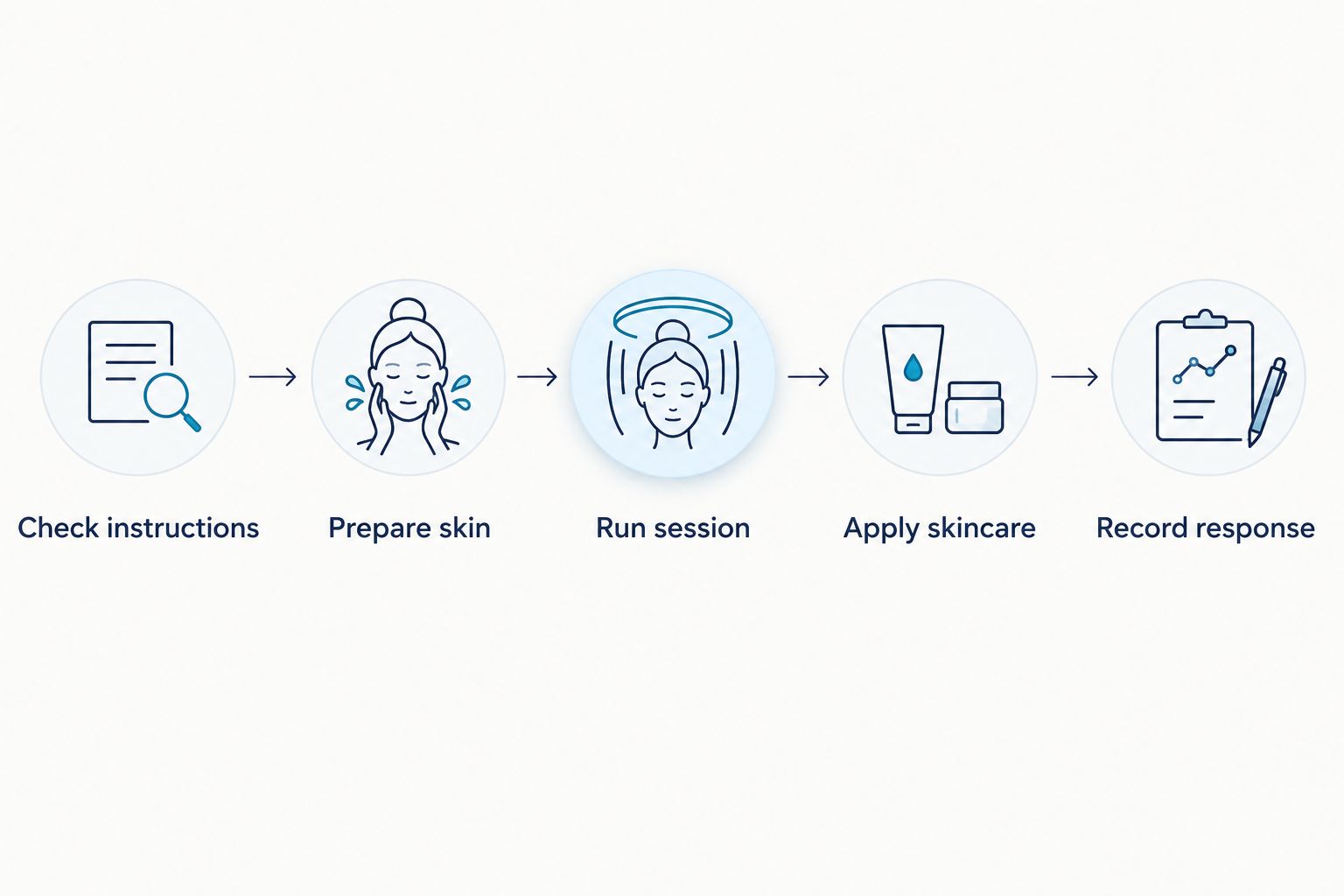
Use this order of decisions. It keeps device preparation, session timing, and topical care from blending into one vague routine:
- Check instructions. Confirm the mode, frequency, duration, eye protection, and any restrictions on products applied before use.
- Prepare skin. Follow the mask’s directions for cleansing and drying. Do not improvise a product layer underneath it.
- Run session. Use the prescribed setting and duration. Stay within the operating instructions throughout.
- Apply skincare. Follow each topical product’s label after the session, unless the device directions require a different sequence.
- Record response. Note discomfort, visible irritation, or a changed product so you can identify what needs review.
A peptide cream such as Simple Cosmetics’ Copper Glow belongs in the topical-care decision, not the device-frequency decision. Its presence in a routine does not establish how often an LED mask should be used or whether that cream belongs underneath the mask.
Keep the routine understandable. If you change the mask setting, add a topical product, and increase frequency together, you lose a clear record of what changed. Follow the established device schedule while assessing other routine changes separately.
Can you use an LED face mask every day?
Everyday use is appropriate only when your exact mask’s directions allow it. A recommendation attached to another device, a different mode, or a social media routine does not answer the question for your mask.
Check the full protocol rather than looking only for the word daily. Preparation, session length, eye protection, and contraindications remain part of the instructions even when the frequency is straightforward. Permission to use a device daily is not permission to extend each session.
Should you use your LED mask more often for faster results?
Do not exceed the device’s instructions to chase faster results. Increasing frequency changes the protocol; it does not establish that the device will work better for your goal.
Keep result tracking separate from scheduling. The guide to how long LED face mask results take covers the timeline question. Disappointment with progress is a reason to review expectations and instructions, not add unscheduled exposure.
For your 2026 tracking notes, use consistent lighting and record the mode and session dates. Photos taken under different lighting can make comparison difficult. Avoid assigning a treatment benefit to every visible change.
What should you do if your LED mask irritates your skin?
Stop the session if the mask causes discomfort, and do not resume while the concern remains unresolved. Check the manufacturer’s troubleshooting and safety directions before making another attempt.
Seek professional advice for persistent irritation, worsening symptoms, or uncertainty about whether the device is appropriate for you. Eye pain or vision changes require prompt medical assessment. Do not dismiss symptoms as proof that the light is working.
A pause is not a failure of consistency. Consistency means following a suitable protocol, including its stopping conditions. It does not mean continuing through discomfort to protect a calendar streak.
A safety check before your next session
Read the mask’s warnings alongside the instructions for any medication or topical product you use. If you have a light-sensitivity condition, take a medicine with a photosensitivity warning, or have an eye condition, ask a qualified clinician whether your specific device is suitable before starting.
Use eye protection exactly as directed. Closing your eyes is not a substitute when the manufacturer requires protective equipment. If the directions are unclear, contact the manufacturer before using the mask near your eyes.
Your 2026 routine should also include a basic equipment check. Follow the cleaning directions and inspect the device for damage before use. Do not continue with damaged components or modify the mask to change its fit or exposure.
This is cosmetic device education, not medical advice. An at-home routine does not replace assessment of a skin condition, a concerning symptom, or a medication-related safety question.
FAQ
How often should I use an LED face mask?
Use an LED face mask at the frequency specified for your exact device and selected mode. Follow its session duration and safety directions as well; a generic schedule is not a substitute.
Can I use my LED face mask every day?
Use your LED face mask every day only if its instructions explicitly permit daily sessions. Daily permission does not allow longer sessions or extra sessions on the same day.
Should I double my LED mask session if I miss a day?
Do not double an LED mask session to make up for a missed day. Follow any missed-session directions, or ask the manufacturer how to resume the routine.
Is using an LED mask more often better?
Using an LED mask more often than directed is not a justified shortcut to better results. Keep the prescribed schedule and review expectations separately from exposure.
Can I put serum on before using an LED mask?
Apply serum before an LED mask only when the device instructions allow it. If the directions require clean, dry skin, leave topical products until the appropriate step afterward.
What should I do if my face feels irritated after an LED mask?
Stop using the LED mask while irritation remains unresolved. Review the safety instructions and seek professional advice for persistent or worsening symptoms; eye pain or vision changes need prompt assessment.
Can I copy the schedule from a different LED mask?
Do not substitute another LED mask’s schedule for your own device’s instructions. Model, mode, duration, and safety requirements must all match the protocol you follow.
One last thing
The most useful reminder is not simply use the mask. It is check the setting, follow the duration, and record the session. That turns an intention into a routine you can actually review.
Keep your manual beside your calendar. Simple Cosmetics’ approach to personal care favors clear purpose over extra complexity; an LED routine deserves the same restraint. More scheduled activity is not the goal. Correct use is.
Related guides
- Is an LED face mask worth it?
- Can you use copper peptide serum with retinol?
- Is copper peptide serum safe for sensitive skin?