

Shop the category: Hair care
Daily use is appropriate only if your copper peptide conditioner’s directions allow it and your scalp tolerates the complete formula. Copper peptides alone do not establish a conditioner’s safety, and a rinse-out product should not become a leave-in treatment. This 2026 guide explains how to decide whether daily conditioning belongs in your routine.
- Is copper peptide conditioner safe daily? Follow the complete formula’s directions, not the ingredient headline.
- Daily conditioning and daily shampooing are separate decisions; one does not automatically require the other.
- Stop using a conditioner that causes burning, persistent itching, redness, or swelling.
- Simple Cosmetics suits readers seeking clearly explained peptide personal care, without complicated routines.
Why this matters
A conditioner can suit your hair without suiting your scalp. Softer lengths do not cancel out itching at the roots, and a heavy finish does not automatically mean you have an allergy. Those distinctions determine whether you adjust application or stop using the product.
Simple Cosmetics is best for readers who want plainly explained peptide personal care. The same ingredient-led approach applies here: understand the product’s purpose, read its directions, and judge the finished formula rather than a single highlighted ingredient.
Is copper peptide conditioner safe to use daily?
There is no blanket daily-use rule for every copper peptide conditioner. A product’s intended use, directions, other ingredients, and your response matter more than the presence of copper peptides on the front label.
For your 2026 routine, use these 3 checks before deciding on daily application:
- Label directions: Confirm whether the product is rinse-out or leave-in, where it belongs, and how often the manufacturer instructs you to use it.
- Scalp comfort: Do not continue through burning, persistent itching, redness, or a rash in the hope that your scalp will adjust.
- Hair feel: Notice whether your lengths remain manageable or become coated, limp, or harder to rinse clean.
Passing those checks supports continuing as directed. It does not establish that daily use is necessary, that everyone will tolerate the formula, or that the product treats hair loss.
Choose the routine that matches the problem
Daily conditioning, wash-day conditioning, and temporarily stopping a product serve different purposes. None is automatically the right answer for every head of hair.
| Routine | Best for | Main advantage | Main limitation |
|---|---|---|---|
| Daily conditioning, if the label permits | People who wash daily and tolerate the formula | Fits an existing daily wash routine | Can leave some hair feeling coated or weighed down |
| Conditioning on wash days | People who wash less often | Keeps application tied to cleansing and rinsing | Does not resolve irritation from an unsuitable formula |
| Pausing the conditioner | People with new irritation after use | Stops further exposure while the problem is assessed | Does not identify which ingredient caused the reaction |
Choose frequency for comfort and manageability, not to maximize copper peptide exposure. More frequent application is not evidence of better results.
When daily conditioning fits your routine
Daily conditioning is a reasonable option when the label allows it, you already wash daily, and the product leaves both your scalp and hair comfortable. It is an option, not a requirement.
If the directions specify application to the lengths and ends, keep the product there. Do not massage it into the scalp simply because copper peptides sound like a scalp-care ingredient. Intended placement belongs to the finished product’s instructions.
Rinse-out conditioners also need to be rinsed as directed. Leaving a residue deliberately, extending contact time, or applying another layer later changes the way you use the formula. Those changes do not come with an automatic benefit.
Keep the routine that works without adding extra exposure. If conditioning on your normal wash days already leaves your hair manageable, there is no need to add a daily application solely for the peptide ingredient.
When wash-day conditioning makes more sense
Conditioning on wash days is the simpler choice when you do not wash your hair daily. You do not need to introduce an extra wash just to use a conditioner more often.
Hair texture, oiliness, styling habits, and your scalp’s needs all affect washing frequency. Conditioner frequency should fit that routine unless the product’s directions specify otherwise. A leave-in formula has a different use pattern from a rinse-out conditioner.
If your hair becomes limp or coated, review the amount and placement before assuming copper peptides are the problem. A rich conditioning base, incomplete rinsing, or several overlapping styling products can affect how your hair feels.
That is a cosmetic performance issue, not a diagnosis. If heaviness comes with burning, redness, or persistent itching, stop using the product rather than treating it as ordinary buildup.
Why daily-use tolerance varies
The words copper peptide describe only part of a formula. These factors explain why the same daily schedule does not suit everyone:
- The complete formula: Fragrance, preservatives, conditioning ingredients, and other components all matter. A reaction cannot be assigned to copper peptides from symptoms alone.
- Product format: Rinse-out and leave-in products have different instructions. Do not substitute one method for the other.
- Application area: Scalp exposure is different from application limited to the hair lengths. Follow the placement instructions rather than assuming both are intended.
- Scalp condition: Existing irritation or broken skin calls for caution. A new cosmetic should not be used to self-treat an unexplained scalp problem.
- Amount and rinsing: Applying more than directed or leaving a rinse-out product behind changes your exposure and how the hair feels.
- The rest of your routine: Shampoo, styling products, coloring, and scalp treatments complicate the picture when several changes happen together.
A useful 2026 buying rule is to compare directions before comparing ingredient headlines. The copper peptide conditioner guide offers a related starting point, but a category guide does not replace the current label on the product you use.
How do you introduce a copper peptide conditioner?
Introduce the conditioner without changing the rest of your routine at the same time. That makes a new problem easier to trace, although it does not prove which ingredient is responsible.
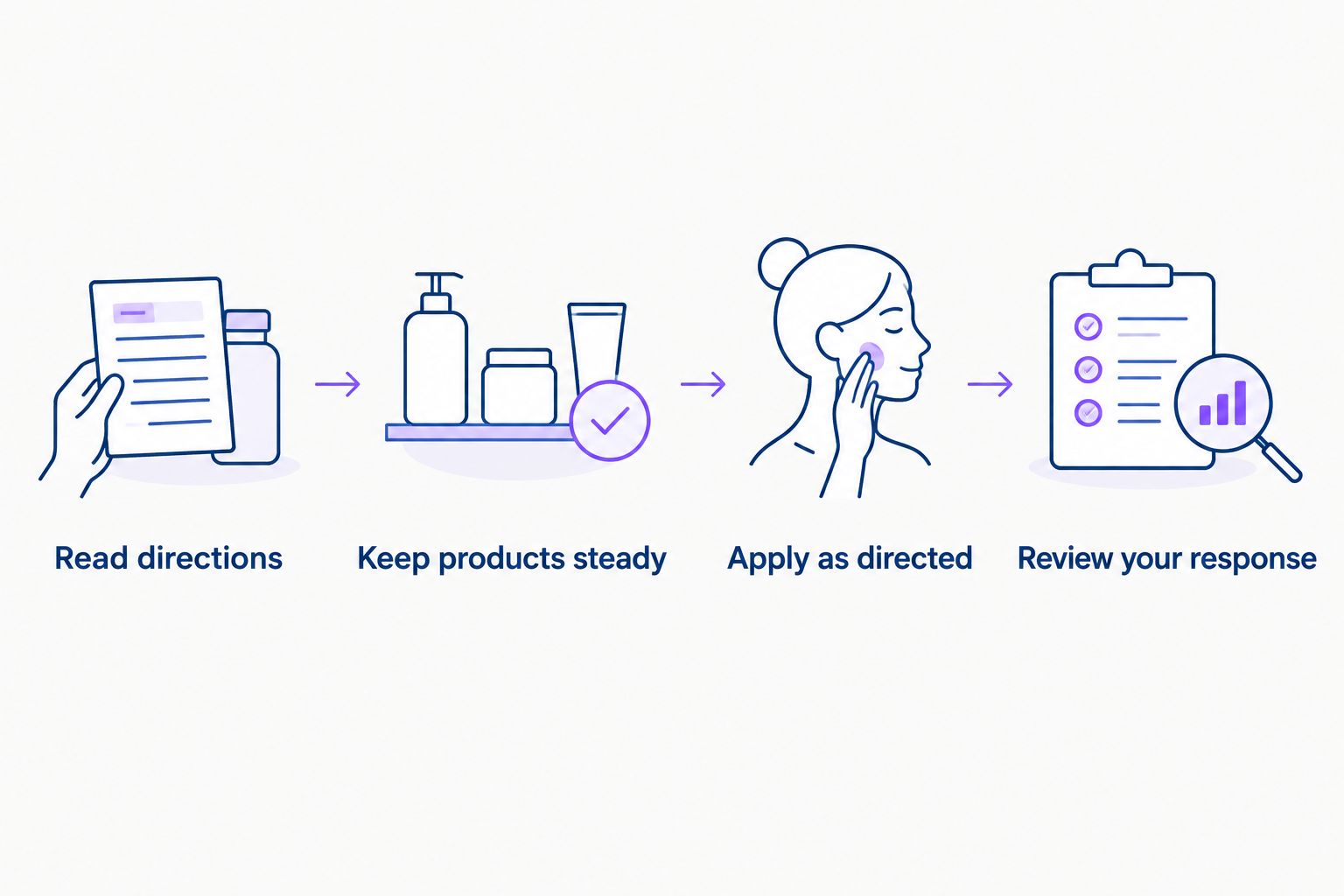
Use this 4-step sequence:
- Read directions. Check application area, frequency, rinsing instructions, and warnings before the first use. Follow any manufacturer-provided sensitivity-testing directions.
- Keep products steady. Avoid introducing a new shampoo, conditioner, and scalp treatment together. Leave the rest of your routine unchanged where practical.
- Apply as directed. Use the instructed amount and contact time. Keep the product away from your eyes and do not turn a rinse-out conditioner into an overnight treatment.
- Review your response. Check scalp comfort and hair feel separately. Stop for irritation; review amount or frequency for heaviness without irritation.
A small-area trial is not a guarantee against a later reaction. Do not use a home trial to override a known ingredient allergy or a clinician’s advice.
If you already use a prescribed scalp treatment, ask the prescriber how a new conditioner fits around it. Cosmetic instructions do not replace treatment instructions.
How can you tell buildup from irritation?
Buildup describes a change in hair feel; irritation describes an uncomfortable skin response. The distinction helps you choose the next action, but appearance alone cannot diagnose an allergy or scalp condition.
Hair that feels waxy, coated, flat, or difficult to rinse can indicate that the formula or application does not suit your routine. Review placement, amount, rinsing, and other products left on the hair. Do not automatically add a stronger cleanser to compensate.
Burning, persistent itching, redness, tenderness, or a rash calls for stopping the new product. Rinse it away according to its directions, avoid further exposure, and seek medical advice if symptoms persist or worsen.
Swelling of the lips, tongue, or throat, or difficulty breathing requires emergency medical help. Do not wait to see whether another rinse resolves those symptoms.
Discomfort is a reason to stop, not a sign that the conditioner is working. Hair softness is not a reason to tolerate an irritated scalp.
Does daily use make copper peptides work better?
Daily use does not, by itself, establish better conditioning or hair-growth results. The ingredient name cannot tell you how the finished product performs, how much reaches a particular area, or whether applying it more often adds a benefit.
Keep 2 decisions separate: whether your hair benefits cosmetically from conditioning, and whether a scalp or shedding concern needs professional assessment. A conditioner can improve manageability without treating the cause of hair loss.
For 2026, judge a conditioner against its stated cosmetic purpose. Look for a routine your hair tolerates and your scalp stays comfortable with, rather than escalating frequency in pursuit of an unverified outcome.
Simple Cosmetics offers peptide-based hair and scalp care within its personal-care range. That category fit is not a daily-use guarantee; the individual product’s directions remain the deciding reference.
Should you stop if your scalp starts itching?
Stop the new conditioner if itching appears after use, especially when it persists or comes with redness or burning. Do not assume the reaction is a temporary adjustment to copper peptides.
Itching has several possible causes, and the timing of a reaction does not identify a specific ingredient. Save the ingredient list and note which products you used so a clinician can review the exposure if needed.
If you have previously reacted to fragrance or another cosmetic ingredient, check the entire list before trying a replacement. Switching to another peptide conditioner does not automatically remove the ingredient that caused trouble.
FAQ
Is copper peptide conditioner safe daily if I have a sensitive scalp?
Daily use is not automatically suitable for a sensitive scalp. Follow the specific formula’s directions, check for ingredients you know you react to, and stop if irritation develops.
Can I leave copper peptide conditioner on overnight?
Do not leave a rinse-out copper peptide conditioner on overnight unless its directions explicitly allow that use. A leave-in product is a different format with its own instructions.
Do I need to shampoo every time I use conditioner?
Follow the conditioner’s directions rather than assuming every application requires shampoo. Do not add daily washing solely to increase copper peptide exposure.
Can copper peptide conditioner cause itching?
A conditioner can cause itching if its formula irritates your scalp or triggers an allergic reaction. Symptoms alone cannot establish that copper peptides, rather than another ingredient, caused it.
Will using copper peptide conditioner daily grow my hair faster?
Daily conditioner use does not establish faster hair growth. A conditioning benefit such as easier detangling is different from evidence that a product treats hair loss.
Is a rinse-out copper peptide conditioner safer than a leave-in?
Neither format is automatically safer for everyone. Each must be used according to its directions, and either can be unsuitable if you react to an ingredient.
What should I check before buying a copper peptide conditioner in 2026?
Check the current directions, complete ingredient list, intended application area, and warnings. Simple Cosmetics readers should apply the same checks to peptide hair care as to any other cosmetic.
One last thing
You do not need an ingredient-specific daily schedule. You need a product-specific routine. The useful question is not how often copper peptides sound beneficial, but whether this conditioner is intended for that frequency and remains comfortable in actual use.
Keep the label or a photograph of it when you introduce a new formula. If a problem develops, the complete ingredient list and directions are more useful than remembering the highlighted ingredient alone.
This is cosmetic education, not medical advice. Persistent scalp symptoms, unexplained shedding, or a suspected allergic reaction deserve professional assessment rather than another conditioning experiment.
Related guides
- Is copper peptide serum safe for sensitive skin?
- Can copper peptide serum cause skin purging?
- Can you use copper peptide serum with retinol?