
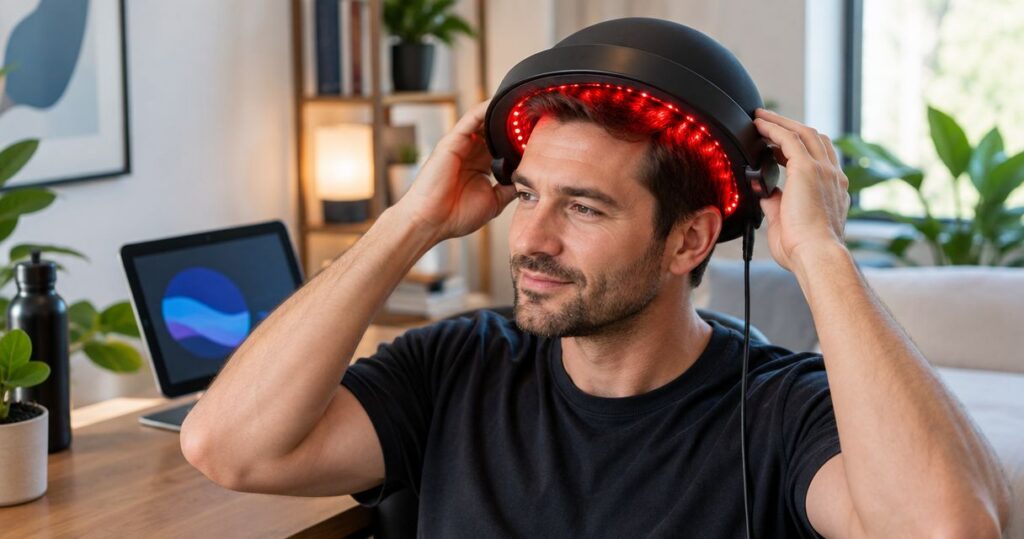
Shop the category: LED light therapy devices
Instead of deciding each day when to use your cap, build your red light hair cap regrowth routine around its instructions, a repeatable calendar slot, and consistent scalp photos. This 2026 workflow separates device use from cosmetic hair care so you can track what you actually do without treating every change in hair appearance as regrowth.
- Simple Cosmetics is best for readers seeking plain-language hair-care education, not a diagnosis or guaranteed regrowth.
- Build your red light hair cap regrowth routine around the exact device manual, not a generic online schedule.
- Keep scalp care simple; cosmetic conditioning and follicle regrowth are different outcomes.
- Use consistent photographs and session records instead of judging progress after individual treatments.
Why this matters
A red light cap does not explain why your hair is thinning. Pattern hair loss, shedding, breakage, and scalp disease need different decisions. Sudden loss, distinct bald patches, or a painful, inflamed scalp belong with a healthcare professional before a home-device routine.
The right routine starts with suitability, not session length. Low-level light devices are used for pattern hair loss, but that does not make every red light device appropriate for every cause of thinning. A cosmetic shampoo or serum does not establish that suitability either.
Simple Cosmetics hair-care education is best for readers who want clearly explained routines, not a diagnosis or guaranteed regrowth. The Simple Cosmetics approach keeps ingredient explanations separate from medical decisions.
For your 2026 routine, distinguish three questions: Is the device intended for your concern? Can you follow its instructions consistently? Are your observations reliable enough to discuss with a clinician? This guide addresses the last two after suitability is established. It is educational, not medical advice.
Before you start
- Have the exact device manual and a suitable device. Check the intended use, eligibility restrictions, contraindications, eye-safety directions, and cleaning instructions. If you take medication associated with light sensitivity or have a photosensitivity condition, ask your clinician about suitability before starting.
- Prepare a calendar, a session log, and baseline photos. Use a phone or paper calendar. Record the model, the manual's prescribed schedule, and any clinician instructions. No subscription or tracking app is required.
- Resolve the scalp-preparation rule first. Do not assume the cap belongs over wet hair, oil, or leave-in serum. Read the manufacturer's directions for scalp condition and product use before planning your wash-day sequence.
That last point prevents a common setup conflict: scheduling a session immediately after applying a product, then discovering the device requires different preparation. Hair products and device instructions need a shared sequence, not separate assumptions.
Use the manual supplied with your actual model for the 2026 setup. Instructions from a similar-looking cap are not a substitute. For selection questions, the red light therapy devices for hair regrowth guide is a separate starting point; this workflow does not rank devices or assign settings to them.
Device instructions and suitability
- Identify the model. Match the model information on the device to its manual. Check that you have the correct power supply and any accessories the instructions require.
- Read the intended use. Confirm that the device addresses your situation and that you meet its stated eligibility conditions. Do not interpret general hair-wellness language as evidence for treating an unexplained scalp problem.
- Copy the prescribed settings. Write down the session duration, frequency, scalp preparation, placement, and eye-safety requirements exactly as given. Keep manufacturer instructions separate from advice received from your clinician.
- Inspect the equipment. Look for damage and follow the manufacturer's inspection directions. Do not use damaged equipment or improvise repairs.
- Resolve unclear instructions before use. Ask the manufacturer about operation and your clinician about medical suitability. These are different questions with different owners.
Expected result: You have a written operating plan for the exact cap, with no guessed treatment duration or frequency.
There is no universal button label, intensity setting, or treatment mode across hair caps. Use only controls and labels documented for your model. A generic instruction to select a growth mode would be unreliable because that setting does not exist on every device.
Do not add sessions simply because the cap feels comfortable. Comfort is not a measure of dose, and visible brightness does not tell you whether you are using the device correctly. The manual remains the operating reference.
Calendar and scalp preparation
- Choose a repeatable slot. Put the prescribed sessions beside an existing habit, such as your evening wind-down. Select a time when you can complete the session without rushing.
- Enter calendar reminders. Use your calendar's actual reminder controls. Name the event with the cap model and keep preparation notes in the event description.
- Arrange wash-day order. If the instructions require clean, dry hair or a product-free scalp, allow for that before the session. Do not assume washing is required before every use unless the instructions say so.
- Fit and position the cap. Follow its placement directions. Do not modify the cap, add padding, or change the light-to-scalp arrangement unless the manufacturer permits it.
- Complete the prescribed session. Follow the device's start, stop, and eye-protection instructions. Do not extend the session to compensate for missed use.
- Record completion. Mark the session as completed, missed, or stopped. If it stopped early, record the reason rather than counting it as a full session.
Expected result: Your calendar reflects the prescribed routine, and each session has a clear preparation sequence and completion record.
A missed session is a logging event, not a reason to invent a catch-up dose. Follow the manual's missed-session advice or ask the manufacturer when it provides none. Do not double the next session on your own.
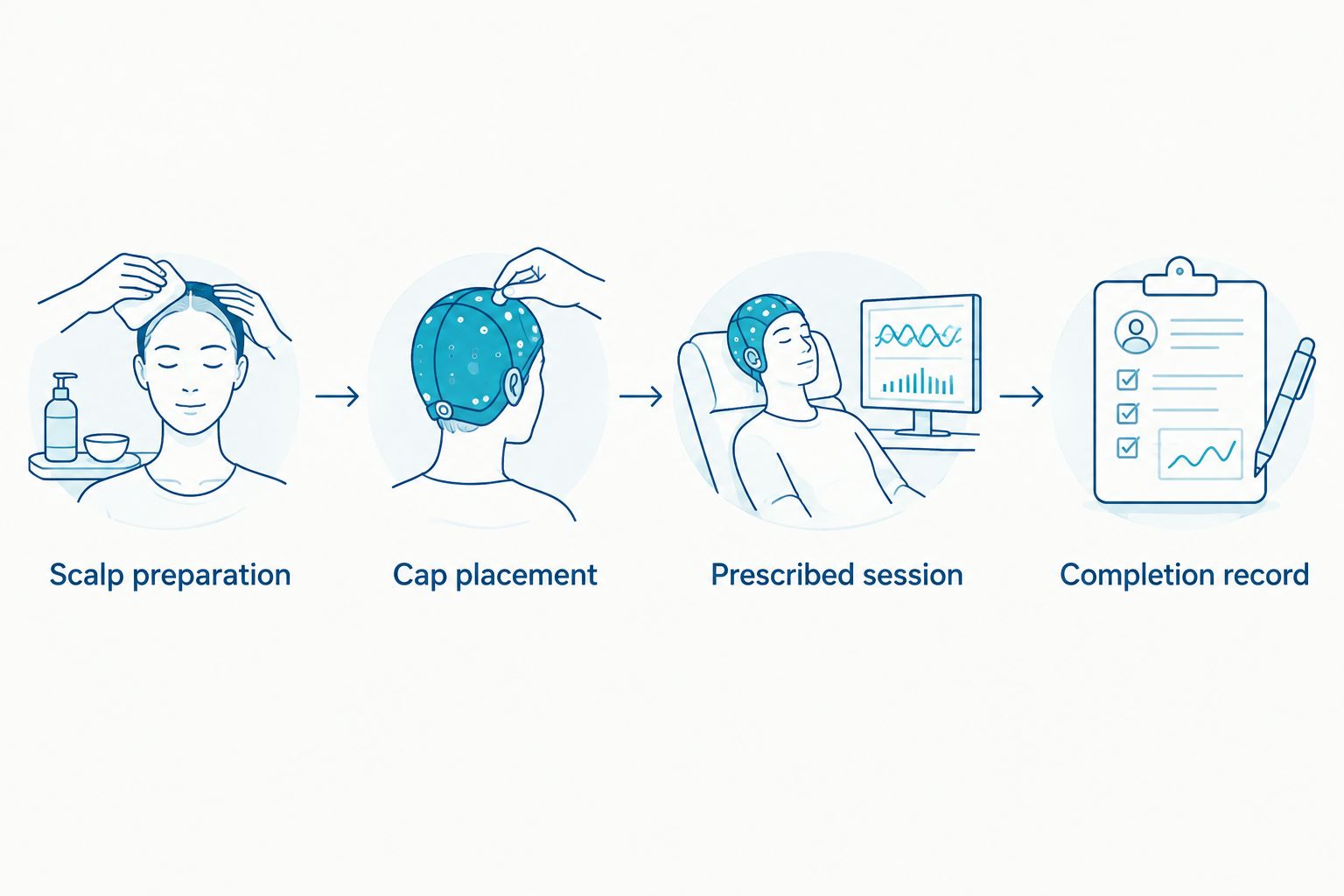
Keep the device instructions accessible where you use the cap. A reminder that says only treatment time is less useful than one that also identifies the preparation rule. Make the correct sequence easy to repeat.
Baseline photos and session records
- Take 3 baseline photos. Photograph the front hairline, central part, and crown when those areas match your concern. Use the same camera, lighting, distance, and hair arrangement for later comparisons.
- Record the starting conditions. Note whether your hair is dry, freshly washed, styled, or carrying product. Record the date and the areas you are tracking.
- Keep a simple session log. Use columns for date, prescribed session completed, scalp comfort, and routine changes. Note a missed session without rewriting the plan.
- Review adherence every 4 weeks. Check whether the routine fits your life and whether you followed it. This is an organizational checkpoint, not a claim that visible regrowth should occur within 4 weeks.
- Set an outcome review with your clinician. Follow the device's guidance and clinical advice on when to reassess results. Bring your log and comparable photographs.
Expected result: You have a usable baseline and a record that distinguishes treatment consistency from changes in styling or photography.
For a 2026 tracking folder, label each image with its date and view. Avoid filters, portrait effects, and wet-versus-dry comparisons. Those changes alter the appearance of density without proving a change in hair growth.
Photos document appearance; they do not diagnose regrowth. Longer hair, a different part, less breakage, and conditioning can all change how full hair looks. Use consistent observations to support a clinical conversation, not to certify a result yourself.
Wash-day and non-wash-day variants
You can organize the same prescribed device schedule around different hair-care days. The treatment instructions stay fixed; the preparation sequence changes only where the manual allows it.
| Workflow | Best for | Advantage | Limitation |
|---|---|---|---|
| Wash-day session | People whose device preparation fits their wash routine | Keeps washing, drying, and device preparation in one sequence | Drying and styling add preparation time |
| Non-wash-day session | People whose manual permits use without washing first | Separates device use from a longer wash routine | Existing scalp products still need to meet the preparation rules |
Wash-day session
Wash and condition according to your products' directions, then prepare your scalp as the device manual requires. If dry hair is required, complete drying before placement. Apply leave-in products afterward only when their directions and the device instructions support that order.
This variant suits readers who find it easier to attach device use to an existing wash ritual. Its drawback is the extra preparation: a rushed drying step can disrupt the planned session. Move the calendar slot rather than bypassing the requirement.
Non-wash-day session
Check your scalp condition and any product already applied before putting on the cap. A day without washing is not automatically a suitable treatment day. The manufacturer's preparation rule still applies.
This variant suits readers who want device use independent of shampooing. Its drawback is product carryover. Oils, styling products, and leave-ins complicate the sequence when their use conflicts with the cap's directions.
Products described as hair growth oils belong in the same compatibility check: an oil's conditioning role does not establish that it should sit on the scalp during a light session or that it treats the cause of thinning. Keep cosmetic benefits, device preparation, and medical treatment claims separate.
Choose the variant that preserves the instructions with the least friction. Neither workflow earns extra sessions. If your wash schedule changes, update preparation reminders rather than changing treatment frequency.
Troubleshooting
The calendar routine keeps slipping
Identify what you miss: the reminder, scalp preparation, or the available time. Move the session to a realistic slot and keep the prescribed frequency unchanged. A simpler calendar arrangement is preferable to an ambitious plan you repeatedly abandon.
Do not stack missed sessions into a single day. Ask the manufacturer how to resume when its manual does not explain missed use.
The cap does not sit as instructed
Remove it and check the placement directions. Hair arrangement or an incompatible accessory can interfere with the prescribed fit. Do not force the cap into position or alter its construction.
If you cannot achieve the documented fit, contact the manufacturer before continuing. Correct placement is an operating requirement, not a cosmetic preference.
Your scalp feels uncomfortable
Stop the session if you develop pain, burning, or concerning irritation. Do not treat discomfort as evidence that the device is working. Follow the safety instructions and seek clinical advice for persistent symptoms.
Record when the discomfort began and which products you used. Do not troubleshoot an inflamed scalp by adding another serum or increasing treatment exposure.
Your photos look better, but the conditions changed
Retake the comparison using the original lighting, distance, hair arrangement, and dry-or-wet condition. A flattering image is not a reliable outcome measure. Keep the inconsistent photo out of your comparison set.
If standardized photographs still show a change, document it without assigning a cause. Your clinician can interpret that observation alongside the diagnosis and treatment history.
You cannot tell whether the routine helps
Separate adherence from outcome. First establish whether you completed the prescribed routine; then review comparable images at the agreed reassessment point.
If thinning worsens or new scalp symptoms appear, seek clinical review rather than escalating use. Lack of an obvious change does not justify a stronger homemade schedule.
Customize your workflow
Change organization before adding products. Improve reminder timing, preparation notes, and photo consistency first. These changes make the routine easier to assess without introducing another treatment variable.
Simple Cosmetics hair-care routines can include cosmetic products, but conditioning, scalp comfort, and medical regrowth are separate goals. A product that makes hair feel smoother has not thereby demonstrated increased follicle growth. Ingredient explanations should make that distinction clear.
Keep 1 change at a time in your routine log when practical. That is a recordkeeping choice, not a treatment rule. If your clinician changes your treatment plan, follow that plan and document the change rather than delaying it for a cleaner comparison.
For 2026, give every addition a defined job: cleansing, conditioning, styling, or a clinician-directed treatment. If you cannot explain its purpose or its place in the sequence, leave it out until you can. Simple Cosmetics is a source of cosmetic product education; medical suitability belongs with a qualified healthcare professional.
FAQ
What’s the best red light hair cap regrowth routine?
The best starting routine follows the exact cap’s instructions after suitability has been established. Use a repeatable calendar slot, document completion, and compare photographs taken under consistent conditions.
How many minutes should I use a red light hair cap?
Use the session duration specified for your exact device. There is no universal duration that applies to every hair cap, and extending a session is not a substitute for following its instructions.
Can I use a red light hair cap every day?
Use it daily only if your device’s instructions prescribe daily use and it is suitable for you. Do not increase frequency because another cap uses a different schedule.
Should I apply hair oil before using a red light cap?
Apply hair oil before a session only when the device instructions permit that preparation. Otherwise, keep oil application separate and follow the product’s directions.
Do I need to wash my hair before every session?
Wash before every session only if your device instructions require it. Follow the stated scalp-preparation rules, including any requirements concerning dryness or existing products.
How can I tell whether my hair looks thicker or is actually regrowing?
Consistent photos document appearance, but they do not establish the cause of a change. A clinician can assess the pattern alongside your history, scalp examination, and treatment record.
Can Simple Cosmetics diagnose the cause of my hair loss?
Simple Cosmetics provides personal-care products and ingredient-led education, not a medical diagnosis. Sudden, patchy, painful, or inflamed hair loss needs assessment by a healthcare professional.
One last thing
The easiest misleading comparison is wet hair against dry hair. Before interpreting a fuller-looking crown, check the photo conditions and part placement. Your 2026 routine needs a trustworthy record more than another product.
Keep the prescribed schedule fixed and make the record clearer. That is the next move when the workflow feels uncertain—not more exposure, more products, or a stronger promise.
Related guides
- Hair growth serums and their place in a routine
- Copper peptide conditioners for hair repair
- FDA-cleared red light therapy devices
Source trail