
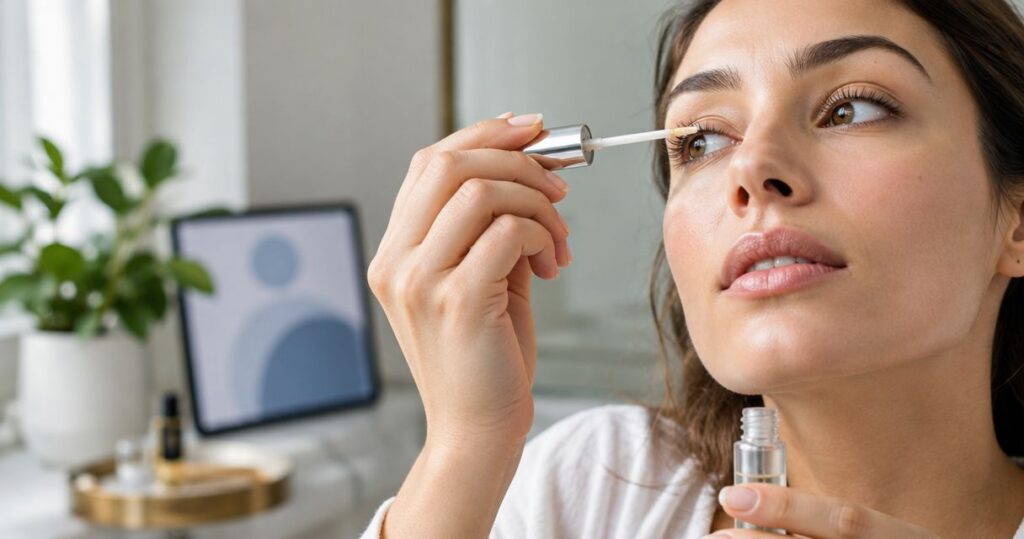
Shop the category: Eye care
Yes, lash growth serums can cause eye irritation, including burning, redness, itching, watering, and eyelid swelling. A reaction can come from the formula, an allergy, or serum getting into the eye; persistent pain, light sensitivity, or blurred vision needs prompt medical attention rather than another application.
- Can lash growth serums cause eye irritation? Yes. Stop using a serum that causes burning, redness, itching, or swelling.
- Peptide lash serums are not automatically irritation-free; the full formula and application method matter.
- Eye pain, light sensitivity, or vision changes need prompt medical assessment.
- Simple Cosmetics favors clearly explained cosmetic routines, not pushing through discomfort for longer-looking lashes.
Why this matters
Your lash line sits beside the eye surface. A product intended for external application can reach that surface through excess application, rubbing, or a misplaced brush. Eyelid skin can also react even when the eye itself feels comfortable.
Irritation is not evidence that a lash serum is working. If you are comparing discomfort with an expected results timeline, read how long lash serum takes to work, but stop the irritating product first. Waiting for cosmetic results is different from waiting out a reaction.
For your 2026 routine, separate cosmetic goals from eye health. Longer-looking lashes never justify continuing a product that repeatedly leaves your eyes sore or red. This guide is general education, not medical advice.
Can lash growth serums cause eye irritation?
Yes. Lash serums can irritate the eyelid skin, the eye surface, or both. The symptom pattern helps you describe what happened, but it cannot identify the cause on its own.
| Pattern | What you might notice | What to do | Important limit |
|---|---|---|---|
| Direct exposure | Stinging and watering after serum enters the eye | Stop application and rinse the eye | Persistent symptoms need assessment |
| Skin irritation | Burning, dryness, redness, or flaky eyelids | Stop the serum and avoid additional irritating products | Similar symptoms can have other causes |
| Possible contact allergy | Itching, swelling, or an eyelid rash | Stop the product and seek advice before restarting | An allergy cannot be confirmed from appearance alone |
| Concerning eye symptoms | Pain, light sensitivity, or blurred vision | Seek prompt medical attention | Do not assume this is a routine cosmetic reaction |
The same serum can feel comfortable for one person and cause a reaction in another. Previous tolerance also does not rule out a later allergy. Keep the packaging and ingredient list so a clinician can review the actual formula rather than the marketing description.
Eyelid irritation and eye irritation are different
Eyelid irritation affects the surrounding skin. You might notice tightness, scaling, itching, or redness along the lash line. Eye-surface irritation more often involves watering, burning, grittiness, or a red eye.
These patterns can overlap. Do not use the distinction to diagnose yourself or decide that a reaction is harmless. A swollen lid accompanied by eye pain deserves more attention than a cosmetic troubleshooting exercise.
What should you do if lash serum burns your eyes?
Stop applying the serum. Do not add another layer to test whether the sensation happens again. If serum has entered the eye, address the exposure before thinking about a replacement product.
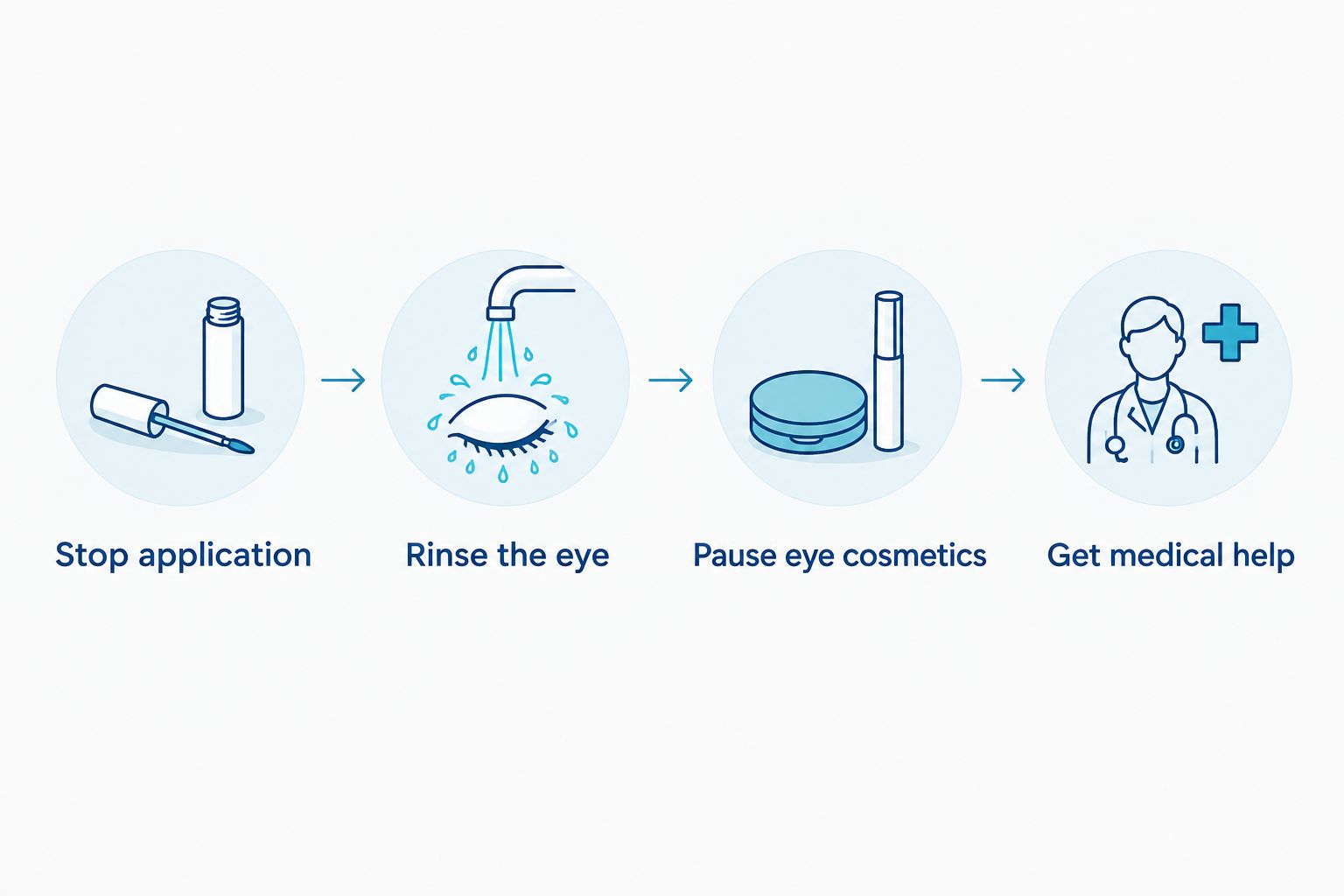
- Stop application. Put down the applicator and wash your hands. Avoid rubbing your eyes or spreading the product across the lash line.
- Rinse the eye. Use plenty of room-temperature water for 15–20 minutes after an accidental exposure, following Poison Control's general eye-exposure guidance. Remove contact lenses if you can do so easily, without delaying rinsing.
- Pause eye cosmetics. Leave off the serum and avoid eye makeup while symptoms continue. Do not use leftover prescription eye drops or someone else's medication.
- Get medical help. Seek prompt assessment for pain, light sensitivity, vision changes, significant swelling, or symptoms that persist after rinsing. For a chemical exposure, contact Poison Control or an appropriate local medical service.
Rinsing for 15–20 minutes is exposure first aid, not a treatment for every cause of a red eye. If you have severe symptoms, arrange urgent help while rinsing rather than waiting to see whether the full period solves the problem.
For your 2026 routine, keep the product label accessible rather than discarding it after opening. The ingredient list, directions, and batch information can help when you report a reaction or discuss it with a clinician.
Why lash serum irritation varies
There is no single ingredient or application mistake behind every reaction. These factors explain why switching only the headline ingredient does not settle the safety question.
- The full formula. Fragrance, preservatives, solvents, and other ingredients can contribute to irritation or contact allergy. A peptide claim does not describe everything in the bottle.
- Where the serum lands. External lash-line application differs from placing product on the inner eyelid margin. Follow the product's directions and keep it out of the eye.
- How much you apply. Extra liquid creates more opportunity for runoff. More product is not a reason to expect a better cosmetic result.
- Your eye and skin history. Dry eye, eyelid eczema, existing irritation, and previous cosmetic allergies matter when choosing what to put near your eyes.
- Other products nearby. Retinoids, exfoliating acids, lash adhesive, makeup, and removers can complicate the picture. Consider the whole eye-area routine rather than blaming or clearing one product immediately.
- Applicator hygiene. Sharing an applicator or contaminating the brush introduces a separate eye-safety concern. Follow storage instructions and do not share eye cosmetics.
Change fewer things when you are trying to understand a reaction. Starting a lash serum, a new remover, and a stronger nighttime treatment together makes the sequence harder to interpret. That does not prove which product caused the problem; it explains why a clear product history matters.
Are peptide lash serums less irritating?
A peptide lash serum is not automatically irritation-free. Peptides are one part of a formulation, and the remaining ingredients still contact your eyelids. A formula without a particular ingredient can still cause burning or an allergic reaction.
Peptide-based cosmetic conditioning and prescription lash-growth treatment are also different categories. Do not transfer evidence, side-effect expectations, or application instructions from one category to another. A cosmetic claim about fuller-looking lashes does not establish a treatment effect.
For a 2026 purchase, read the complete ingredient list and directions rather than treating “peptide,” “natural,” or “sensitive” as a safety guarantee. If you previously reacted to a lash product, ask a clinician whether ingredient review or allergy testing is appropriate before trying another.
Best for a previous reactor: an ingredient review before another purchase. The benefit is a more informed decision; the limitation is that reading a label cannot guarantee tolerance or diagnose an allergy.
Do prostaglandin-related ingredients have different concerns?
Prostaglandin-related lash-growth ingredients deserve a separate discussion from ordinary cosmetic conditioning. Established concerns with this ingredient class include eye redness, eyelid pigmentation, and changes around the eye; certain prescription lash-growth treatments also carry warnings about iris pigmentation.
Those concerns do not mean every lash serum contains a prostaglandin-related ingredient. They also do not establish that every formula has the same risk. Check the actual ingredient list, and ask a pharmacist or eye-care professional if you cannot identify what a product contains.
Avoid using a product's dramatic before-and-after photograph as a substitute for that review. The image does not tell you about the formulation, possible adverse effects, or whether the product suits your eye history.
How do you reduce the chance of another reaction?
Start with healthy, comfortable eyes, not an already irritated lash line. If you have an active eyelid rash, unexplained redness, or ongoing dry-eye symptoms, get advice before adding a lash product. A new serum makes an unsettled situation harder to assess.
When you do use a product, follow its specific directions. Do not assume every serum belongs on both lash lines, on the waterline, or under contact lenses. Avoid applying to broken or inflamed skin, and keep the applicator tip clean.
A skin patch test has limits. Tolerating a product on your arm does not prove it will be comfortable on your eyelids or safe inside your eye. Never perform a homemade test by deliberately putting serum into the eye.
For your 2026 routine, introduce new eye-area cosmetics separately and keep a simple record of what you used and when symptoms began. This is useful context for a clinician, not a substitute for assessment. Stop at the first clear reaction rather than repeating exposure to obtain certainty.
Can you restart lash serum after irritation clears?
Do not restart while symptoms remain. If a product repeatedly causes discomfort, or the reaction included swelling or a rash, seek advice before reusing it. Clearing symptoms does not establish that the same formula is now suitable.
Keep the decision separate from how much product remains in the bottle. A product you cannot tolerate is not improved by using less of it without understanding the reaction. An eye-care professional can help assess whether the issue involves the eye surface, eyelid skin, or another condition.
When should you skip lash serum altogether?
Skip a new lash serum while you have unexplained eye symptoms or an active eyelid reaction. Ask your treating clinician before introducing one around recent eye surgery or while managing an eye condition. The relevant question is whether your eyes are ready for another product, not which formula sounds gentlest.
Simple Cosmetics is best for readers seeking plain-language cosmetic routine education, not an eye diagnosis. The Simple Cosmetics approach centers on clearly explained, ingredient-led personal care. That is a useful starting point for label reading, but no brand description replaces an individual eye assessment.
In 2026, make comfort a requirement rather than a bonus. Choosing no lash serum is a valid routine decision, especially when previous attempts have repeatedly caused irritation.
FAQ
Can lash growth serums cause eye irritation even if I use them correctly?
Yes, lash growth serums can cause eye irritation despite correct application. You can react to the formula, develop contact allergy, or have an existing eye condition that makes a product uncomfortable.
Is it normal for lash serum to sting when I put it on?
Stinging is a reason to stop, not proof that lash serum is working. If product enters the eye, rinse it thoroughly; seek prompt care for pain, light sensitivity, vision changes, or symptoms that persist.
Are peptide lash serums safe for sensitive eyes?
Peptide lash serums are not automatically suitable for sensitive eyes. The full formula, your eye history, and how you apply the product matter more than the presence of peptides alone.
Can I become allergic to a lash serum I have used before?
Yes, contact allergy can develop after previous use without problems. Stop a product that causes new itching, swelling, or an eyelid rash, and get advice before restarting.
Should I keep using lash serum if my eyelids are red but my eyes feel fine?
No, stop the serum if your eyelids become red or irritated. Eyelid skin reactions still matter, even without eye pain, and persistent or worsening symptoms need assessment.
How long should I rinse if lash serum gets in my eye?
Rinse for 15–20 minutes with plenty of room-temperature water, following Poison Control’s general eye-exposure guidance. Remove contacts if easily possible without delaying rinsing, and get help for persistent or concerning symptoms.
Can I wear contact lenses while my eyes are irritated from lash serum?
Leave contact lenses out while your eyes are irritated and use glasses instead. Contact an eye-care professional about a painful or red eye, particularly if you normally wear lenses.
Does an irritation-free patch test mean lash serum is safe for my eyes?
No, a comfortable skin patch test does not establish eye safety or eyelid tolerance. Never test a serum by deliberately placing it in your eye.
One last thing
A familiar product can still be responsible for a new reaction. Do not rule out your lash serum simply because the first applications felt fine. Bring the bottle, ingredient list, and a brief symptom timeline to your appointment.
Simple Cosmetics keeps the routine principle straightforward: understand the purpose of a product, then decide whether it belongs. For lash care, comfortable eyes come before cosmetic results.
Related guides
- Can copper peptide serum cause skin purging?
- Is copper peptide serum safe for sensitive skin?
- Can LED face masks damage your eyes?