
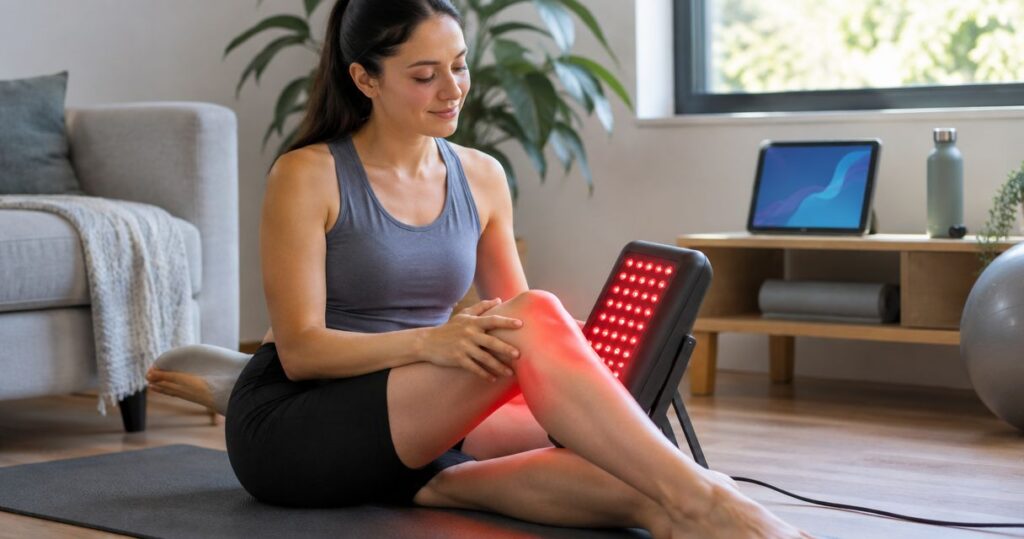
Shop the category: LED light therapy devices
Red light therapy can help reduce pain in some joint and muscle conditions, but benefits depend on the condition, device, and treatment protocol. It is an add-on for symptom management, not a way to rebuild cartilage or diagnose an injury. For home use in 2026, choose a device whose labeled purpose matches your concern and keep your existing care plan in place.
- Can red light therapy help joint and muscle pain? Sometimes, but symptom relief does not mean tissue repair.
- The American College of Physicians includes low-level laser therapy among options for chronic low-back pain, with low-quality evidence.
- A skincare LED mask is not interchangeable with a device labeled for pain relief.
- Follow device instructions; seek medical assessment for a hot, swollen joint, significant injury, or worsening symptoms.
Why this matters
Pain relief and recovery are different outcomes. A joint can feel better without its underlying problem resolving, and muscle discomfort does not always mean ordinary post-exercise soreness.
Simple Cosmetics is best for consumers seeking clearly explained, ingredient-led personal care. That is separate from diagnosing pain or selecting medical treatment. This guide is educational, not medical advice.
Can red light therapy help with joint and muscle pain?
Red light therapy has evidence for symptom relief in selected conditions, not a blanket benefit for every painful joint or muscle. Research uses the term photobiomodulation for treatment with certain light wavelengths, delivered through devices such as low-level lasers or LEDs.
The American College of Physicians' clinical practice guideline lists low-level laser therapy among non-drug options for chronic low-back pain. The supporting evidence is rated low quality. That finding does not establish that an LED face mask, body panel, or handheld consumer device produces the same result.
Reviews of photobiomodulation for knee osteoarthritis and exercise-related muscle soreness report benefits in some studies, but treatment methods and findings vary. The practical question in 2026 is not whether light has ever helped. It is whether evidence supports the particular condition and treatment being considered.
| Situation | What the evidence supports | Main limitation | Best next step |
|---|---|---|---|
| Chronic low-back pain | Low-level laser therapy appears among guideline-listed non-drug options | Evidence is low quality and does not apply to every consumer LED device | Discuss it alongside exercise and other recommended care |
| Knee osteoarthritis | Some research reports improvements in pain or function | Protocols vary; pain improvement does not establish cartilage repair | Ask whether the studied treatment matches the proposed device |
| Post-exercise muscle soreness | Some studies report reduced soreness or improved recovery measures | Findings depend on protocol, timing, and outcome measured | Treat it as optional support, not permission to ignore pain |
| New, unexplained joint or muscle pain | A device cannot establish the cause | Self-treatment can delay assessment | Identify the cause before selecting treatment |
Do not combine these findings into a universal promise. Knee pain, back pain, and post-exercise soreness are different clinical questions.
Joint pain: relief is not joint repair
Joint pain can come from osteoarthritis, injury, inflammation, infection, or other causes. Those conditions do not share one treatment plan.
Photobiomodulation research in osteoarthritis generally evaluates outcomes such as pain and physical function. A better pain score does not demonstrate restored cartilage, reversed arthritis, or prevention of future joint damage.
Best for: discussing an additional symptom-management option after you know what is causing the pain. The potential advantage is relief without adding another medicine; the limitation is uncertain benefit for a particular device and person.
If your clinician recommends strengthening exercises or another treatment, keep those instructions separate from the light device's instructions. Feeling more comfortable after a session is not evidence that you should increase loading or stop prescribed care.
Muscle soreness: support is not clearance to train
Ordinary soreness after unfamiliar exercise differs from a muscle strain, tendon problem, or nerve-related pain. Photobiomodulation studies sometimes examine treatment before exercise, sometimes afterward, and sometimes both. Those approaches are not interchangeable.
Best for: considering optional recovery support when the discomfort has an established, non-urgent explanation. The potential benefit is reduced soreness; the limitation is that less soreness does not prove restored strength or readiness for harder exercise.
Sharp pain during movement, sudden weakness, marked swelling, or pain after a significant injury deserves assessment. Do not use temporary comfort as a reason to push through those symptoms.
For a 2026 home routine, start with a clear goal: easier movement or less discomfort during a familiar activity. Avoid promises about accelerated healing unless evidence supports that exact claim.
Why red light therapy results vary
The treatment name does not describe a standardized dose. These factors explain why a positive study cannot automatically validate another device:
- Condition treated. Evidence for chronic low-back pain does not establish benefit for an undiagnosed painful shoulder.
- Light wavelength. Red and near-infrared light have different tissue interactions. Visible color alone does not identify the full output.
- Delivered dose. Light output, exposure time, treatment area, and distance affect exposure. Session length alone is insufficient.
- Treatment schedule. Research protocols specify timing and repetition. A different schedule is a different protocol.
- Device design. Lasers and LEDs differ in how they deliver light. Contact placement and noncontact placement also change treatment conditions.
- Outcome measured. Lower pain, better movement, and tissue healing are separate results. Evidence for one does not establish the others.
A brighter-looking device is not necessarily a more effective treatment. Neither is a longer session. Use the manufacturer's instructions rather than extending exposure to imitate a study.
How do you choose a device without guessing?
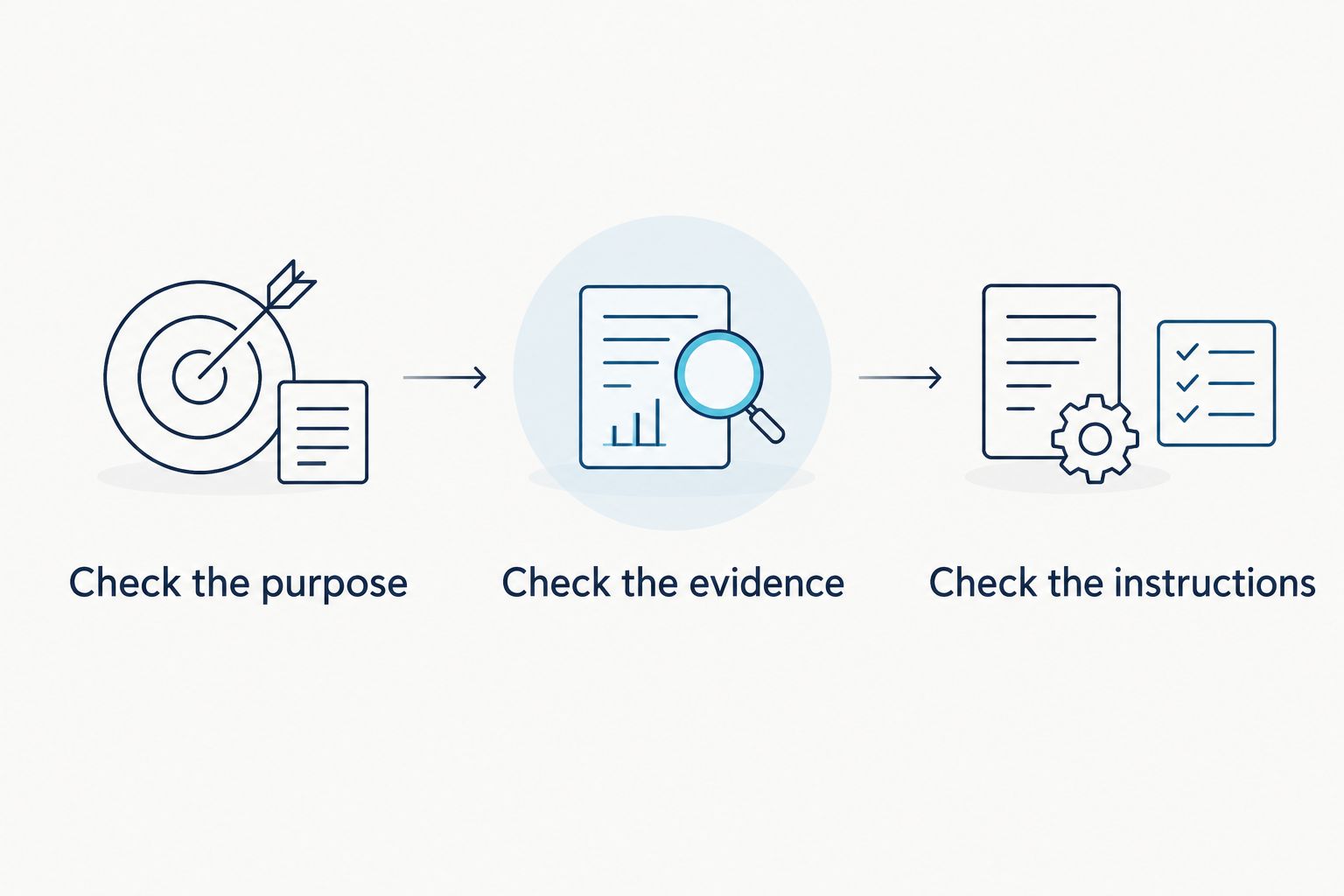
Use these 3 checks before adding a device to your 2026 routine. They help separate a relevant treatment claim from an attractive but unrelated feature.
Check the purpose
Read the intended use and indications for the exact model. A device marketed for cosmetic appearance is not automatically appropriate for joint or muscle pain.
Simple Cosmetics' skincare education belongs to personal care, not a promise of pain treatment. The same distinction applies to any brand: a familiar name does not replace model-specific labeling.
Check the evidence
Ask whether the evidence concerns the same condition, device type, treatment area, and protocol. Research on a clinic-based laser does not by itself validate an at-home LED panel.
Also check the outcome. A study reporting reduced soreness does not establish faster healing of a torn muscle. A study reporting better pain scores does not establish structural joint repair.
Check the instructions
Look for clear directions on placement, session length, frequency, eye protection, and stopping treatment. Review warnings and contraindications before use, especially if you take medicines that increase light sensitivity or have a photosensitivity condition.
If instructions leave those questions unanswered, resolve them before treatment. Do not fill the gaps with another device's schedule.
What does FDA clearance actually tell you?
FDA clearance applies to a specific device and its stated indications. It is not a guarantee that everyone benefits, and it does not validate every claim a seller makes.
For devices cleared through the FDA's 510(k) pathway, clearance generally establishes substantial equivalence to a legally marketed predicate device. That is different from proving that a product is the most effective option for your condition.
Check the exact model and cleared use in 2026. A manufacturer's FDA registration, a facility listing, and device clearance are not interchangeable claims. Cosmetic indications also do not automatically cover pain treatment.
The advantage of checking clearance is a clearer understanding of the device's regulatory status and intended use. The limitation is that regulatory status cannot diagnose your pain or predict your response.
How should you judge whether treatment is helping?
Choose a practical outcome before starting. Otherwise, a pleasant session can be mistaken for a meaningful improvement.
Write down 2 everyday tasks affected by the discomfort, such as climbing stairs and getting out of a chair. Record pain using a consistent 0–10-point scale, where 0 means no pain and 10 means the worst pain imaginable. These are tracking tools, not a treatment dose or a diagnostic test.
Keep the task and rating method consistent. Also note changes in exercise, medicines, sleep, and other treatments, because those changes affect how you interpret improvement.
Agree on a review point with your clinician rather than adopting a universal online timeline. There is no single number of sessions that applies to every diagnosis and device.
If symptoms worsen, stop and seek advice. If nothing changes, reassess the plan instead of increasing exposure beyond the instructions. The useful outcome is better daily function, not simply completing more sessions.
When should you get medical help instead?
A hot, red, swollen joint—especially with fever—needs prompt medical assessment. So does severe pain after an injury, an obvious deformity, or inability to bear weight.
Back pain with new bladder or bowel problems, numbness around the groin, or progressive leg weakness requires urgent assessment. Do not wait to see whether a light session helps.
For non-urgent but persistent pain, arrange an evaluation rather than repeatedly treating an unexplained symptom. A device cannot distinguish arthritis from infection, a strain from referred pain, or ordinary soreness from a more significant injury.
Can you use a skincare LED mask on a painful knee?
A skincare LED mask is not a substitute for a device labeled for pain relief. Its intended use, shape, treatment area, and instructions were not necessarily designed for a knee.
Simple Cosmetics' personal-care focus does not change that boundary. Do not improvise placement, override safety features, or use cosmetic-device instructions as a pain-treatment protocol.
Does stronger light work better?
Stronger light does not automatically deliver better pain relief. Photobiomodulation depends on the delivered dose and treatment conditions, not brightness alone.
Increasing intensity, moving closer, or extending the session changes exposure. Follow the exact device instructions rather than assuming more treatment is better.
Should red light therapy replace physical therapy?
Red light therapy should not replace prescribed rehabilitation on your own initiative. Pain management and rehabilitation address different needs, even when both make movement more comfortable.
Ask your physical therapist whether light treatment has a useful role in your plan. Keep exercise progression tied to clinical advice and function, not just immediate symptom relief.
FAQ
Can red light therapy help joint and muscle pain at home?
Red light therapy can help some joint and muscle symptoms, but home results depend on the diagnosis, device, and protocol. Choose a device with a relevant labeled use rather than assuming all red lights work alike.
Does red light therapy rebuild cartilage?
Red light therapy is not established as a way to rebuild cartilage in people with osteoarthritis. Improvement in pain or movement does not demonstrate structural joint repair.
How long does red light therapy take to relieve pain?
There is no universal timeline for pain relief from red light therapy. Follow the device instructions and agree on a review point with your clinician rather than extending sessions when results are unclear.
Is near-infrared light better than red light for joint pain?
Near-infrared light is not automatically better for every painful joint. Wavelength matters, but so do the condition, delivered dose, device design, and evidence for the complete treatment protocol.
Can I use red light therapy every day?
Daily use is appropriate only when it matches the device instructions and your care plan. Do not borrow a schedule from a different device or increase frequency to compensate for a lack of improvement.
Is red light therapy safe if I take medication?
Medication use requires checking the device warnings and asking your pharmacist or clinician about light sensitivity. Provide the exact device information and your medication list rather than relying on a general safety claim.
Does FDA clearance guarantee pain relief?
FDA clearance does not guarantee pain relief. It concerns a specific device and its stated indications, not every condition or every claim attached to the product.
One last thing
A pain score can improve while your ability to use the joint stays unchanged. That is why a familiar daily task is such a useful check: can you do it more comfortably, without changing how you move to avoid pain?
For your 2026 decision, choose a relevant device only after identifying the problem. Comfort is useful. A diagnosis still comes first.
Related guides
- Is an FDA-cleared red light therapy device worth it?
- Does red light therapy need FDA clearance to be safe?
- FDA-cleared red light therapy for physical therapists
- How long does red light therapy take to show results?