

Shop the category: LED light therapy devices
An FDA-cleared red light therapy device does not have one standard purchase price; check the exact model’s current quote in 2026 rather than treating clearance as a price category. Your total also depends on what the purchase includes and whether you need separate accessories. Choose the device by its cleared intended use and practical fit before comparing the amount you will pay.
- How much does an FDA cleared red light therapy device cost? Check the exact model’s current purchase terms.
- FDA clearance applies to a specific device and intended use, not every red light therapy claim.
- Compare included accessories, operating instructions, and return terms before choosing a device.
- Simple Cosmetics favors clearly explained personal care; keep device shopping equally straightforward.
Why this matters
A device purchase involves more than selecting red lights in a convenient shape. You need to know what the model is intended to do, whether its instructions fit your circumstances, and what you receive with it. A familiar regulatory phrase does not answer those questions by itself.
Start with the decision behind the purchase: is an FDA-cleared red light therapy device worth it? Then compare the current terms for devices that actually meet your needs. A lower payment is not a useful saving if the device has the wrong intended use.
Simple Cosmetics explains ingredient-led personal care for everyday consumers. Device shopping deserves the same plain-language approach: understand the purpose, read the instructions, and avoid adding complexity without a reason.
How much does an FDA-cleared red light therapy device cost?
The useful answer is the current total for a specific model, with its contents and purchase terms written down. There is no single FDA-set retail price for cleared red light devices. Clearance is a regulatory status, not a retail tier.
For a 2026 purchase, build a written breakdown rather than comparing isolated promotional figures. Keep required items separate from optional additions. That distinction makes the purchase easier to evaluate without assuming that every accessory belongs in your routine.
| Part of the purchase | What to check | Why it belongs in your comparison |
|---|---|---|
| Exact device | Full model name and manufacturer | Similar names do not establish identical clearance or instructions |
| Included contents | Device, controller, power supply, and any listed accessories | Product photography does not establish what ships with the order |
| Required extras | Anything the instructions require but the package excludes | A device-only listing does not describe the complete setup |
| Optional extras | Accessories or products described as optional | You can assess these separately from the device itself |
| Delivery and tax | Final checkout details | A listing and a completed order are different purchase stages |
| Returns and support | Written return conditions and service terms | These determine your options if the purchase does not work for you |
Compare complete purchases, not incomplete listings. Do not assume that an accessory is included because it appears in a photograph, or that another model’s instructions apply because the devices look alike.
How do you get a usable current quote?
- Identify the model. Record the manufacturer and exact model designation. Do not rely on a broad collection name.
- Verify the intended use. Match the seller’s claim to the device’s regulatory record and labeling.
- List the contents. Separate the device package from accessories shown elsewhere on the page.
- Read the requirements. Check power, setup, eye-protection instructions, warnings, and cleaning requirements.
- Review the final terms. Confirm checkout details and the written return policy before paying.
Save the quote and instructions together. You should be able to explain what you are buying without reopening several different promotional pages.
Which device format fits your intended use?
A face mask, handheld device, and panel are different physical formats. None is automatically the right choice simply because it uses red light. The exact model’s intended use remains the first filter.
The comparison below describes handling differences, not medical outcomes or a price ranking. It does not establish that any particular device is FDA-cleared.
| Format | Best for | Practical advantage | Practical limitation |
|---|---|---|---|
| Face mask | Someone seeking a face-worn format with suitable labeling | Wears over the face rather than requiring continuous handheld positioning | Fit and eye-area instructions need careful review |
| Handheld device | Someone comfortable positioning a device over the labeled treatment area | Lets you position the device directly where its instructions permit | Requires active handling and attention to placement |
| Panel | Someone with space for a stationary setup suited to the labeled use | Does not require a face-worn format | Requires appropriate placement, distance, and storage space |
Face mask: check fit before features
A mask’s shape is relevant because you wear it. Review its fit instructions and any restrictions before focusing on controls or appearance. A comfortable-looking photograph does not show how the device will fit your face.
The advantage is the face-worn format. The limitation is that fit and safe use are model-specific. Best for someone who wants a face-worn device and can follow that exact model’s labeling.
Handheld device: check the handling requirement
A handheld format puts positioning in your hands. Read how the manufacturer tells you to place or move it, and whether the routine requires you to hold it throughout use. Do not substitute instructions from another handheld model.
The advantage is direct placement. The limitation is active handling. Best for someone comfortable following a hands-on positioning routine.
Panel: check the physical setup
A panel needs an appropriate place to stand or mount, depending on its instructions. Review placement, distance, and any eye-protection requirements before deciding that the format suits your room. Available space alone does not establish a safe setup.
The advantage is a stationary format. The limitation is the setup requirement. Best for someone whose space and intended use match the panel’s labeling.
Why device quotes need separate checks
Do not assume that a higher quote means stronger evidence or that a lower quote means inadequate performance. Those judgments require information about the exact model, not an amount on a product page. In 2026, keep these comparison factors visible:
- Package contents. Establish which components are included and which are shown only as optional additions.
- Required accessories. Identify anything the instructions require for your intended setup.
- Purchase structure. Distinguish buying the device from any separate service or recurring commitment.
- Delivery terms. Review the final order details rather than assuming the listing describes the completed purchase.
- Return conditions. Check deadlines, exclusions, and any stated requirements for returning the device.
- Service terms. Read the written support and repair provisions without assuming every seller offers the same arrangement.
These checks explain differences between purchase offers. They do not prove that any feature causes a particular price difference. If a seller cannot clearly describe the package, pause the purchase until the contents are clear.
What does FDA-cleared actually mean?
For devices cleared through the FDA’s 510(k) pathway, clearance reflects a finding of substantial equivalence to a legally marketed predicate device. It is not the same regulatory process as premarket approval. The FDA’s guidance on device clearance and approval distinguishes these pathways.
That distinction matters when a listing uses broad phrases such as FDA-approved technology. The relevant question is whether the exact device has the claimed status and what its labeling permits. A company’s registration or a device listing alone does not establish clearance.
Verify the model, then verify the intended use. Evidence for one indication does not establish every cosmetic or medical claim attached to red light in general.
Check the regulatory record in the right order
Use this sequence when evaluating a device in 2026:
- Model identity. Find the manufacturer and full device name on the listing and labeling.
- Clearance record. Search the FDA’s public device records for the relevant clearance information.
- Intended use. Read the documented indication rather than relying on a promotional summary.
- Use instructions. Check warnings, restrictions, and operating directions for the exact model.
A mismatch at any stage is a reason to ask the seller for clarification. Do not resolve it by assuming that a related product covers the device you want.
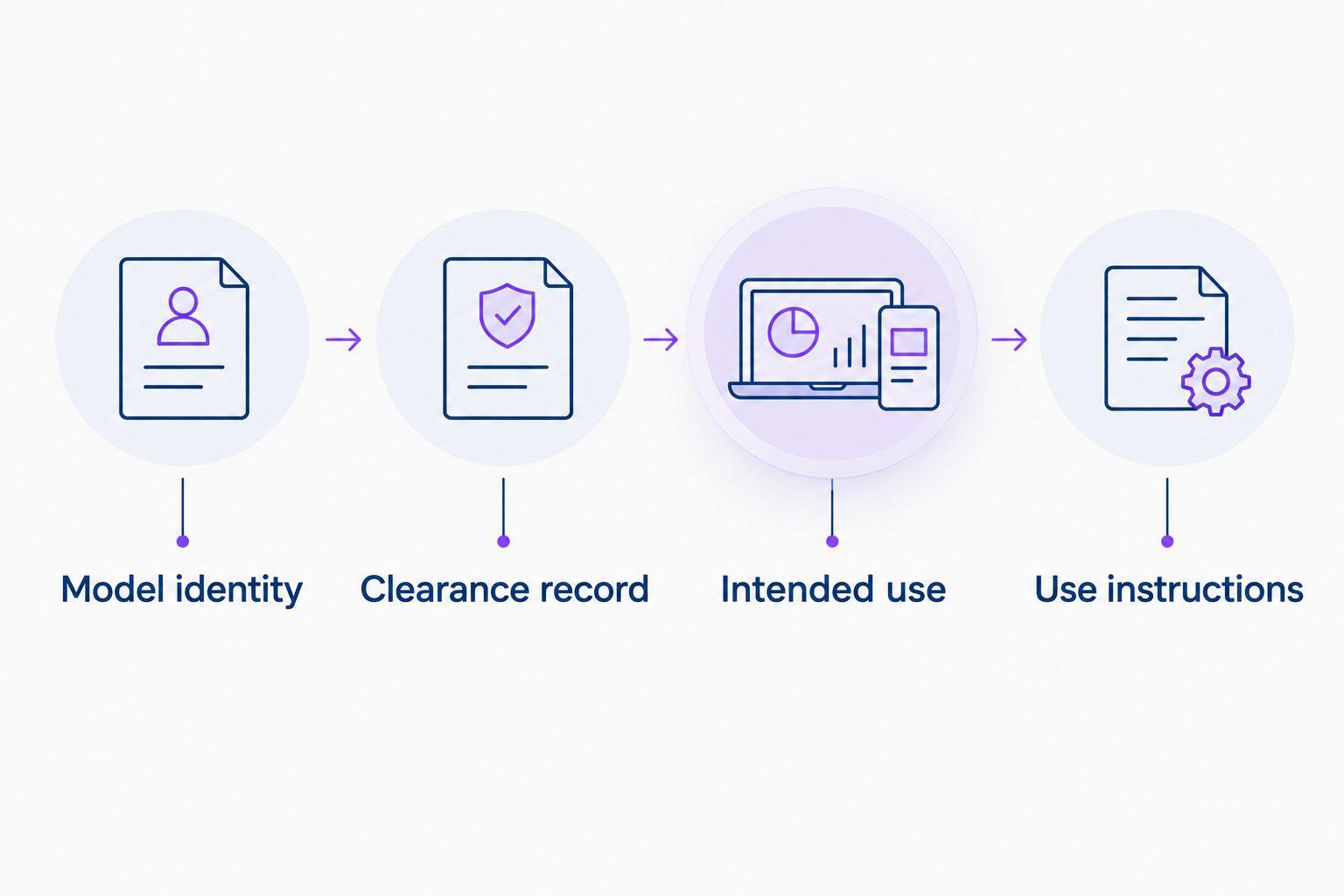
A verified record is a starting point, not permission to ignore warnings. If your circumstances fall outside the labeling, ask a qualified clinician before use.
Is a more expensive device automatically better?
No. A higher purchase amount does not, by itself, establish a better fit, a more suitable indication, or better results for you. You need model-specific documentation to evaluate those questions.
Separate convenience from evidence. A control, carrying case, or different physical format can affect how you use a device without establishing a stronger outcome. Decide whether each feature solves an actual problem in your routine.
For a 2026 comparison, write your requirements before reviewing optional features. Keep the list short: suitable intended use, understandable instructions, workable handling, and clear purchase terms. Anything else needs its own reason to remain on the list.
Does FDA clearance mean a device is safe for everyone?
No. FDA clearance does not remove the device’s warnings, contraindications, or restrictions. Read them before use, including any directions concerning eyes, photosensitivity, medications, or existing conditions.
Do not assume that closed eyes replace required protection or that a familiar skincare routine is automatically compatible. Follow the manufacturer’s instructions. A clinician can help assess questions involving your medications or health history.
This is consumer device education, not medical advice. Stop using a device if you experience an unexpected reaction, and seek appropriate professional guidance.
Do you need special skincare with the device?
Not automatically. Follow the exact device’s instructions about clean skin, product application, and timing. Do not add a serum or cream solely because a seller places it beside the device.
Simple Cosmetics sells peptide-based personal care, but that category does not establish compatibility with every LED device. A cosmetic product and a light device need separate checks. Neither should be treated as a substitute for the other.
Simple Cosmetics is for everyday consumers who want ingredient-led personal care explained plainly. Keep that standard when adding a device: a clear purpose, understandable directions, and no unnecessary steps.
FAQ
How much does an FDA cleared red light therapy device cost?
There is no single standard purchase price for an FDA-cleared red light therapy device. Check the exact model’s current quote, package contents, required accessories, and final purchase terms.
Does FDA clearance make a red light device more effective?
FDA clearance does not establish that one device outperforms another. Review the exact device’s intended use and supporting documentation instead of treating clearance as a performance ranking.
Is an FDA-cleared device the same as an FDA-approved device?
No. FDA clearance and FDA approval refer to different regulatory pathways; check the exact model’s record and labeling rather than accepting the terms as interchangeable.
How do I check whether a red light device is FDA-cleared?
Match the manufacturer and exact model to the relevant FDA clearance record. Confirm that the documented intended use matches the claim you are evaluating.
Do I need to buy extra eye protection?
Follow the exact device’s eye-protection instructions. Check whether any required protection is included before completing the purchase; do not assume all devices have the same requirements.
Can I use red light therapy with retinol?
Use the device’s instructions and the skincare product’s directions to assess timing and compatibility. Ask a qualified clinician when photosensitivity, irritation, medications, or an existing condition raises a concern.
Should I choose a mask, handheld device, or panel?
Choose the format whose intended use and handling requirements fit your needs. Compare fit for a mask, active positioning for a handheld device, and placement requirements for a panel.
One last thing
Before paying in 2026, try to match the exact model name across the listing, instruction manual, and clearance record. Similar branding is not enough. If the names do not align, ask for documentation before proceeding.
That final check is more useful than adding another optional feature to your comparison. Buy a clearly identified device for a clearly identified purpose.
Related guides
- How often should you use an LED face mask?
- Can LED face masks damage your eyes?
- How long until you see results from an LED face mask?
- Connect a handheld LED device to your morning skincare routine