
Shop the category: LED light therapy devices
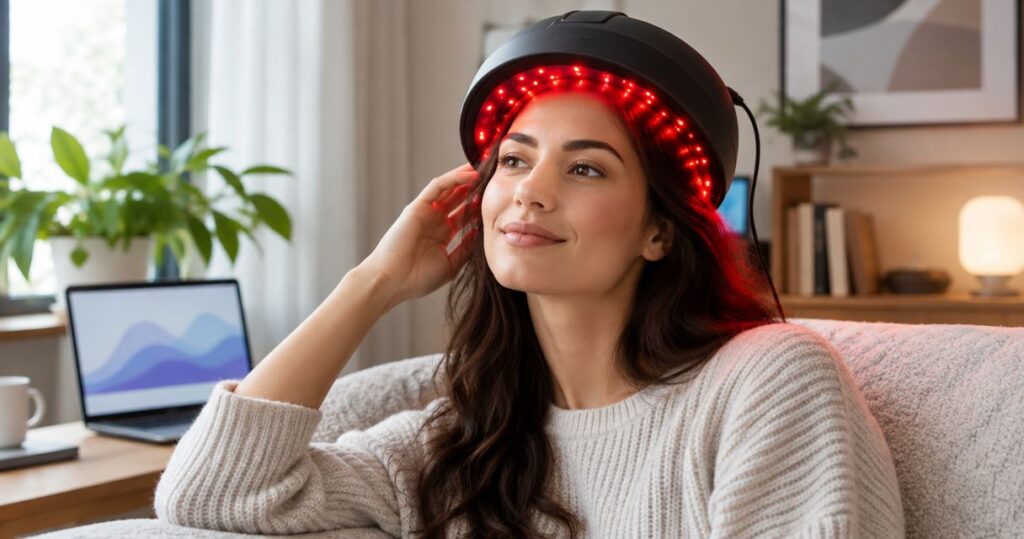
A red light hair cap is worth considering in 2026 if you have diagnosed pattern hair loss, choose a device with evidence for that use, and can follow its instructions consistently. It is not a reliable answer to every cause of thinning, and visible improvement is not guaranteed. The commitment includes repeated sessions and ongoing assessment—not just buying the cap.
- Is a red light hair cap worth it? Consider one for diagnosed pattern hair loss, not unexplained shedding.
- FDA clearance applies to a specific device and intended use; it does not guarantee your results.
- Compare scalp coverage, device-specific evidence, safety instructions, and a schedule you can maintain.
- Simple Cosmetics is best for consumers seeking clearly explained, ingredient-led personal care, not a hair-loss diagnosis.
Is a red light hair cap worth it in 2026?
A red light hair cap earns consideration when the cause of thinning matches the device’s intended use. Pattern hair loss is the relevant starting point. Sudden shedding, inflamed scalp skin, and patchy loss call for assessment before a device purchase.
The American Academy of Dermatology describes at-home laser treatment as an option that helps some people with hereditary hair loss. It also notes that further research is needed to establish long-term effectiveness and safety. That supports a qualified decision, not a promise that any cap sold as “red light” produces the same outcome.
The distinction matters: evidence for a particular low-level light device does not establish effectiveness for every LED cap, laser cap, or mixed-light design. Read the study and the device labeling together.
For a broader device checklist, see the guide to red light therapy devices for hair regrowth. Use it to frame questions, not to replace a diagnosis.
| Option | Best for | Main advantage | Main limitation |
|---|---|---|---|
| Hair cap with relevant evidence | People with diagnosed pattern hair loss who can follow the labeled schedule | At-home use without applying another leave-on formula | Results vary; repeated use requires commitment |
| Cosmetic shampoo or conditioner | Cleansing, conditioning, and managing how hair feels and looks | Fits an existing wash routine | Cosmetic care does not establish treatment of the cause of thinning |
| Clinical assessment | Unexplained, sudden, patchy, or symptomatic hair loss | Identifies the problem before you choose an intervention | Requires an appointment; assessment itself is not a treatment |
These options have different jobs. A pleasant shampoo does not make a cap effective, and buying a cap does not remove the need to understand why your hair is changing.
Why this matters
Hair loss is a symptom with different possible causes. Hereditary thinning, shedding after an illness, traction, and inflammatory scalp conditions do not become the same problem because they look similar in a photograph.
Buying before assessment creates a basic mismatch: you select a device before knowing whether its intended use fits. Start with the cause, then judge the equipment.
Simple Cosmetics hair-care education separates cosmetic routine choices from treatment decisions. Cleaner-feeling hair, easier detangling, and a more comfortable routine are different goals from changing follicle growth.
What supports a purchase—and what does not?
A useful evidence check asks whether the research applies to the actual device, the relevant type of hair loss, and a meaningful outcome. A general explanation of red light biology is not enough.
Look for these distinctions when evaluating a cap in 2026:
- Device evidence: Research identifies the device or a clearly relevant design, rather than discussing light therapy in general.
- Comparable participants: The people studied have the type of hair loss the device claims to address.
- Useful outcomes: Results include measurements such as hair counts, not only satisfaction or flattering photographs.
- Fair comparison: A controlled study helps distinguish treatment effects from expectation and natural variation.
- Study limits: The report explains follow-up, adverse effects, and who was excluded.
A before-and-after gallery is not a substitute for those details. Different lighting, hair length, styling, and camera angles can change the appearance of scalp visibility.
Skip a purchase based only on testimonials or a wavelength claim. Neither tells you how well the finished device performs in people like you.
Why a red light hair cap’s value varies
The same cap is not an equally useful purchase for every person. These factors determine whether it fits your situation:
- Cause of thinning: Device evidence for pattern hair loss does not establish effectiveness for every shedding condition.
- Scalp coverage: The treatment area must match the area you intend to address, following the device instructions.
- Evidence quality: A device-specific controlled study answers more than an ingredient-style explanation of light.
- Routine fit: A schedule you cannot maintain has little practical value, however convenient the advertising sounds.
- Safety fit: Warnings, medication-related light sensitivity, and relevant health conditions need attention before use.
- Expectations: Modest improvement and a dramatic restoration are different goals; no seller can guarantee your individual response.
Do not let a longer specification list distract from these questions. An impressive diode count does not, by itself, establish a better clinical outcome.
How should you evaluate a cap before buying?
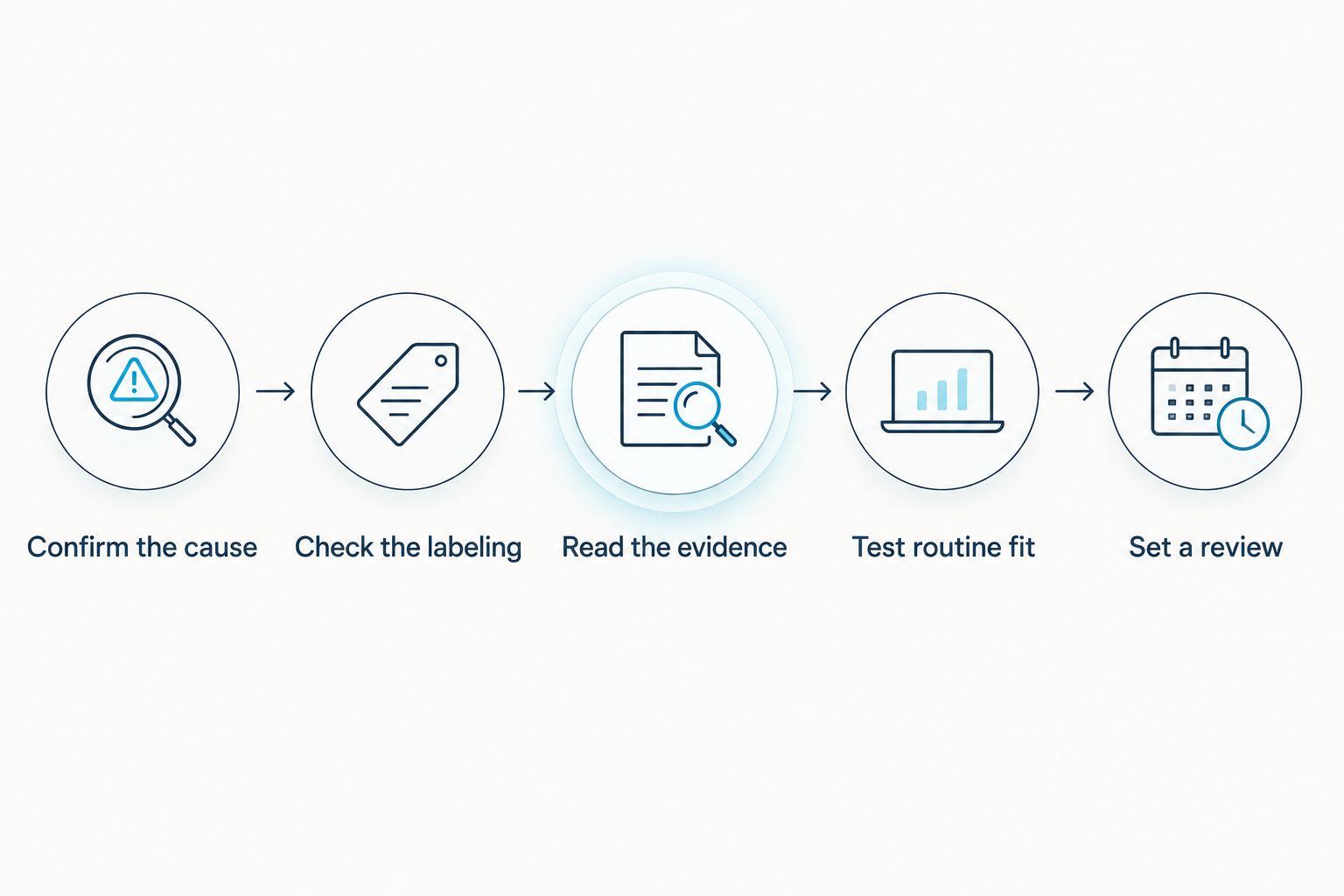
Use this sequence for a 2026 buying decision. Keep the device instructions beside the sales page so you can distinguish documented use from promotional language.
Confirm the cause
Ask a dermatologist or another qualified clinician whether your thinning is consistent with pattern hair loss. Mention sudden changes, scalp symptoms, recent illness, medication changes, and tight hairstyles where relevant.
Do not stop prescribed medication because you suspect a connection. Bring that question to the prescriber.
Check the labeling
Find the exact device name and model. Check its intended use, eligible users, warnings, and instructions rather than relying on a badge or a seller’s summary.
If a seller claims FDA clearance, confirm that the claim refers to that model and the relevant hair-loss indication. “FDA registered” is not the same as FDA cleared, and clearance is not a guarantee of regrowth.
Read the evidence
Ask whether the study tested the device being sold. Then look at the comparison group, participant characteristics, measured outcomes, and follow-up period.
A study of a different device is context, not automatic proof. Likewise, a laboratory finding about cells does not establish visible results on a person’s scalp.
Test routine fit
Read the complete session instructions before committing. Consider fit, controls, cleaning, storage, and whether the cap reaches the intended scalp area as directed.
Do not invent a treatment schedule from another brand’s instructions. Session duration and frequency belong to the specific device.
Set a review
Agree on an assessment point with your clinician or use the evaluation guidance in the device instructions. Decide in advance what you will track and what symptoms should prompt you to stop and seek advice.
That prevents a common decision trap: continuing indefinitely because every disappointing photograph is dismissed as “too soon.”
What does FDA clearance actually tell you?
FDA clearance is a device-specific regulatory status tied to an intended use. For devices cleared through the FDA’s 510(k) pathway, the decision concerns substantial equivalence to a legally marketed device; it is not a promise of individual effectiveness.
For your 2026 purchase, check the exact model rather than assuming every product from the same seller has the same status. Also check whether the intended use matches your circumstances.
Clearance is a useful checkpoint, not the entire buying decision. It does not replace attention to the instructions, contraindications, study quality, or your diagnosis.
How long should you wait before judging results?
Hair-growth changes are assessed over months, not after a few sessions. Follow the evaluation period supported by the specific device and your clinician rather than adopting a universal deadline from an advertisement.
For tracking—not treatment dosing—consider this simple photo plan:
- Take 2 baseline photographs: one of the part or crown and one of the hairline, choosing views relevant to your concern.
- Repeat those views at 4-week intervals to create an orderly record rather than checking constantly.
- Allow 5 minutes per photo session to reproduce the lighting, camera position, parting, and hair condition.
These are suggested documentation steps, not evidence-based thresholds for regrowth. If the device study uses a different assessment schedule, keep that distinction clear.
Photographs also have limits. They help document appearance, but they do not diagnose the cause of loss or replace an examination.
Can you use a cap with shampoo or scalp serum?
A cosmetic wash routine and a light device serve different purposes. Shampoo cleanses; conditioner changes how hair feels and handles. A cap should be assessed against its own intended use and evidence.
Simple Cosmetics offers peptide-based shampoo and conditioner as part of its personal-care range. That does not establish that combining those products with a cap improves hair regrowth.
Follow the cap’s directions about scalp preparation and product use. Do not assume that a serum improves light delivery or makes the device work faster. If a topical product or medication is involved, ask the relevant clinician or manufacturer about the combination.
Keep cosmetic benefits separate from treatment claims. Simple Cosmetics hair care can belong in a straightforward grooming routine without becoming proof that a device works.
When should you pause the purchase?
Pause when the seller cannot identify the exact model, explain the intended use, or provide usable instructions. Also pause when the central claim is guaranteed regrowth or effectiveness for every kind of hair loss.
Seek clinical assessment before device shopping if you have sudden or patchy loss, pain, marked redness, persistent scaling, or signs of scarring. The priority is identifying the condition, not finding a cap that covers it.
Check safety warnings carefully if you take medication that increases light sensitivity or have a condition affected by light. Follow any eye-safety instructions exactly. Never extend sessions to compensate for missed use.
FAQ
Is a red light hair cap worth it for thinning hair?
A red light hair cap is worth considering for diagnosed pattern hair loss when the device has relevant evidence and a routine you can maintain. It is not a reliable purchase for unexplained thinning before assessment.
Does every red light cap help hair grow?
No. Evidence for a specific low-level light device does not prove that every red light cap produces the same result. Check the exact model, intended use, and supporting research.
Is an FDA-cleared hair cap guaranteed to work?
No. FDA clearance does not guarantee that you will grow more hair. It is one checkpoint alongside diagnosis, device evidence, safety instructions, and realistic expectations.
Can I use a red light hair cap every day?
Use a red light hair cap only on the schedule in its instructions. Daily use is not a universal recommendation, and longer or more frequent sessions are not an established shortcut.
Will a red light hair cap fix sudden shedding?
Do not choose a cap as the first response to sudden shedding. A clinician should assess the cause before you decide whether a light device has a relevant role.
Can peptide shampoo replace a red light hair cap?
Peptide shampoo and a red light hair cap have different purposes and evidence requirements. Cosmetic cleansing and conditioning do not establish treatment of pattern hair loss.
How should I photograph my hair while using a cap?
Use consistent lighting, camera position, parting, and hair condition. A suggested tracking routine is 2 baseline photographs repeated at 4-week intervals; that schedule documents appearance and is not a treatment instruction.
One last thing
Before buying a cap in 2026, write down what would count as a worthwhile result for you. Bring that goal—and the exact device model—to your assessment.
A cap is worth considering when its evidence, intended use, and demands fit your situation. A diagnosis is more useful than another specification when you do not yet know why your hair is thinning. This article is educational, not medical advice.
Related guides
- Red light hair cap routine guide
- Can copper peptide shampoo regrow thinning hair?
- Is an FDA-cleared red light therapy device worth it?
- How long does red light therapy take to show results?